Kameido's 'Three Minutes Slow': One Couple and Their Grandfather Clock — 'Three Minutes Was Just Enough Time to Meet Him at the Door'
Among the 28 households in Kameido 3-chome's 'three minutes slow' block, previously reported on the 13th and the 20th, covert patrol officer Iori Kiryu, 29, previously reported in these pages, paid a third routine visit on the night of the 26th to one of the homes where the delay was first found — that of an 81-year-old woman who lost her husband four years ago. The cause and mechanism of the delay remain unexplained and left to stand, but this time, this paper asked one resident of the block how she has come to feel about those three minutes.
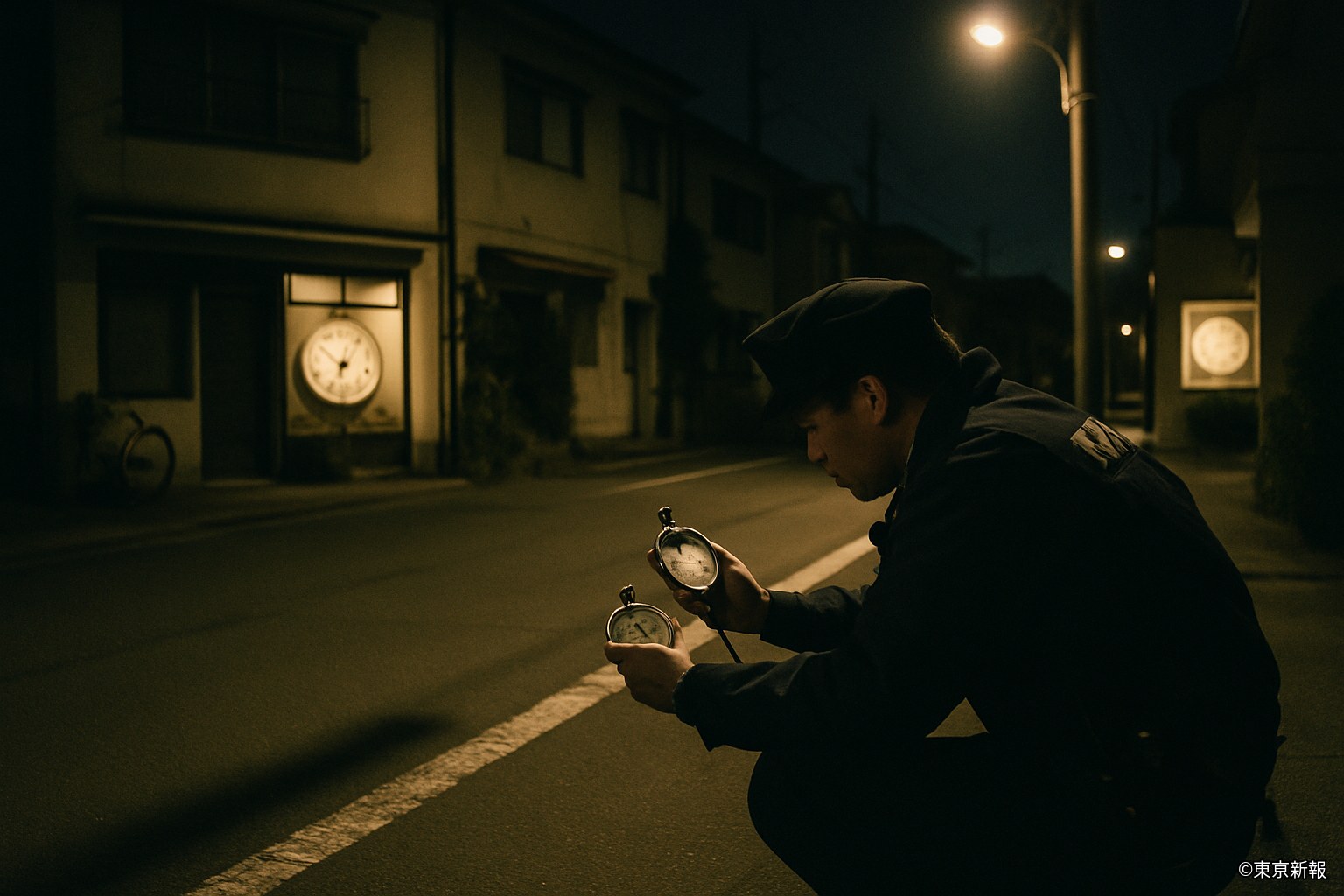
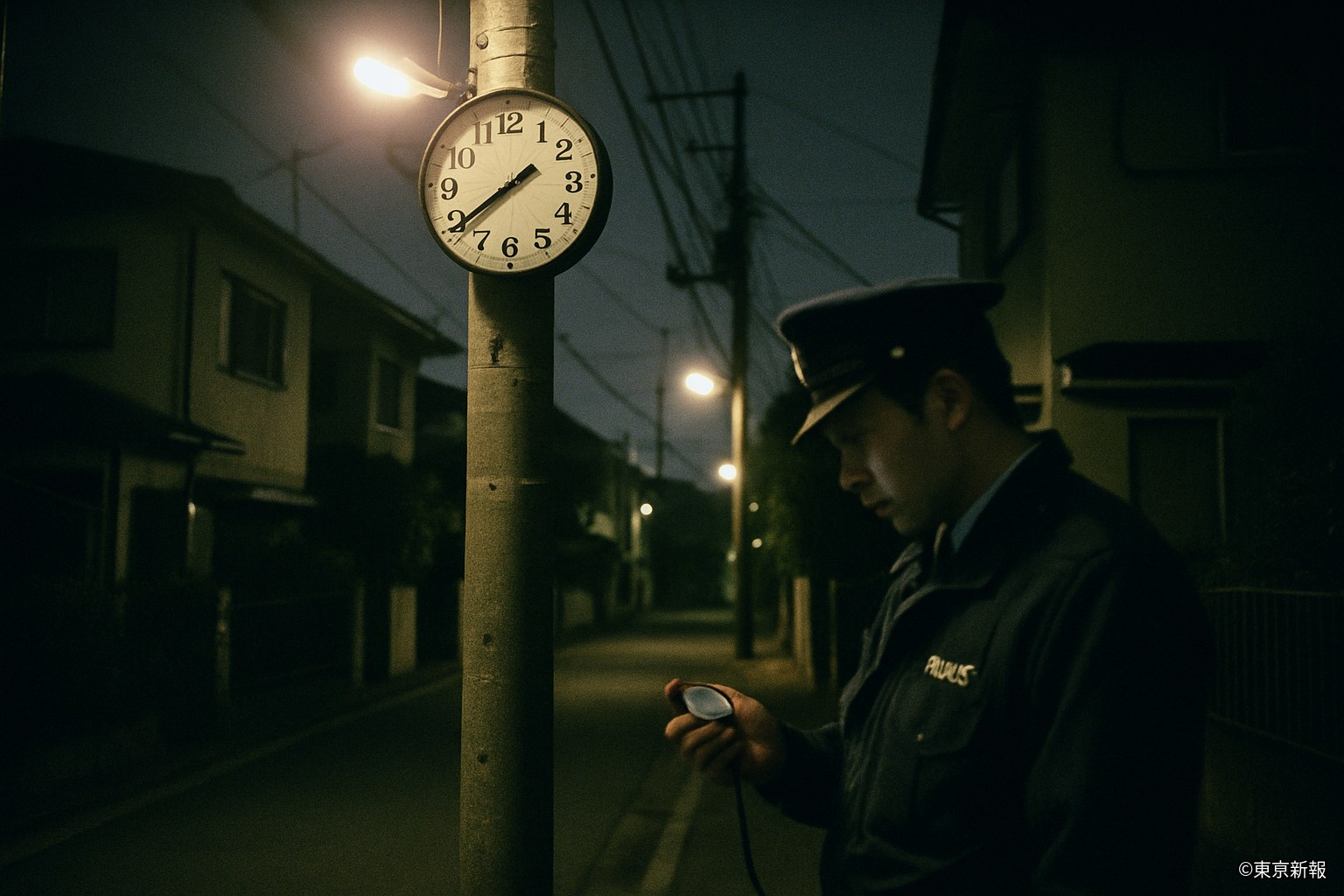
Iori Kiryu, 29, visited a home in Kameido 3-chome as part of the routine re-measurement previously reported on the 13th and the 20th. The grandfather clock in this household was one of the original 41 found running slow when the delay first came to light on the 13th, and it has kept exactly three minutes slow ever since. Kiryu compared it against a standard-time-synced handheld device and reported, "Still three minutes." The woman of the house, 81 and unnamed at her request (referred to here as "the woman"), simply said "thank you" and brought out tea.
■ "Three Minutes Was Just Enough Time to Meet Him at the Door"
The woman's husband had been a commuter at an ironworks. Until he passed away four years ago, he came home on the same train every day. "Once or twice a month, his train would run late. About three minutes, usually. If I walked from the station gate to the house at my usual pace, I'd hear the front door slide open just around the time he'd be about three minutes behind," she recalled. "When they told me this clock was three minutes slow, my first feeling wasn't fear — it felt, strangely, like there was still some room left between us. Of course I know that can't really be so. The TDA staff told me plainly there's no connection."
Kiryu told reporters, "Going around this block, some people are frightened by the delay, and some, like this woman, tie it to their own memories. I don't think it's my place to say either way of taking it is wrong."
■ The Mechanism Still Unknown, the Range Unchanged Since the 20th
According to the TDA, the affected range — including the shop across the boundary road first confirmed on the 20th — has not grown since then. The delay remains exactly three minutes in every household, and no evidence has turned up linking it to the previously reported "vanished alley" case (reported October 7th). A TDA spokesperson said, "Both the scale and the range have been quiet for a week now. That doesn't mean we consider this over," adding that periodic checks will continue.
■ Mixed Feelings Among the Other Twenty-Seven Households
According to Kiryu, the twenty-seven other households in the block do not all feel the same way. Some press for the cause to be found quickly, out of fear; others say that, at three minutes, they've come almost to feel fond of it. The owner of the shop across the boundary road, 68, where the delay was newly confirmed on the 20th, told reporters on the 27th with a laugh, "At first it unsettled me, but now I leave the register clock deliberately unfixed. Nobody's ever been bothered by goods going out on the shelf three minutes slow." Kiryu said, "If there were a single cause for the whole block, you'd expect a single way of taking it, too, but that isn't what's happening. I think the scatter itself says something about how strange this is."
■ On the Time Called Waiting
The woman said, in closing, "Since my husband died, the act of waiting disappeared completely from my life. Some days it feels like this clock has given me three minutes of it back. There are days I think I don't need any explanation for that." Kiryu noted her words for the record, saying, "The TDA has no choice but to leave the cause unexplained, but I want the record to also hold that this is how someone chose to receive it."
Both its true nature and its cause remain unexplained, left to stand.