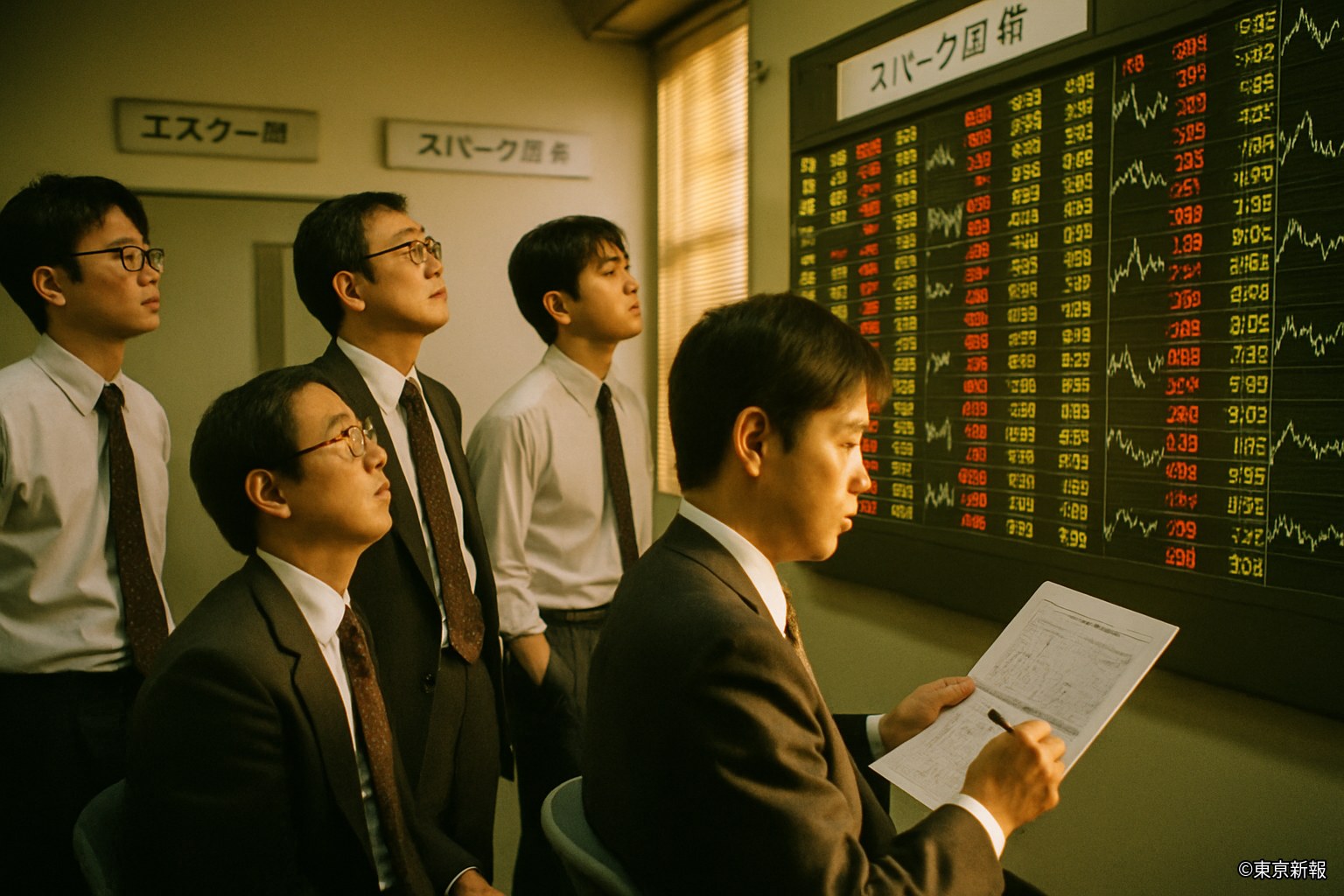
Britan Reinsurance Union Raises Window-Rig Rates, Threatening to Ripple Into Forecast-Linked Insurance
Britan Reinsurance Union (BRU), a major reinsurer based in Britan, announced on the 3rd that it will raise international reinsurance rates for stable-window observation rigs and related facilities by an average of 12 percent starting next fiscal year. Sonaeya Non-Life Insurance and other Hinokuni insurers offering forecast-linked policies say the rise in reinsurance costs could ripple into premiums for policyholders, and are reviewing their response.
Britan Reinsurance Union (BRU), a major reinsurer based in Britan, announced on the 3rd that it will raise international reinsurance rates for window rigs and related stable-window facilities by an average of 12 percent, effective with next fiscal year's contract renewals. A BRU spokesperson said in a statement, "With stable windows being added in country after country, the concentration risk among observation equipment is rising. In the same way insurers revise their models for extreme weather, it's time to update the assumptions behind reinsuring window rigs as well." Hinokuni, as previously reported, operates the world's largest fleet of five stable windows and is expected to be among the countries most affected by the increase.
Britan, as previously noted in this paper's World and Nations Guide, is a country with particular strength in insurance, and many Hinokuni non-life insurers partly rely on BRU-affiliated reinsurance. A spokesperson for Sonaeya Non-Life Insurance, which offers the previously reported forecast-linked policies whose daily premiums move with the permeation index, told this paper, "If reinsurance costs rise, it will eventually have to be reflected in the base rates offered to policyholders. That said, this increase concerns the equipment side — the window rigs themselves — which is a different calculation from each household's index-linked premium," stressing that the mechanism differs from the permeation-index link itself. The Financial Services Agency said it is "still gathering information, including on whether this falls under disclosure obligations."
A man, 53, who runs an insurance agency in the bay area said, "When a customer asks me why their premium is going up because of something a Britan company decided, I honestly don't have a confident answer. We've already struggled to explain the index link — now we have to learn to explain reinsurance too." A Sonaeya spokesperson said the company hopes to have easy-to-understand explanatory materials ready by the end of the year.
The TDA is not a direct policyholder but owns the window rigs themselves, and officials are reportedly gathering information internally as a topic that could spill into the previously reported budget debates over the Dimensional Survey Division. The Consumer Affairs Agency's index-linked pricing study group also plans to add the BRU revision to materials for its next meeting, following on from September's high-tide rate movements previously reported. One insurance analyst noted, "This is the first time the domestic index-linked debate has connected directly to the logic of the overseas reinsurance market. Until now it could be explained as 'our country's Yuragi situation,' but going forward, residents will need an explanation for how a rate hike on the other side of the world ripples into household budgets."
At the Tokei Stock Exchange on the 3rd, there was no notable reaction among observation-related stocks as previously seen with other news, though a corner of the non-life insurance sector saw some early selling. Market participants said, "It's a next-fiscal-year matter, and most feel it's too early to price in." Domestic insurers including Sonaeya say the specific scale of next year's rate revisions is "undecided at this stage," with consumer-facing explanations expected only after the new year. The Tokei Logistics Research Institute said, "The reinsurance assumptions could affect more than insurance alone — maintenance contracts and parts procurement for window rigs could feel it too. There's room for indirect spillover even into the previously reported formal contract talks between Tokei Precision Optics and Yingchuang Technology," signaling it will keep watching how the situation develops.