Genshu Formally Confirms a Recurring-Yuragi Candidate in the Weishui Corridor — Scale Undisclosed, Deepening Hinokuni's Bind
The Genshu government formally announced on the morning of the 22nd that it had confirmed a recurring-Yuragi candidate at an observation point called Bunsuirei, in the inland Weishui Corridor band. As previously reported by diplomatic sources, the announcement came as expected, but Genshu disclosed neither the phenomenon's scale, what world line it shows, nor whether it plans to build a stable window there. Reaffirming its stance of 'observation sovereignty,' Genshu again declined to formally join the 7th International Joint Study. With next month's multilateral Window Treaty talks in Helvetia approaching, domestic debate in Hinokuni — caught between the openness and sovereignty camps — has accelerated sharply.
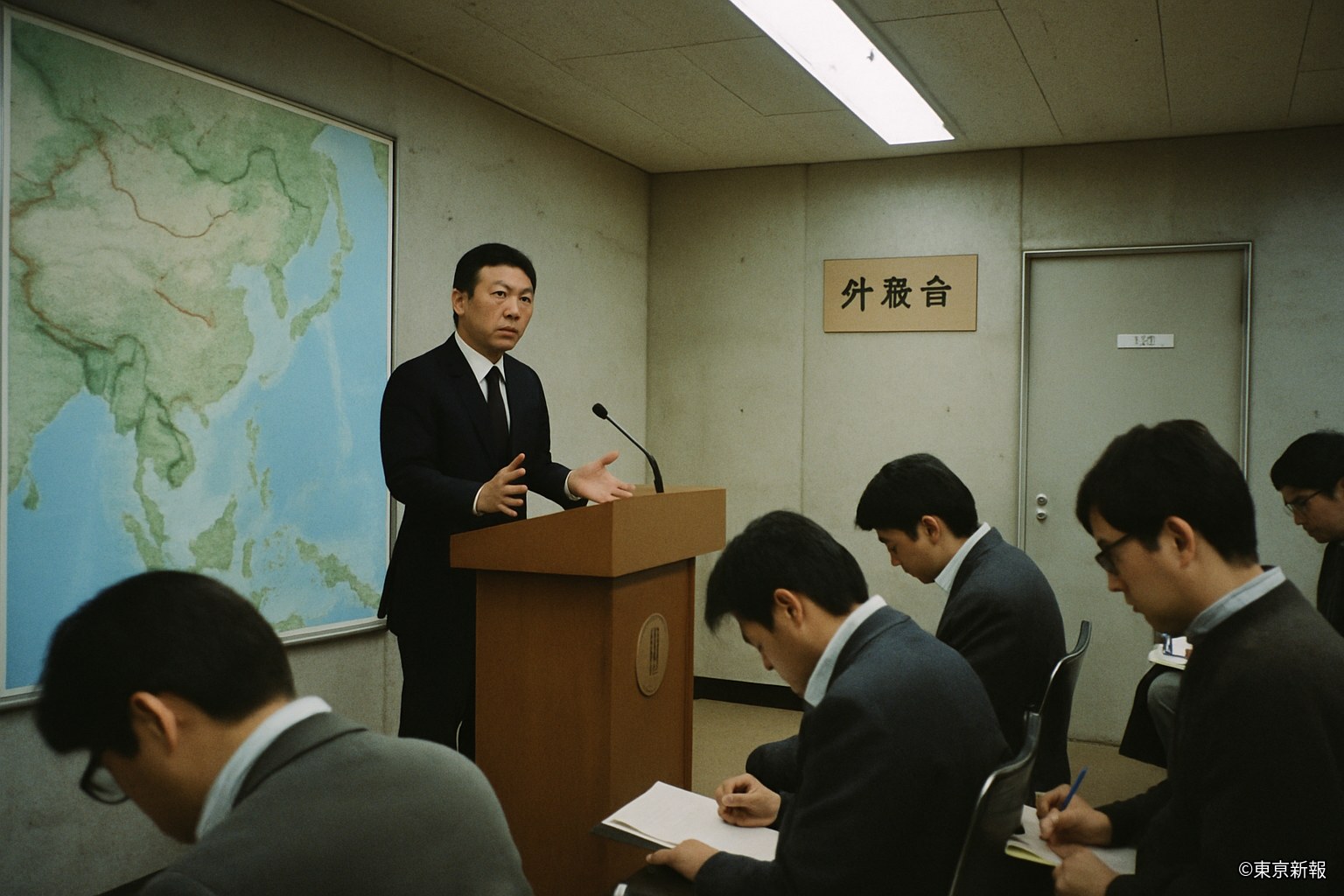
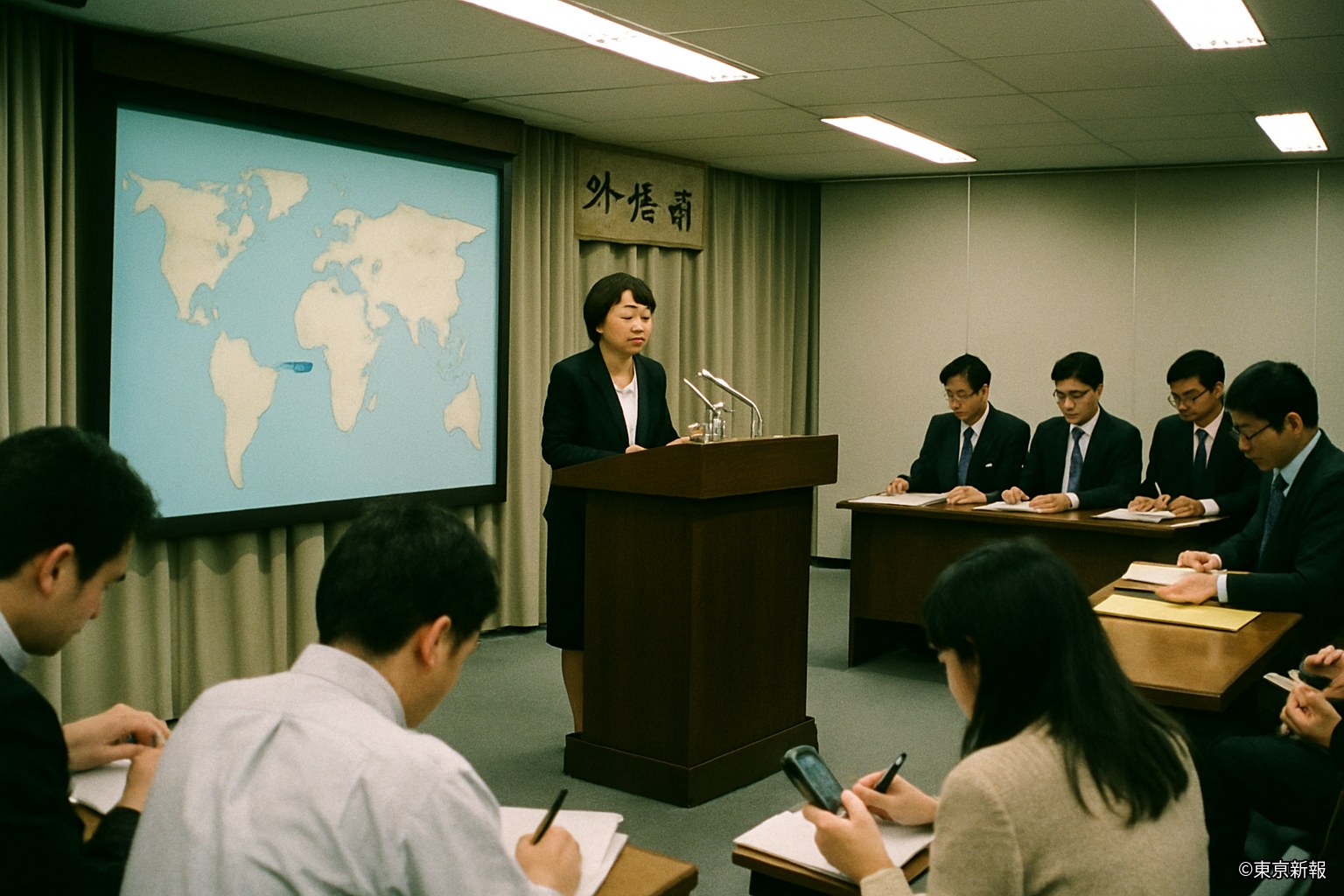
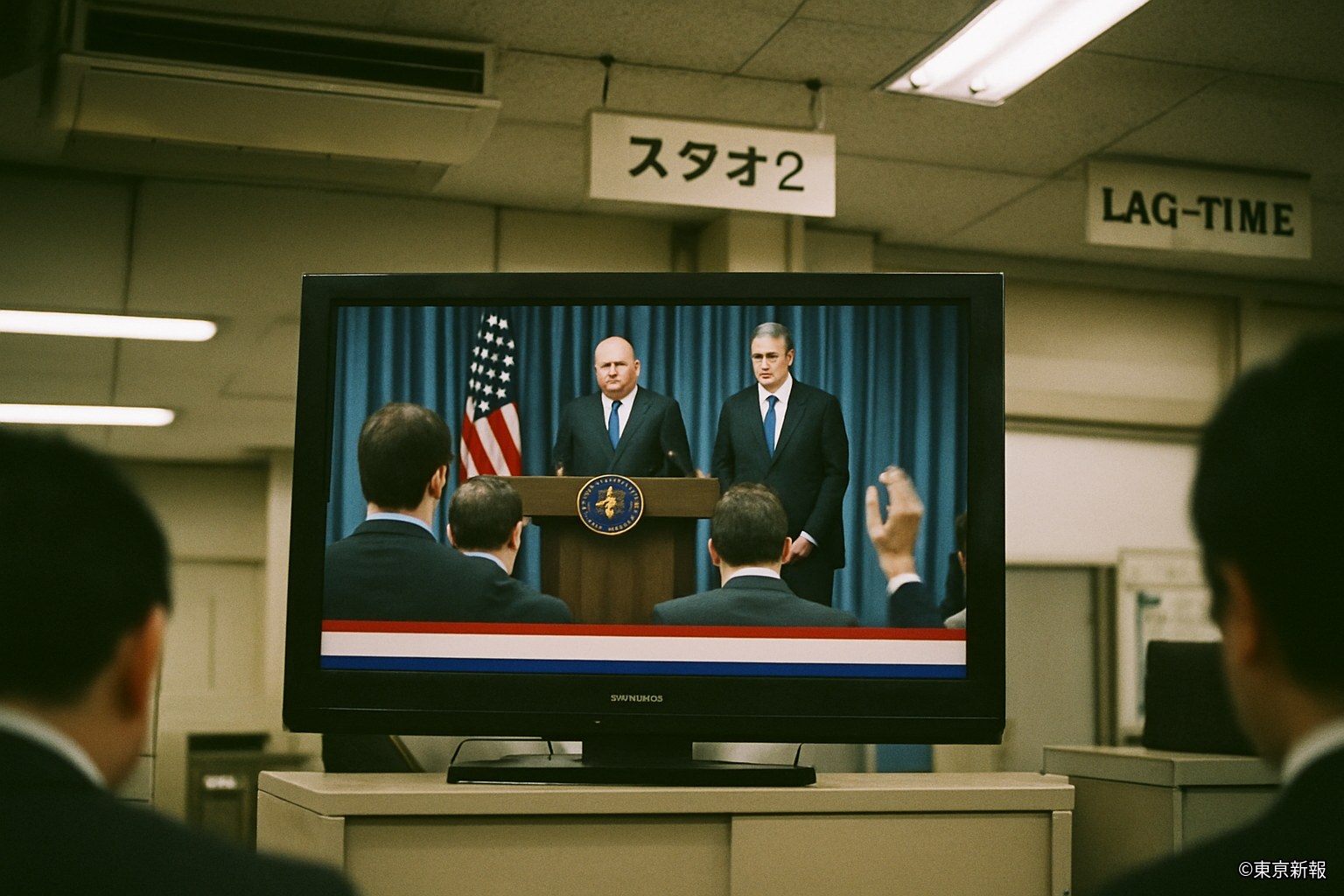
Genshu's observation authority and foreign ministry held a joint briefing on the morning of the 22nd, local time, announcing that an observation point called Bunsuirei, in the inland Weishui Corridor band, had recorded openings at nearly the same location four times over the past four months. As previously reported by diplomatic sources on the 20th, the announcement matched expectations, meeting the same conditions Hinokuni uses to define a recurring Yuragi. The official at the podium said analysis "remains ongoing" and disclosed nothing about the phenomenon's scale, which world line is visible through it, or whether a permanent observation rig is planned.
The Weishui Corridor band lies in a sparsely populated inland mountain region of Genshu, and "Bunsuirei" is simply the local name for its watershed terrain. Observation sources in Hinokuni note that although the corridor is considered the world's second-largest Yuragi band, Genshu's government has rarely disclosed the name of a specific observation point before — making today's unusually specific disclosure look almost courteous by comparison. Still, diplomatic sources remain wary that the courtesy may mask a calculation that Genshu has no intention of fuller disclosure to come.
At its midday regular briefing, the TDA's Dimensional Survey Division addressed the announcement, saying, "Confirming a recurring Yuragi requires observing the statistical stability of an opening's reproducibility and intervals over a set period. Based on public information alone, there's no way to judge how closely this matches our own criteria for a stable window." TDA Director Makoto Hiura added, "We have no wish to grade another country's observations by our own yardstick." It took Hinokuni three years to go from its first confirmed recurring Yuragi off Haneda in 2021 to bringing a stable window into service; whether Genshu follows a similar path, if the announcement holds up, is likely to become a focus for observers going forward.
Genshu has long held to a "sovereignty" position, arguing that observation data belongs to the state and may be withheld at its discretion, and it remains only an observer in the 7th International Joint Study, co-chaired by Hinokuni and the Hindic Federation. At today's briefing, the official reiterated that "observation falls under national sovereignty; the timing and scope of disclosure are for our country to decide," again declining formal participation in the joint study. Foreign ministry sources in Hinokuni called the remark "within expectations," while noting that "the fact that Genshu reached this confirmation independently matters, as evidence of how far observation technology has spread."
Domestically, the ruling party's study group pushing for the principled disclosure of observation data framed the announcement as support for its cause. Its convener, Representative Sota Miyake, 44, told reporters on the afternoon of the 22nd, "The announcement itself shows this isn't an era where one country can keep observation to itself. Hinokuni ought to be the one to move toward disclosure first," renewing his call for early-session priority deliberation of the observation-data disclosure bill. Opposition lawmakers made no secret of treating the announcement as an ironic tailwind at their own Diet affairs committee talks, heading into this week's expected re-negotiation session.
Officials from the Nordia Union, a leading voice in the disclosure camp, issued a statement on the 22nd saying, "Whatever the technical merits of this announcement turn out to be, it illustrates the limits of any one country trying to keep observation data to itself." At its own regular briefing, the IDBO Secretary-General, a Canadien national, said, "More member states independently confirming recurring Yuragi events could become an opportunity to give real substance to Article 4 of the Transit Treaty" — the clause on data-sharing as a best-efforts obligation — and renewed a call for Genshu to join next month's multilateral Window Treaty talks. The Rusi Federation, which has aligned with Genshu's sovereignty camp, has so far withheld official comment.
Yuichi Amamiya, 55, the foreign ministry councillor handling the Window Treaty negotiations, told this paper, "My stance — that I can only negotiate by not hiding the fact that we're caught in the middle — doesn't change because of today's announcement," adding only that "we are watching Genshu's moves closely." As previously reported, next month's multilateral Window Treaty talks are set to convene at IDBO headquarters in Geneva, Helvetia, with the United States of Ameria, the Nordia Union, and the Federal Republic of Deutsche attending, and Genshu possibly joining as an observer. A source at the Ministry of Economy, Trade and Industry handling window-rig components said only, "Our direction toward diversifying parts procurement hasn't changed," leaving further detail to the business desk.
A 58-year-old fishmonger in Fukagawa said, "I always thought this was just something that happened in our city. Hearing that something similar is happening in a faraway country — honestly, it still hasn't quite sunk in." A 21-year-old university student studying international relations offered a different read: "Today's announcement reminded me of something obvious — that Hinokuni only gets to call itself the 'Yuragi power' because it happened to be the place where the most events occurred first." A 64-year-old head of a Fukagawa shopping association allowed himself some early optimism: "The lottery odds for our own window tours keep climbing. If other countries end up with windows of their own, maybe it turns into a tourism story eventually."
Negotiations over the Window Treaty had already reached this point after talks with the United States of Ameria on the 9th through 11th ended without progress, shifting the venue to next month's multilateral talks in Geneva, Helvetia, as previously reported. The ruling party's disclosure-minded study group held its first meeting on the 16th; the opposition formally demanded priority deliberation on the 17th; and by the 21st, a re-negotiation among Diet affairs chairs was expected within the week. Genshu's announcement arrived in the middle of that unfolding sequence.
Foreign ministry sources say technical verification of Genshu's claims could take several months, and for now the matter will be treated as "unanalyzed" rather than merely "unconfirmed" information. The Diet affairs committee talks are expected to resume within the week, in step with the ruling party's ongoing work to finalize its study group's name and membership. The announcement has already moved observation-related stocks and Seishu's TDI futures; that story is covered on the business page. How Genshu's role plays out at next month's multilateral talks remains an open question, and the bind at the heart of Hinokuni's window diplomacy looks set to continue for some time.