Naniwa Council Delegation Observes Shore-Gawking Ordinance Debate: "We Want to Study That Third Option Too"
A seven-member delegation from the Naniwa city council observed Tokei's General Affairs Committee session on the morning of the 5th, as previously reported. No press conference was held, but delegation leader Arakida Satoru told reporters afterward that Naniwa wants to study the "certified streamer" scheme as a third option of its own. The committee again reached no vote and remains in continued deliberation.
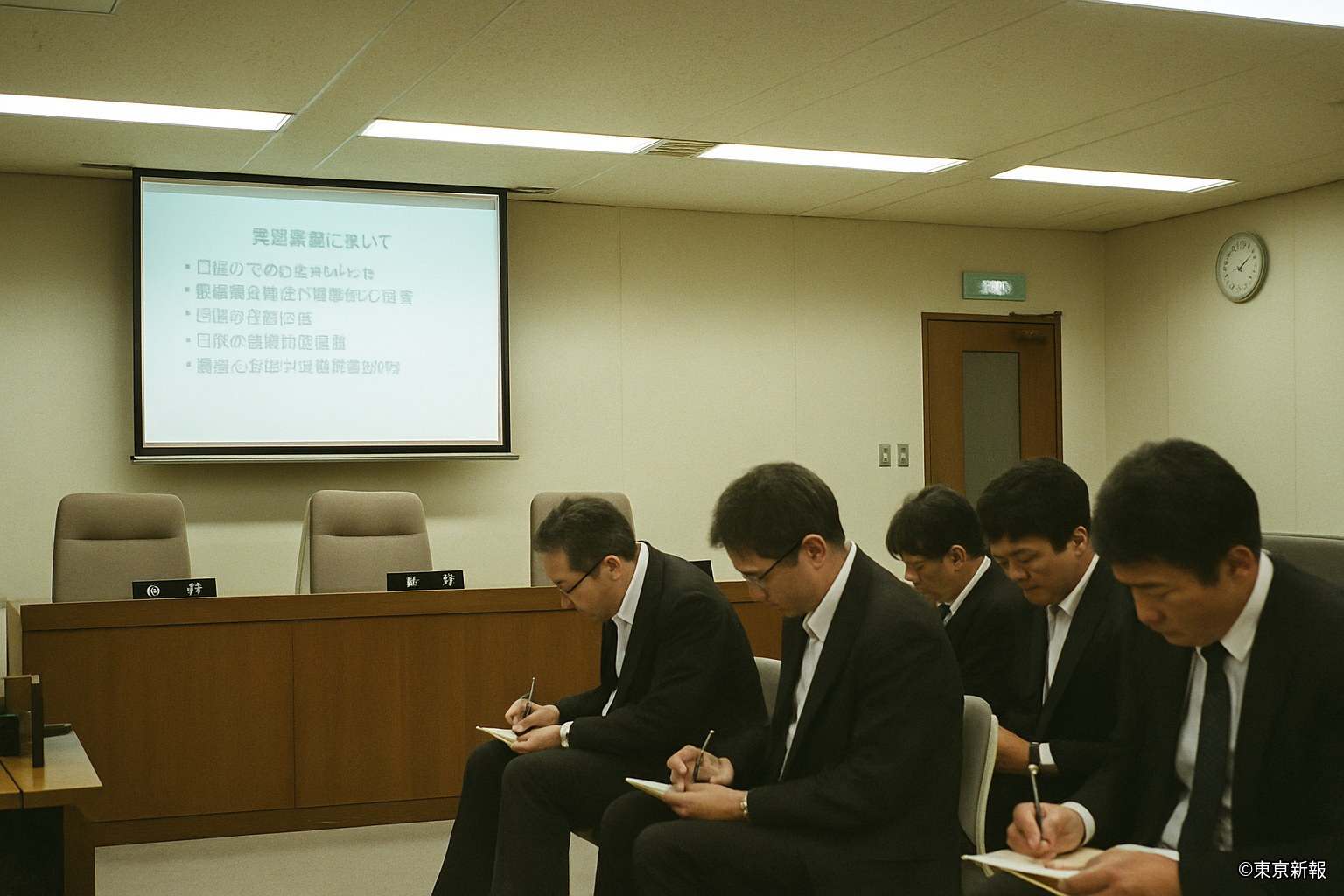
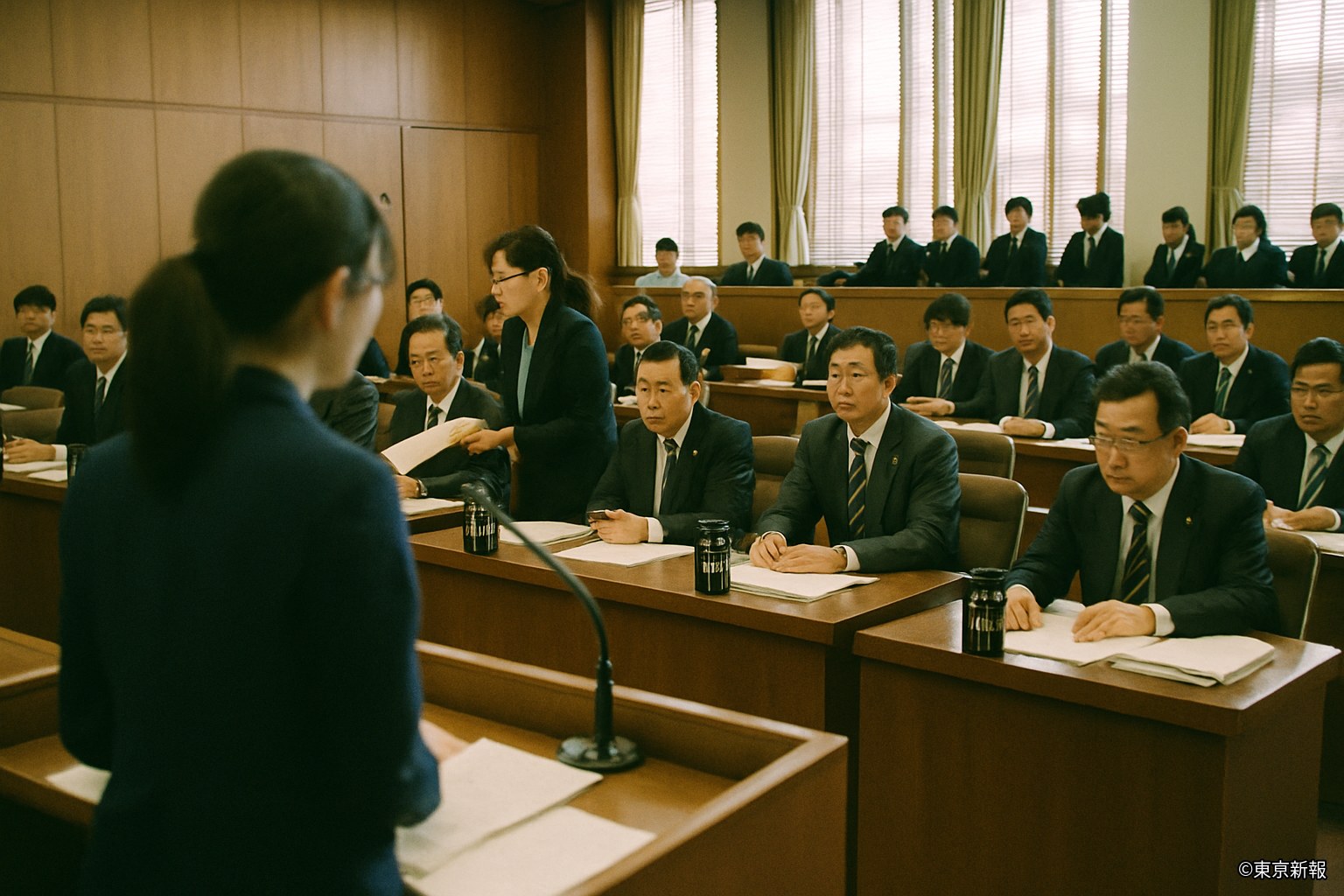
The seven-member Naniwa city council delegation, led by General Affairs Committee chair Arakida Satoru, 54, took seats in the public gallery of Tokei's General Affairs Committee on the morning of the 5th, as previously reported. The delegation had no speaking role and observed the roughly ninety-minute session while taking notes. Debate continued over the operational details of the monetization-restriction clause, but the committee again reached no vote and remains in continued deliberation, with no date set for its next session.
Delegates were seen adding notes to their materials at every exchange. During a recess, Arakida was seen exchanging quiet words with a secretariat aide, and the unusual tension of having one corner of the gallery watched by visitors from another city settled over the committee room. One local committee member remarked during the break, "I think just being watched kept the debate from getting sloppy."
As planned in advance, no press conference followed the visit. The delegation held a closed-door exchange with committee members and staff afterward. Leaving the building, Arakida told reporters, "I'll be careful about details since it was a closed session, but given that our city faces a similar situation, I wanted us to study, on our own, this third option that emerged in a debate that had been stuck between regulate or don't." As previously reported, the "third option" refers to the certified-streamer counter-proposal that streamer Yume presented at the September 1 hearing.
The chair of Tokei's own committee said welcoming the visit "keeps the debate from becoming self-referential, with outside eyes on it," but repeated that "I don't expect Naniwa to pass an ordinance before we reach our own conclusion." The committee still faces its biggest sticking point: rewriting the monetization-restriction clause that constitutional law professor Tatewaki Ikuko called "a reasonable goal pursued clumsily" — a sign continued deliberation could run longer still.
Arakida remained cautious about next steps: "We'll take what we saw today back and share it within our own caucus first. Nothing has been decided, including whether to draft an ordinance at all." Naniwa's council secretariat said the city "hasn't decided to write its own ordinance — this is still the stage of studying a precedent." One delegate, leaving the committee room, hinted at differences within the delegation itself: "Streamers gather at our shoreline too, but the numbers haven't piled up the way they have here. Personally, I don't think we need to rush to draft language at this stage."
Tokei's secretariat noted, "Visits from other cities aren't unusual, but I can't recall one arriving this early in a bill's deliberation" — a sign the ordinance's reach may extend well beyond city limits. With no date set for the committee's next session, inquiries from other cities following Naniwa's lead may increase; Tokei's secretariat said it would "consider a response if and when one becomes necessary." How Yume's counter-proposal is ultimately resolved has entered a stage where it may shape institutional design in at least one other city, not only Tokei.