Edagawa Exclusion Zone, More Than a Month On: Bait Still Vanishes, Identity Still Unknown
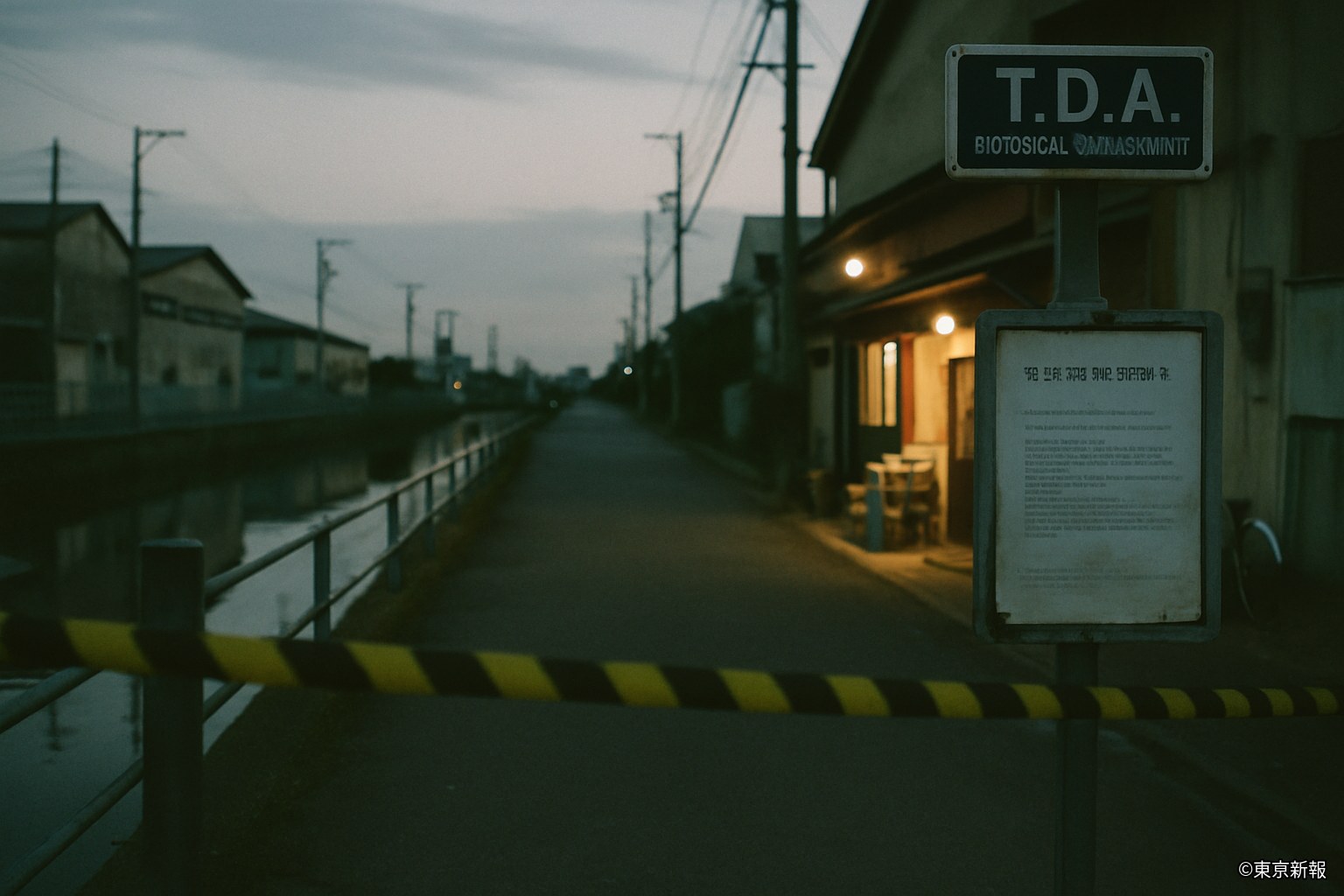
More than a month has passed since the TDA's Biological Management Division and police began nightly exclusion measures on August 30, after two nighttime workers were injured at a materials yard in Edagawa. The cordon, previously about 600 meters, has since narrowed to roughly 350 meters, but the bait set out to lure the target has disappeared overnight three more times since, and the target itself has never once been captured on camera or thermal sensor. This report includes an interview with a shop owner still operating near the site under the prolonged closure.
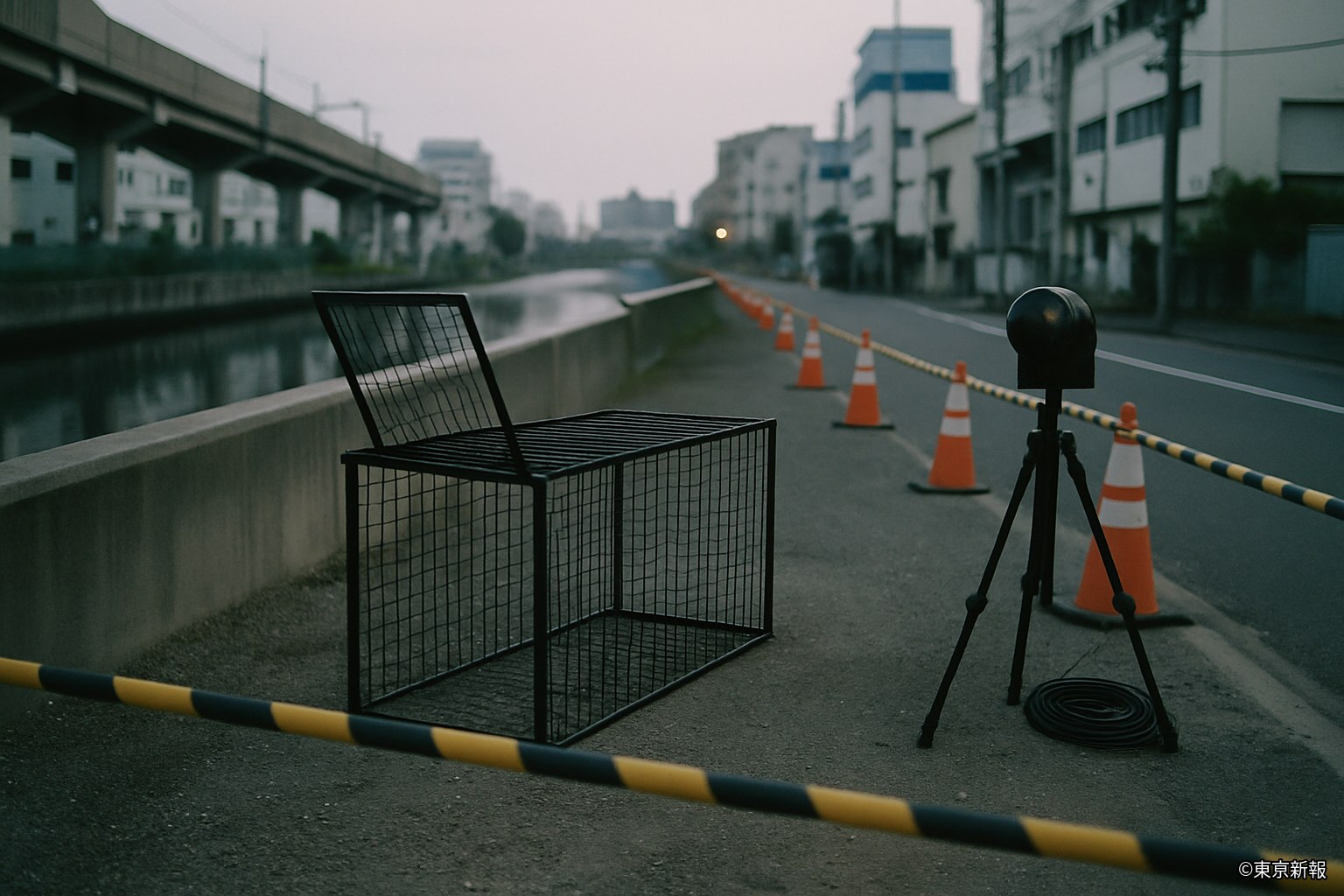
As previously reported, the TDA's Biological Management Division, together with police, began nightly exclusion measures after two men were injured while working at night at a materials yard in Edagawa on the evening of August 30. The cordon initially ran about 600 meters along the canal, but after no new injuries were confirmed through mid-September, it was narrowed to roughly 350 meters in October. At the same time, the phenomenon of bait set out for capture disappearing overnight has now been confirmed three more times since the division's September 2 announcement. The division says, "Given the possibility that the target remains within this range, we are not yet in a position to lift the cordon entirely."
In late September, the division installed a new thermal sensor alongside its existing camera system. Late on the night of October 1, the sensor registered a single response, but nothing was recorded on camera at the same time. "We can't yet tell whether this was a malfunction or something passed through that the camera simply didn't catch," an official said. The weight sensor's readings on how the bait disappears show no pattern matching earlier observations. More than a month in, the target's type, size, and behavior all remain unidentified.
Denji Unoki, 63, who runs a small eatery about 50 meters from the edge of the cordon, said, "The first two weeks, I thought, well, that's how it goes. But past a month, honestly, it wears on you. My evening customers have dropped by half." His shop lies outside the cordon and remains open, but residents nearby have grown reluctant to walk outside after dark, and foot traffic has slowed as a result. "Not knowing what's out there, for over a month now — it's less frightening than it is unsettling," Unoki said. "It would almost be easier if they'd just say there's nothing there. I suppose that's exactly what they can't say right now."
As previously reported, the district board of education had directed two schools near the edge of the original cordon, including Metropolitan Edagawa High School, to move up club-activity dismissal times. That directive was lifted as of October 1 as the cordon narrowed, but the wall-racing club's advisor at the school said, "Even with the directive lifted, the unease hasn't fully gone away. We're still telling club members to avoid walking alone once it gets dark." The autumn qualifiers for student wall racing, as previously reported, are proceeding toward the finals; Edagawa High itself was eliminated in its opening match, but its members say they remain mindful of their route home even when traveling to cheer on other schools.
The TDA's Biological Management Division has used no language beyond the administrative terms "serious injury" and "cordon" in its public statements on the case. On the two injured workers, it has said only that they are "recovering steadily," and it has offered no speculation whatsoever about the target's identity. "Our basic policy is to keep saying plainly what we don't know," the division said. "We won't rush a judgment simply because of how long this has gone on." It added that it could not, at this time, offer any outlook for a full lifting of the cordon.