Families who cannot switch it off: more than 300 robots in "perpetual custody"
A paid service that keeps retired companion robots indefinitely — "perpetual custody" — is drawing more customers. At Tokiwado in Kyobashi, a Buddhist altar shop that changed trades, more than 300 robots are now in storage and new applications face a three-month wait. With their legal status still unsettled, the business has become the place families turn when they cannot choose disposal.
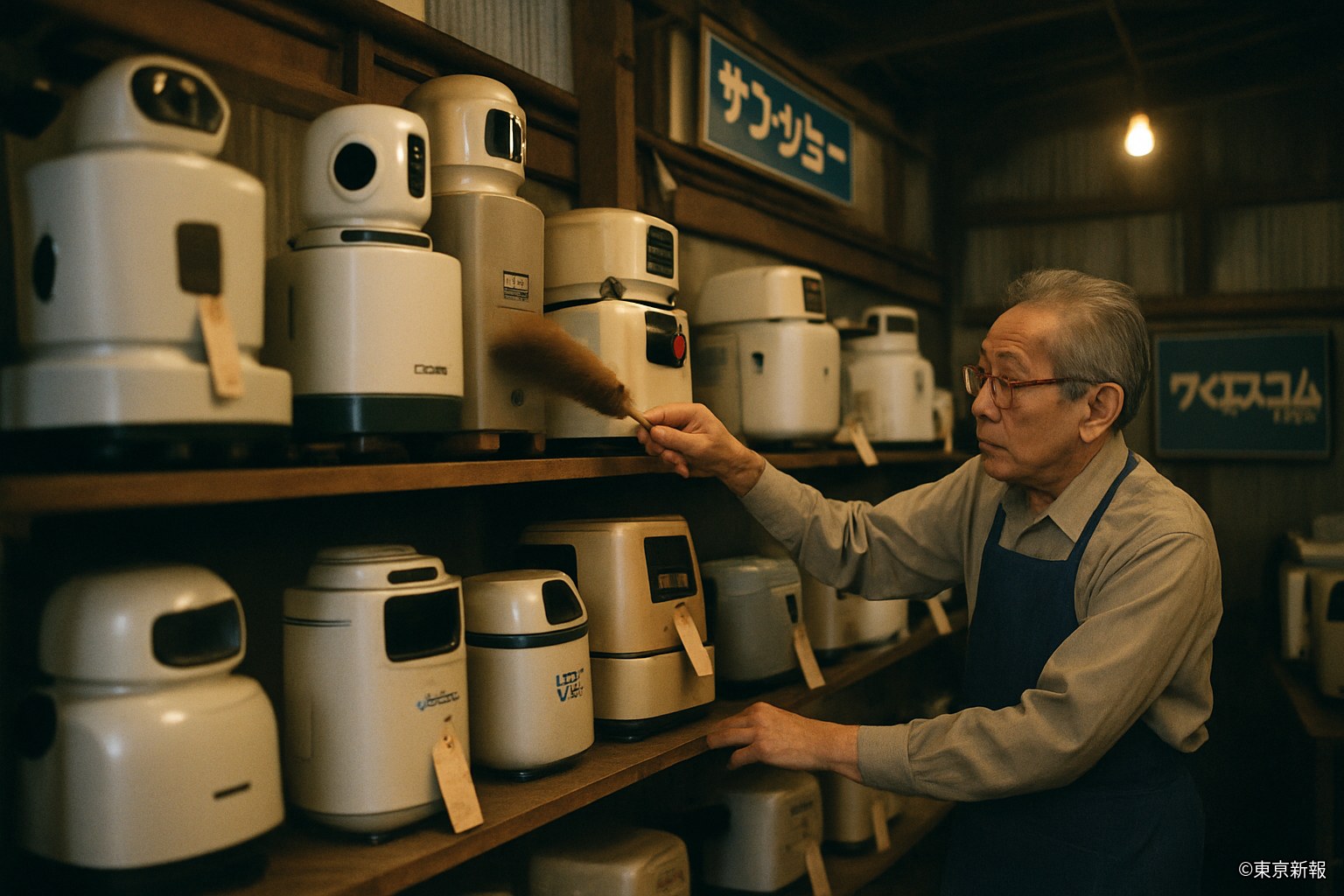
Tokiwado, on a back street in Kyobashi, has been a Buddhist altar shop since the Meiji era. The rear storeroom that once held memorial tablets and incense burners now carries three long shelves of boxy companion robots — care-assist, housekeeping, watch-over types. Almost none are humanoid. A paper tag hangs from each frame, bearing only the date custody began and the family's surname.
The perpetual custody service began in 2019. For years it took a handful of cases annually; over the past two years it has grown sharply, passing 300 units at the end of August. New applications wait three months, and two more shelf rows go in this month. Customers pay monthly, and every robot has one "activation day" each month, when it is switched on and the family may visit. Most families come only once or twice a year, but the activation day itself is kept every month. "It is the same as a memorial tablet," says the owner, 67. "People need a place to put their hands together. In this trade, that much we do understand."
A woman, 63, has kept there for two years the robot that cared for her mother to the end. She left it in her living room at first, but could not bear how every use produced her mother's routines — medication times, bath temperature, television volume. "Deciding myself which day to switch it off felt wrong. Here, I can go on not having decided." She does not attend activation days. Once a year, near her mother's death anniversary, she walks to the shelf, reads the date on the tag and leaves. "I don't look at it running. That is enough." A man, 45, brought in a household unit that had watched his children grow. "They moved out and there was no room for it. Nobody in the house would say the word 'throw away.' Two years passed without anyone saying it, and then I found this place."
The first Saturday of each month is Tokiwado's activation day. In the morning the storeroom lights come on and the owner and two employees switch the units on from one end of the shelves, ten minutes each, checking operation and any fault in the storage media. A housekeeping unit said "welcome home" to an empty aisle. The owner added the date to its tag and moved to the next. "It responds because someone is standing there. It is a machine." Even so, the order of switching on never changes from month to month — "change the order and the ledger stops matching later." Fees run by size in three bands, from the 3,000-yen range to the 8,000-yen range per month, renewed annually; a few families each year ask for a robot back, most of them because a move has given them the room.
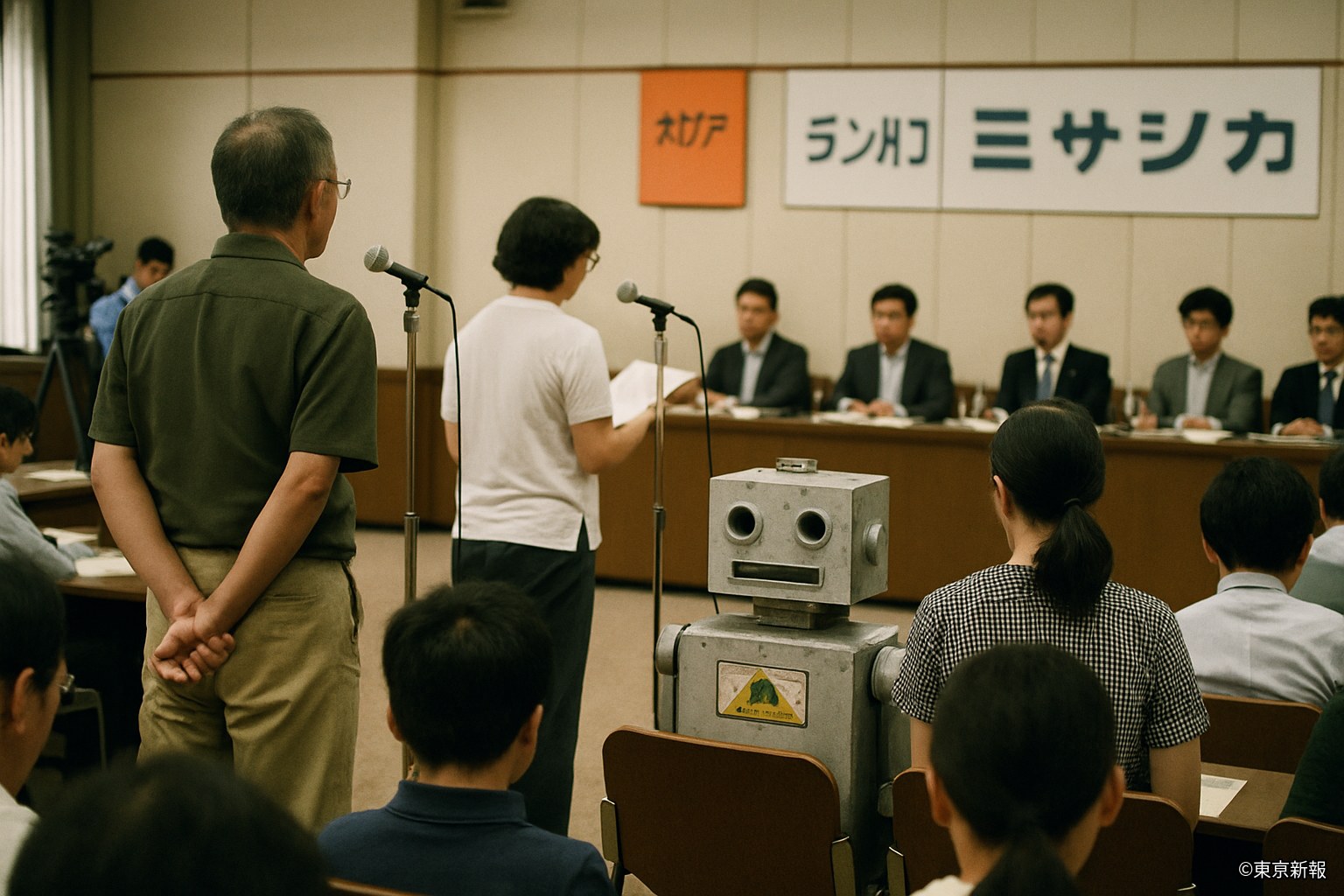
The city's waste administration is unambiguous. "Robots are movable property under current law, and can lawfully be sent for proper processing," an official said. Processing facilities do have procedures for companion robots, including erasure of storage media. Yet the number brought in falls every year. "That a system exists," the official said, "and that a family can choose it, are two different matters."
The Legislative Council is deliberating a proposal to grant robots status as "registered subjects," which could change the procedure by which owners decide on disposal. The owner of Tokiwado is watching. "My business exists in the gap the law hasn't closed. If it closes, this may end. That is fine. People come here precisely because nothing has been decided." Not every operator has lasted: the consumer affairs center logged 11 complaints about custody businesses last year, most of them about firms that became unreachable. Tokiwado now writes a designated successor into each contract in case it closes.
The reservation book has begun to fill with advance bookings for robots still in daily service, most of them made by elderly owners who do not want their families left with the decision. Closing the ledger, the owner said: "The order is backwards. Normally the person goes first. In my book, the people are scheduled to go first." The storeroom lights stay off except on activation days. Walking between the shelves, the paper tags all swayed together in the air conditioning. There was no sound.