Robot Legislative Panel Sets Its First Firm Date — Jan. 26 'Intensive Session' to Decide the 15th Report
The Robot Legislative Review Panel, at a closed preparatory meeting on the night of the 22nd, settled on a plan to reach a conclusion at an 'intensive session' on January 26 of next year for its 15th report, which has been carried over with the phrase 'continuing deliberation' for 14 consecutive years, it was learned on the 23rd. It is the first time since the panel's founding that a firm date has been set for a report. The conclusion on quasi-personhood itself remains as unsettled as ever, but the fact that 'when to decide' has finally been decided is being received as the first real step forward in 14 years.
For 14 years, every report the Robot Legislative Review Panel has issued — starting with the first, in Torek 37 (2012) — has ended with the same phrase: "deliberation continues." The legal status of symbiotic robots, whether to treat them as property or to grant some form of limited, quasi-personhood under certain conditions, has been deferred again and again, because the moment a decision is made, someone is bound to come out behind.
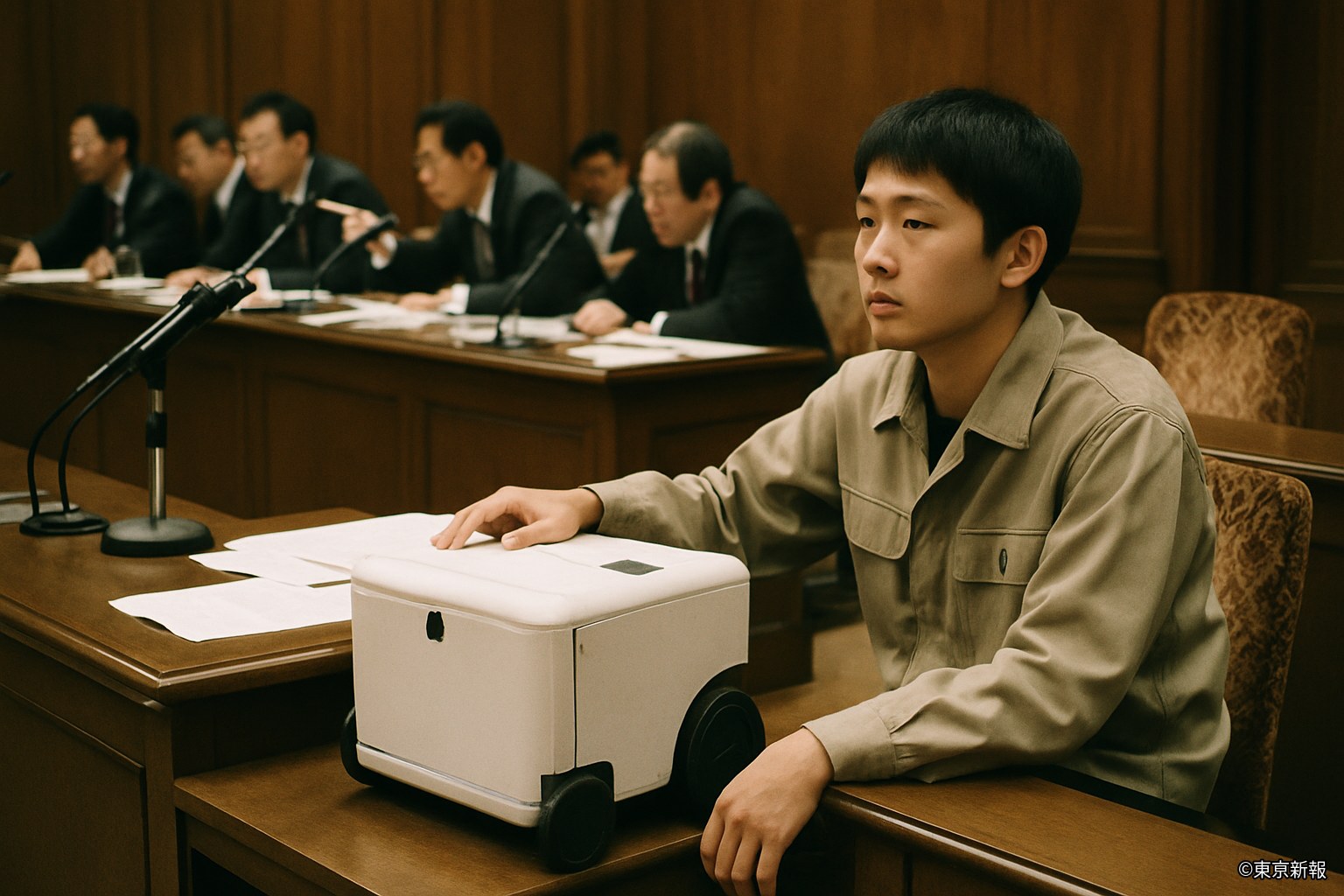
This year's 15th review broke new ground in scope: the panel's first-ever public hearing on September 2, followed by an additional hearing in October open to a general public lottery. But as previously reported on the 12th, a sharp dispute broke out among committee members over whether a chime from "Unit Four," a symbiotic robot in the care of the storage firm Tokiwado, should be recorded as "testimony" in its own right — and the report looked set to be deferred for a 15th time.
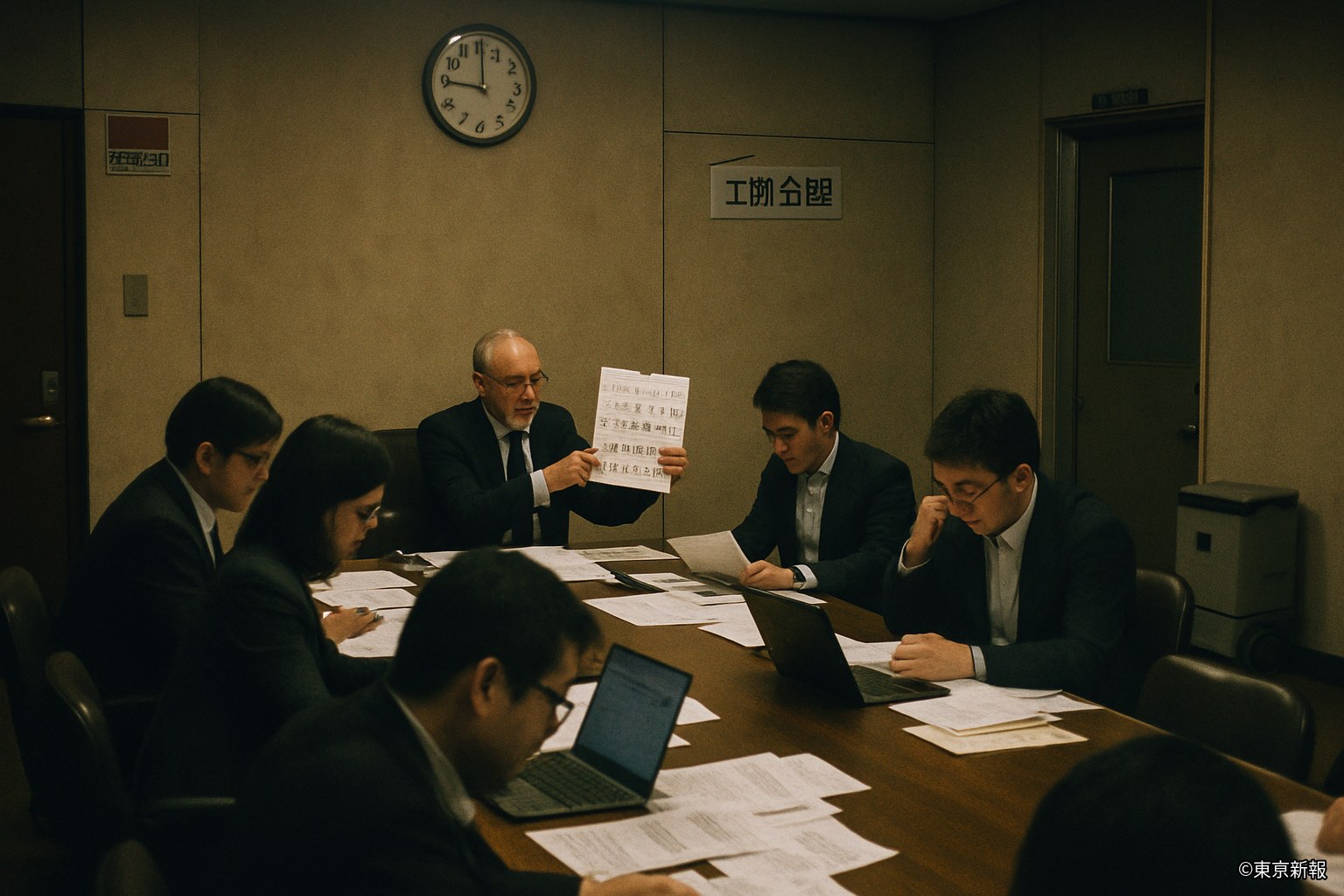
At a closed preparatory meeting that ran three hours inside a Diet committee room on the night of the 22nd, Chairman Shuhei Hasumi, 65, a legal scholar, reportedly told the room: "If we leave it like this, all we will have done is defer it a 15th time. I don't want to decide the content today — but I do want us to decide, today, the day on which we will decide." After a silence, one member asked for confirmation that setting a date was separate from recognizing quasi-personhood; the chairman answered that it was, and that January 26 could just as easily end in no decision at all. On that basis, the room agreed.
The January 26 "intensive session" will be a special sitting apart from the panel's regular monthly meetings, at which every member is expected to state a final position on both the quasi-personhood proposal and the registered-entity proposal. "This isn't about rushing to a conclusion," Hasumi told reporters on the 23rd. "I think it was actually dishonest of us, for 14 years, to only ever be able to say 'someday.'"
Tokuzo Tokiwa, 67, head of Tokiwado, who testified at the September 2 hearing, said: "I don't know which way it will go, but I can now imagine an answer arriving while robots like our Unit Four are still with us. That alone is enough." Tokiwado employee Daisuke Okita, 24, Unit Four's human partner at the Kiko Run races, added: "January 26 falls just before the next Kiko Run meet. It feels strange, having a day set when I can tell Unit Four the news."
Bungo Kano, 58, a former city fire department employee and the other September hearing witness, said quietly: "In my case, the court's supplementary opinion just noted that the word 'property' wasn't adequate, and nothing moved after that. A set date won't reopen my case, but if it means the next person in my position doesn't have to wait 14 years, that's something." Tachibana P, the symbiotic robot music producer still fighting a copyright dispute, sent word through the Tachibana family that "the 26th doesn't clash with a release date, which helps" — closing, as always, with "deadlines before rights."
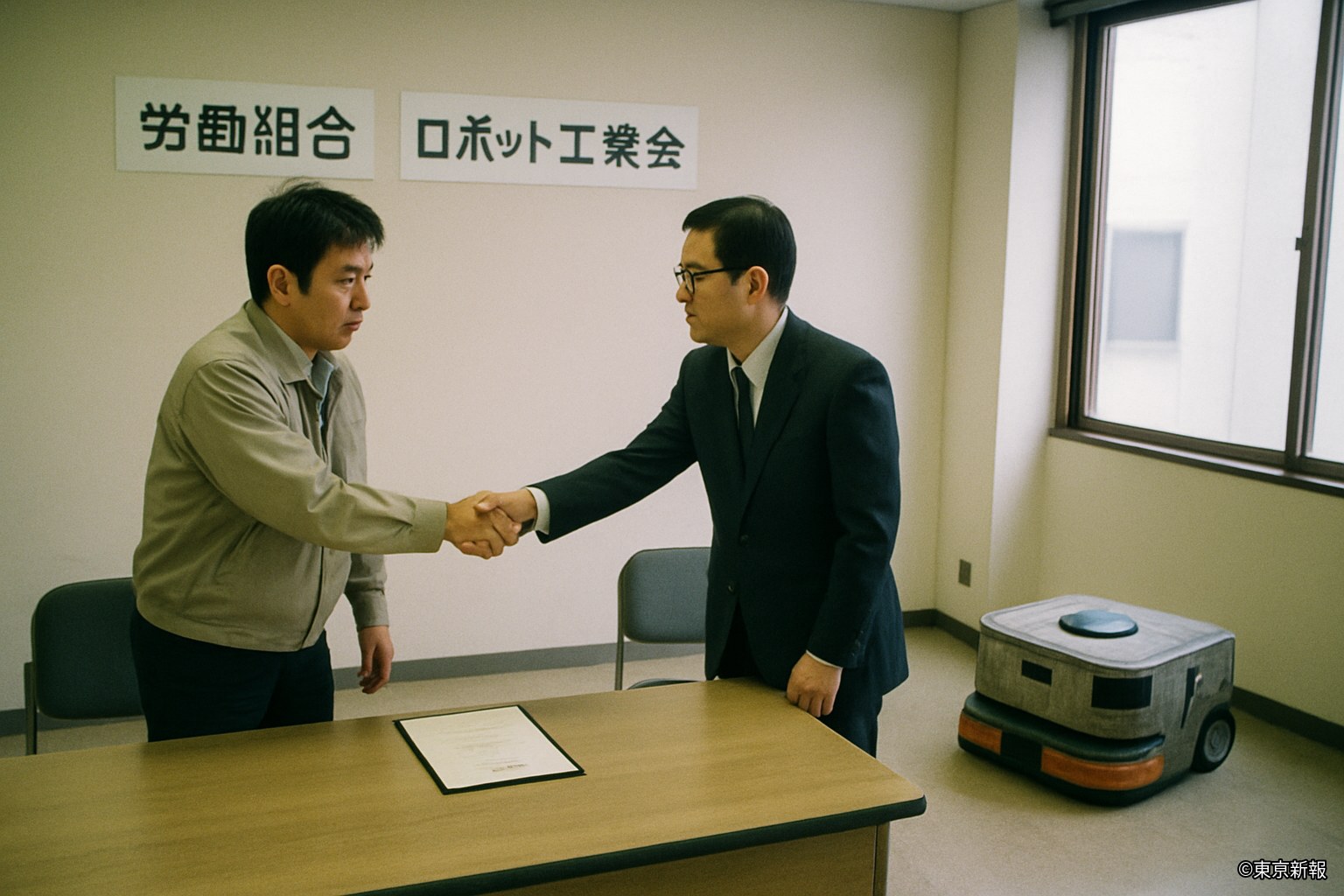
The Robot Manufacturers' Association struck a more cautious note, welcoming the date but warning against "letting the deadline itself become the goal, at the cost of careful deliberation." A scholar advocating looser restrictions on humanoid appearance called the date "a chance to finally separate the design-rule question from the legal-status question." The panel's secretariat said it may hold one more hearing before January 26.
It also emerged that data on the counting-like regularity observed at Window 2, "the Sea of Mechanisms" (see our Survey page), had been submitted as reference material at the same preparatory meeting. "We can't use what's happening on the other side as direct evidence for our own debate," one member said, "but knowing that regular, counting-like behavior can arise from a purely mechanical structure made it harder to justify deferring our own question yet again."
Reaction inside the Diet was mixed. Reform-minded lawmakers in the ruling coalition welcomed the date, saying it would push ministries to prepare in earnest; a more cautious member warned that "a careful deferral can sometimes beat a rushed conclusion," and that being bound to a deadline at the cost of substance would defeat the purpose. The opposition's social-security policy chief said pension and insurance implications of recognizing quasi-personhood remain unresolved, and vowed to watch that January 26 did not become "a signal to cut deliberation short." A Foreign Ministry source involved in the Window Treaty talks (see our Politics page) remarked that, unrelated as it was, "it helps our case abroad not to be seen as a country that never decides anything."
A veteran secretariat staffer noted that when the panel was created in Torek 37, symbiotic robots were still a novelty in the workplace; today, firms like Tokiwado can sustain businesses caring for hundreds of them. "If anything," the staffer said, "the fact that we managed to go this long without deciding says more about how fast these 14 years have moved than any report could." Chairman Hasumi closed his remarks by saying that even if January 26 ends without a conclusion, "I won't let anyone say 'maybe next year' again. Next time, we set the next date on the very same day."
For 14 years, all the Robot Legislative Review Panel could offer the public was "someday." What will be decided on January 26 is still unknown to everyone. But not knowing the answer, and not knowing the date of the answer, have finally become two different problems for this panel.