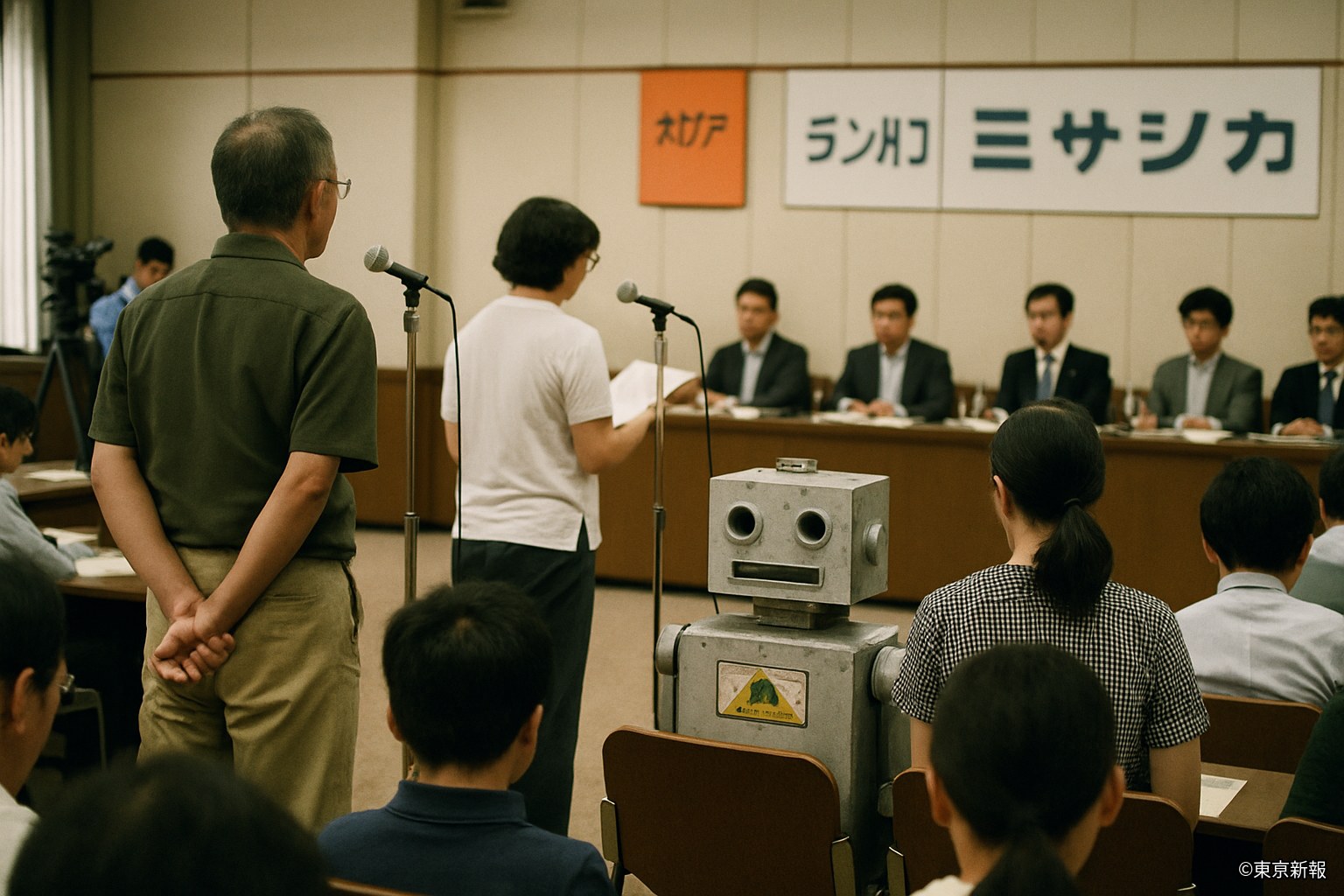
Robot Law Council holds its first hearing with formally invited speakers
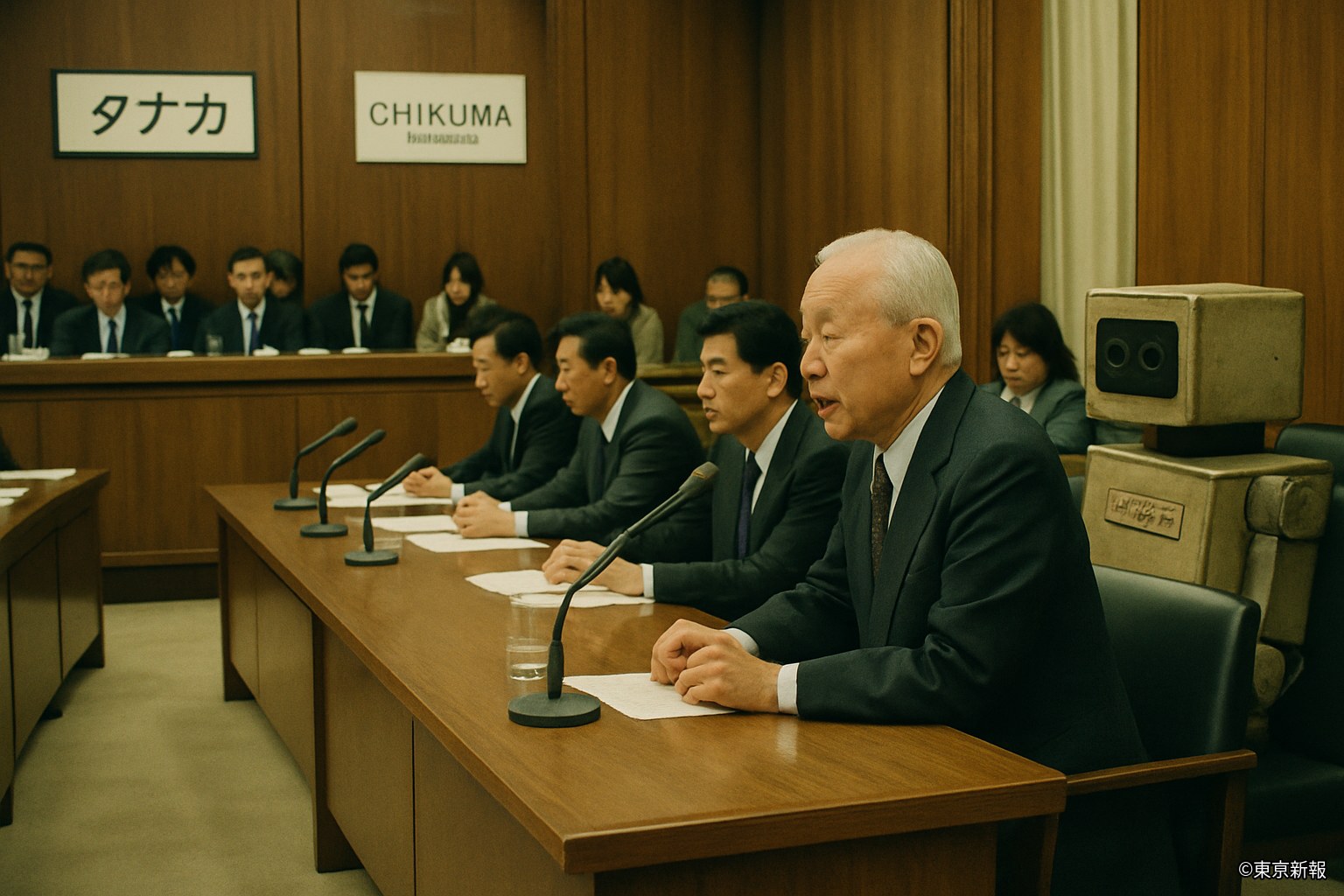
The Robot Law Council held a hearing on the 2nd toward its 15th round of recommendations, formally inviting four public speakers for the first time since the council's creation. Among them was the owner of Tokiwado, a business that offers "perpetual custody" for companion robots, and a party to a past Yuragi-related lawsuit. The council is due to report by year's end — which, if it happens, would come fourteen years after its first recommendation.
Until now, the council's sessions had mostly featured citizens who came to observe raising comments from the gallery; on August 29 a hearing on the "registered subject" proposal took comments in that open format. This time was different: the council formally designated four people in advance as public speakers and gave them a dedicated slot to testify — the first hearing of this invited format since deliberations over companion robots' legal status began.
The four speakers were Tokuzo Tokiwa, 67, owner of Tokiwado, a business offering "perpetual custody" for companion robots; Bungo Kano, 58, a former city fire department employee who was party to the Torek-42 disaster-robot damage lawsuit; a representative of the robotics industry association; and a scholar who advocates lifting the ban on humanoid appearances.
Kano had been the officer responsible for a disaster-rescue robot damaged while assisting a fire operation. The original lawsuit was argued under a straightforward property-damage framework, but a supplementary opinion in the ruling went further, noting that "this cannot be exhausted by the word 'object.'" In his testimony, Kano said, "I did not lose a machine. I lost a partner's record" — bringing his own experience into the debate over the proposed "quasi-personhood" status. In the gallery sat owner families alongside a non-humanoid companion robot.
Tokiwa, drawing on his business's practice — over 300 robots in custody, a three-month wait for new clients — argued that a concrete system was needed for how robots continue to exist after an owner's death or retirement. "The ones in our care wake up on activation day once a month, even after their owner is gone. Whose name greets them that day? Right now, there's no answer."
Beyond its 300-plus robots in custody and three-month waitlist, Tokiwado has also seen a rise in "living reservations" — active robots pre-registered by owners who are still alive. "More people want to settle what happens after them, while they're still here," Tokiwa said. "Whether the robot side has intent of its own, honestly, I still don't know. But I feel the value of treating them as if they do, every day on the floor."
A written statement was submitted by the companion-robot music producer known as "Tachibana P," who did not appear in person. It read, in full: "I support registration — provided the procedure meets the deadline." The blunt line, fitting for someone embroiled in a copyright dispute, reportedly drew laughter in the chamber.
The industry association's representative argued that quasi-personhood should be discussed while keeping the current non-humanoid appearance standard intact. The humanoid-ban scholar took the opposite tack, urging that the legal-status question be advanced separately from the appearance debate. The four speakers did not reach agreement.
The council's first recommendation was compiled in Torek 37 (2012), but every one since has closed with the same line — "further consideration to continue" — deferring any substantive conclusion. "The repeated deferrals aren't negligence so much as the fact that the moment a decision is made, someone is left behind," one council member said. "Grant quasi-personhood, and ownership interests grow uneasy. Withhold it, and people who've lived through what Kano described are left out in the cold."
The council plans to hold an additional, publicly solicited hearing in October, aiming to bring a wider range of voices into its recommendation alongside today's invited format. Its report is due by year's end — which, if delivered, would mark fourteen years since the council's first recommendation in Torek 37, a possible turning point after years of repeated postponement.