First Interim Report on Yorusagi Survey: 32 Tagged, Broadly Matching Earlier Estimate
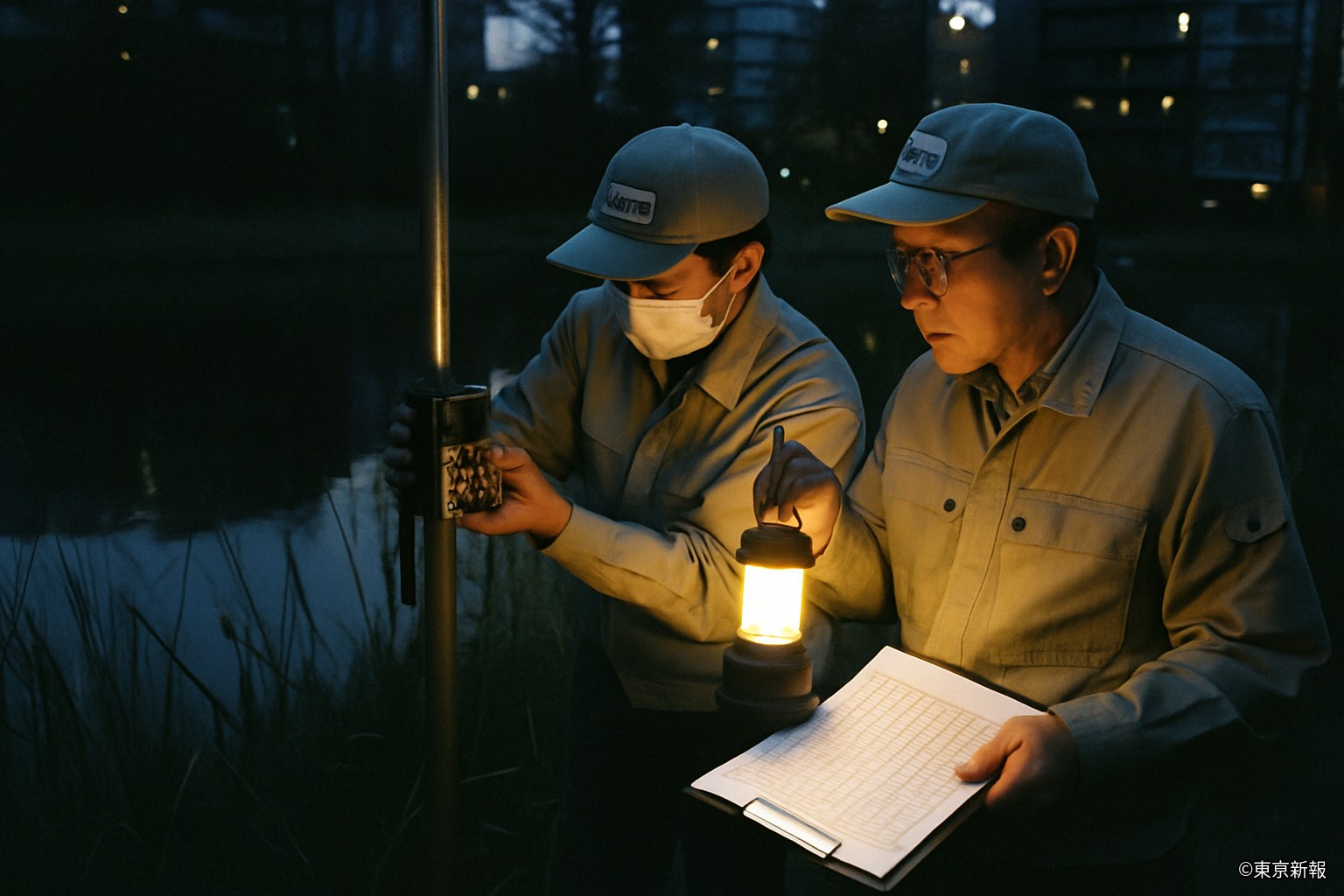
The TDA's biological management division released its first interim report on the 16th in the three-year ecological survey of the Yorusagi, the drift species designated a specified drift species on Aug. 31, as previously reported. Over a month and a half of observation, 32 individuals have been successfully tagged — broadly consistent with the earlier visual estimate of around 40. The division also issued its first penalty under the feeding ban.
As previously reported on Aug. 31, the Yorusagi, which has settled in an urban green space in North ward, became the twelfth species designated a specified drift species, and a full-scale three-year ecological survey using twelve observation cameras and individual tagging began that autumn. On the 16th, the TDA's biological management division released its first interim report, a month and a half after observations began on Sept. 1, stating that 32 individuals have now been tagged. The visual estimate at the time of designation was roughly 40; the division explained, "Since these birds are active only at night, we can't expect to capture every individual. A confirmed count of 32 against an estimate of around 40 actually looks consistent to us."
Breeding season, overwintering behavior, and diet all remain unconfirmed. The tagged birds' range stays largely within the green space and roughly 800 meters around it, which the division called "the survey finally catching up with our initial judgment that the population had settled here."
Regarding the feeding ban that came with the designation, the division announced on the 16th that it has issued its first penalty, against a man in his seventies who had been habitually scattering bread crumbs near the green space. He reportedly said, "It's gotten cold, and I figured they must be hungry." The division commented, "We understand the gesture came from kindness, but feeding obscures the natural changes in range and population we're trying to track. It undercuts the survey we just started."
Meanwhile, interest surged around the district's planned "Yorusagi Observation Walk," set to begin in November with a lottery for twenty groups: applications at the announcement stage already exceeded six times the capacity. Tamotsu Nagata, 67, a birdwatching enthusiast living near the green space, said, "At first, a bird that doesn't call felt like it was missing something. But once I got to watch the tagging and started seeing each one as an individual with a name and a number, coming out here became something I look forward to." Nagata said the ward has asked him to help guide the walks.
The ward's parks and green spaces division explained the thinking behind the event: "The issues previously reported in August — nighttime photography under strong lights, crowds of tripods — made us wonder whether an observation walk could redirect residents' interest to the right distance." According to the division, penalties across all specified drift species combined have numbered only a handful to date, and this marks the first case this year. The core of the Yorusagi's biology — its diet, its silence — still depends on the three years of observation ahead. "We're proceeding exactly as planned at designation: cull before you count, and you'll never know if the count changed," the division concluded. "This interim report only confirms the numbers line up. It hasn't solved the mystery."