Twenty-four "unrecorded" tremors found on half-century-old chart paper
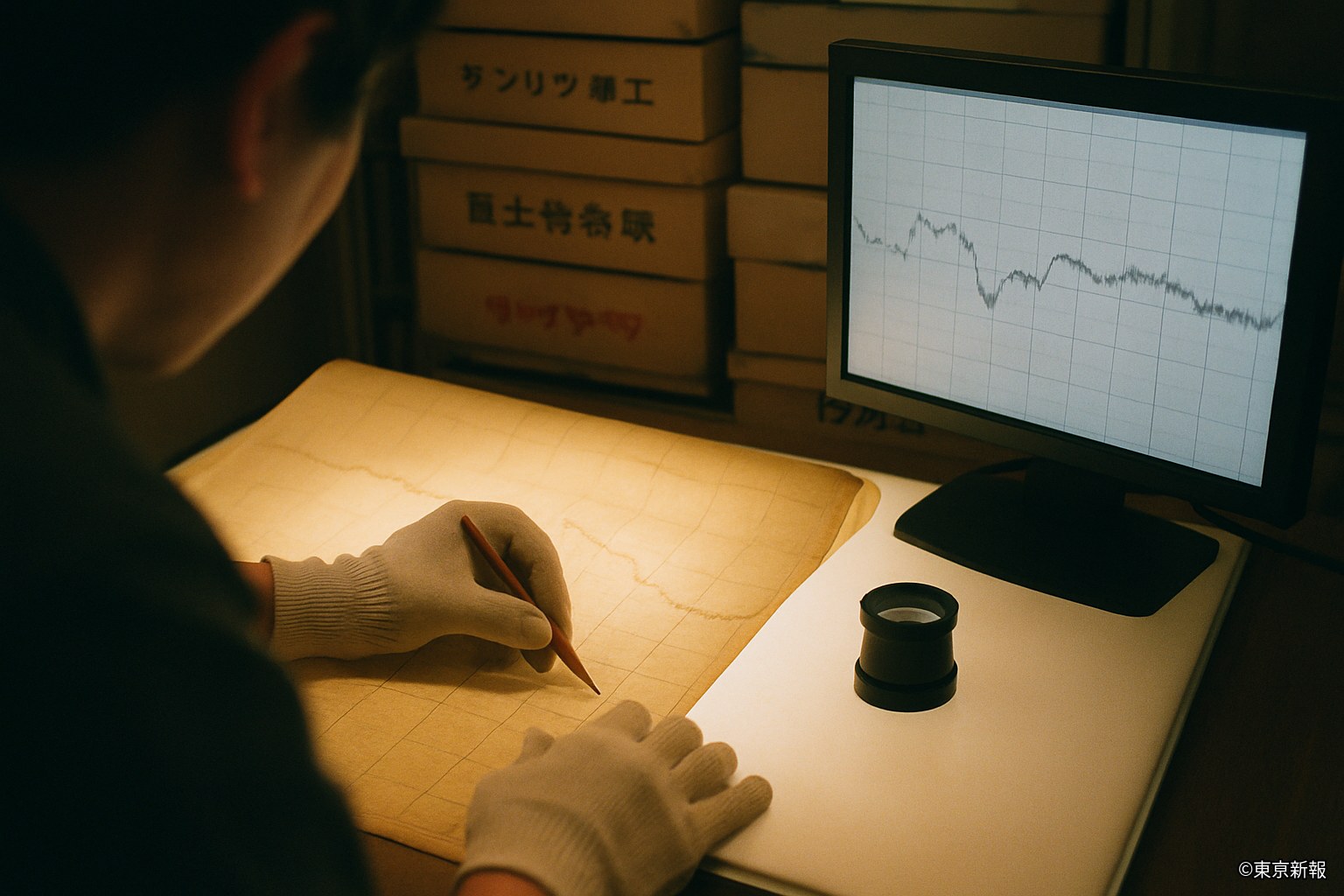
The Seventh International Joint Research Project on the origins of the Yuragi released its first interim report on Sept. 1. Its re-analysis of early observational records has identified 24 minute fluctuations on chart paper from 1976–79 that fell below the detection thresholds of the era. Separating them from instrument noise remains to be done.
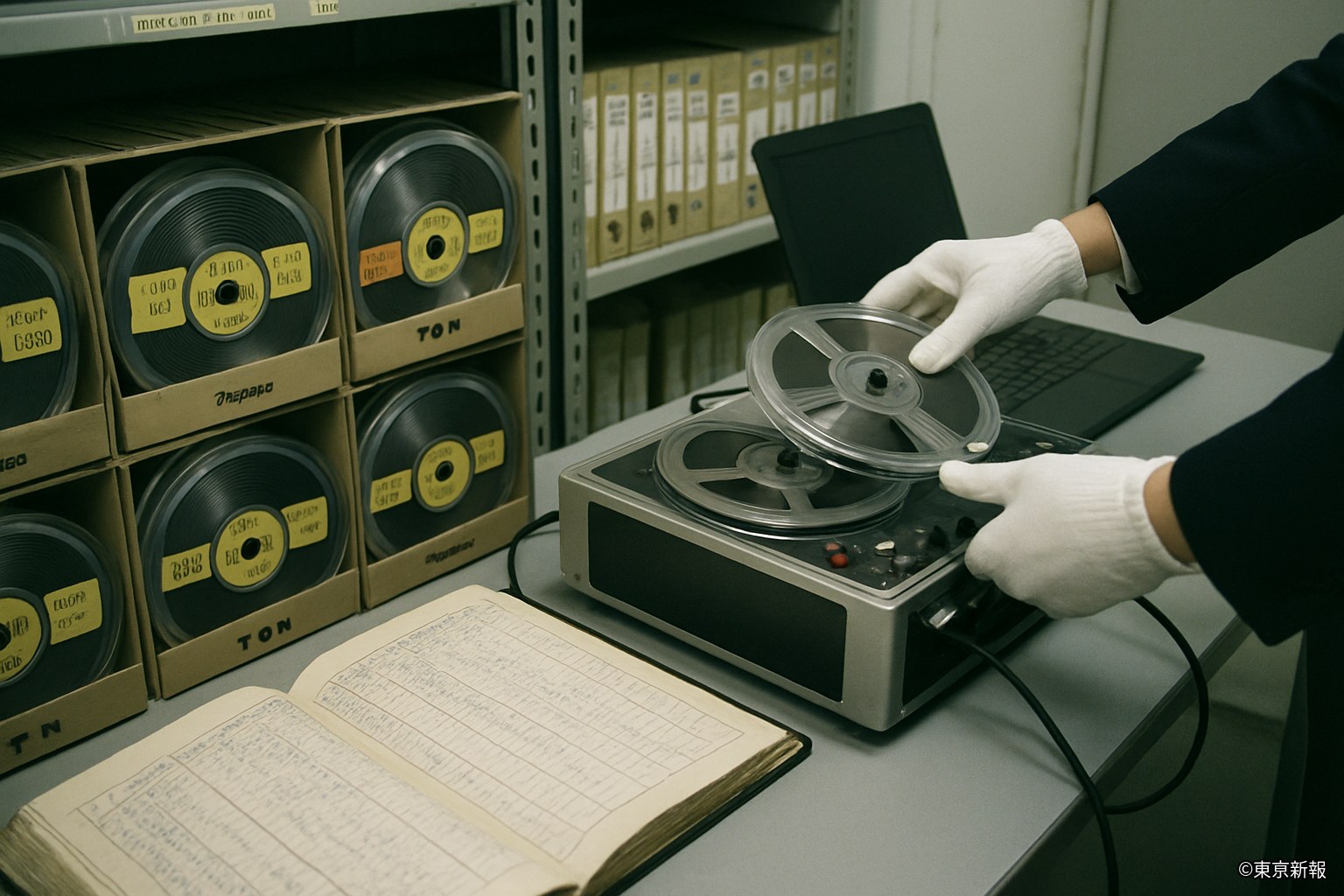
The target is roughly 12,000 rolls of analog records from 1976, when the observation network was first built, through 1979. Peeling apart humidity-fused rolls and scanning faded ink traces by hand, the twelve participating institutes have digitized only about 30 percent. "There is a joke that the digitization will be our greatest scientific contribution," the lead researcher said. "It is no longer entirely a joke."
Observers of the era logged a "detection" only when the recording needle swung past a set width. The 24 events are smaller than that — faint swings lasting a few minutes, absent from every ledger. Asked about their distribution, the team said no concentration by season or site "can be identified at this stage." The finding suggests early Yuragi may have occurred more often than the records show; the report also devotes one deliberate line to a caveat: "These results derive from records after 1976 and cannot be used to argue the timing of onset itself."
The hardest problem ahead is telling true fluctuations from the noise of fifty-year-old instruments. The next phase will cross-check against raw network data supplied by the TDA and unify noise criteria across all twelve countries. Asked what this means for the "1975 problem," the lead researcher reached for the same phrase as at the opening session: "We said we would not bring new hypotheses — we would ask the old data again. Paper does not hurry its answers. Neither will we." A senior TDA official told this paper: "The paper that observers half a century ago refused to throw away is now a primary source. Not throwing things away is itself a kind of science."