Liquid sealed in Fukagawa drift object "differs from known water"; opening postponed
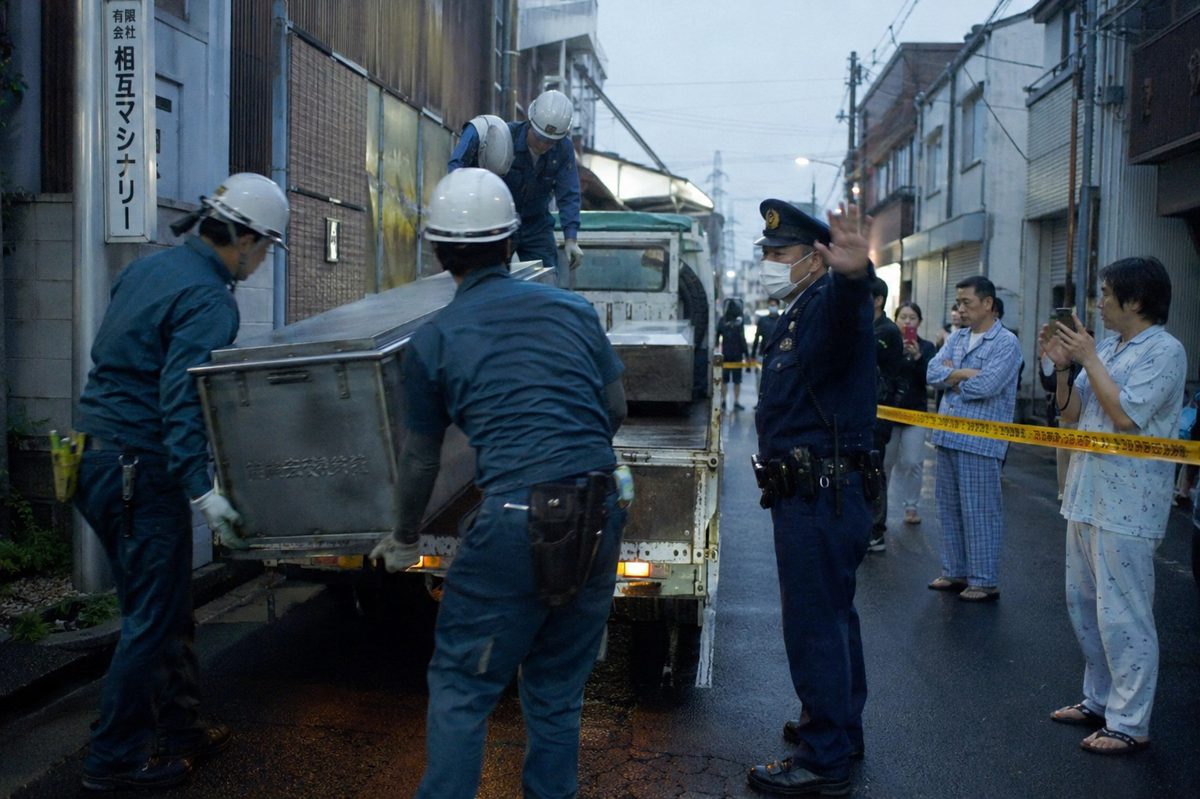
Regarding the drift object recovered in Fukagawa 2-chome, the Third Appraisal Center announced on the 29th that non-destructive analysis of the liquid sealed inside its container found an isotope ratio differing from known water. The quarantine committee will postpone opening it for now.
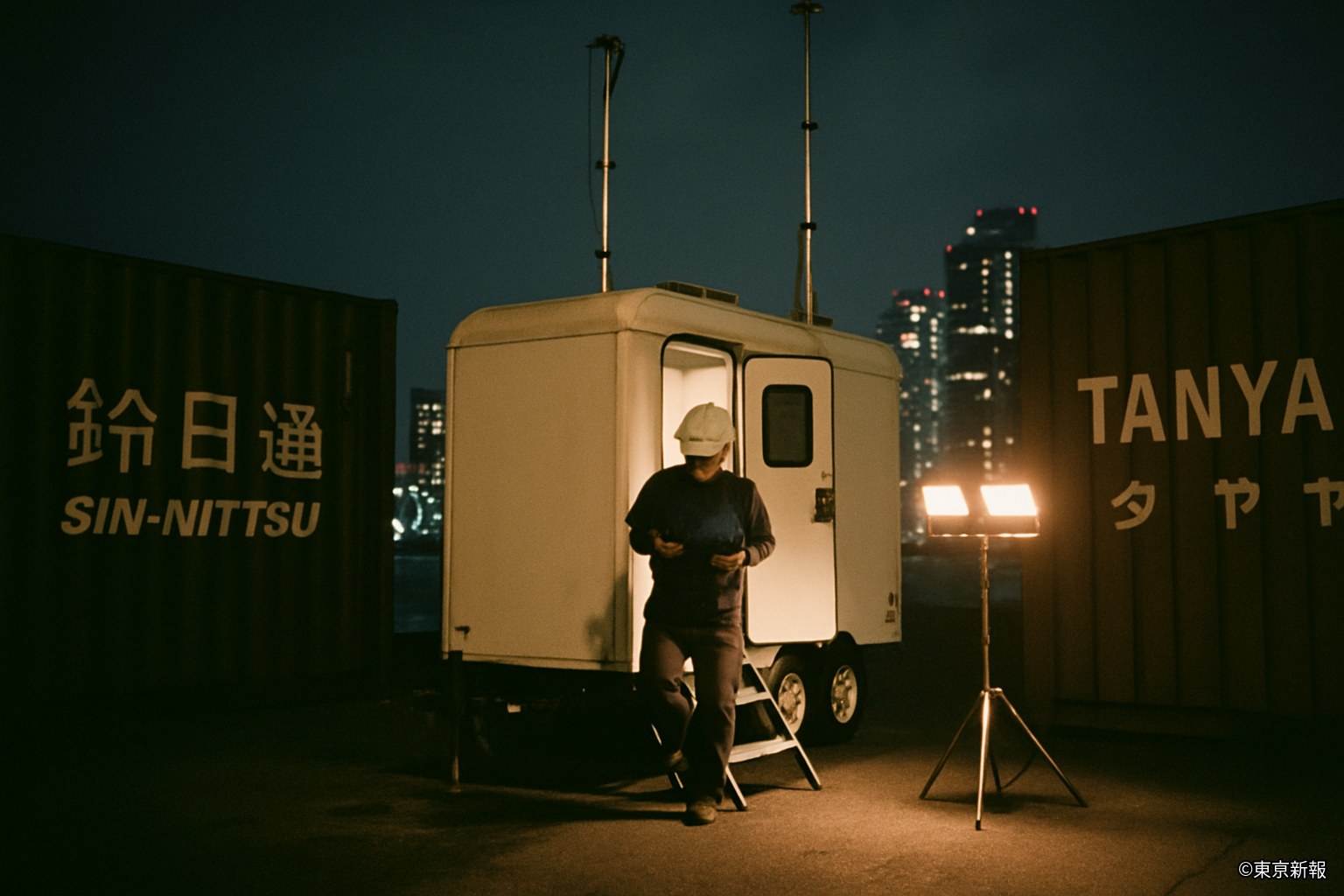
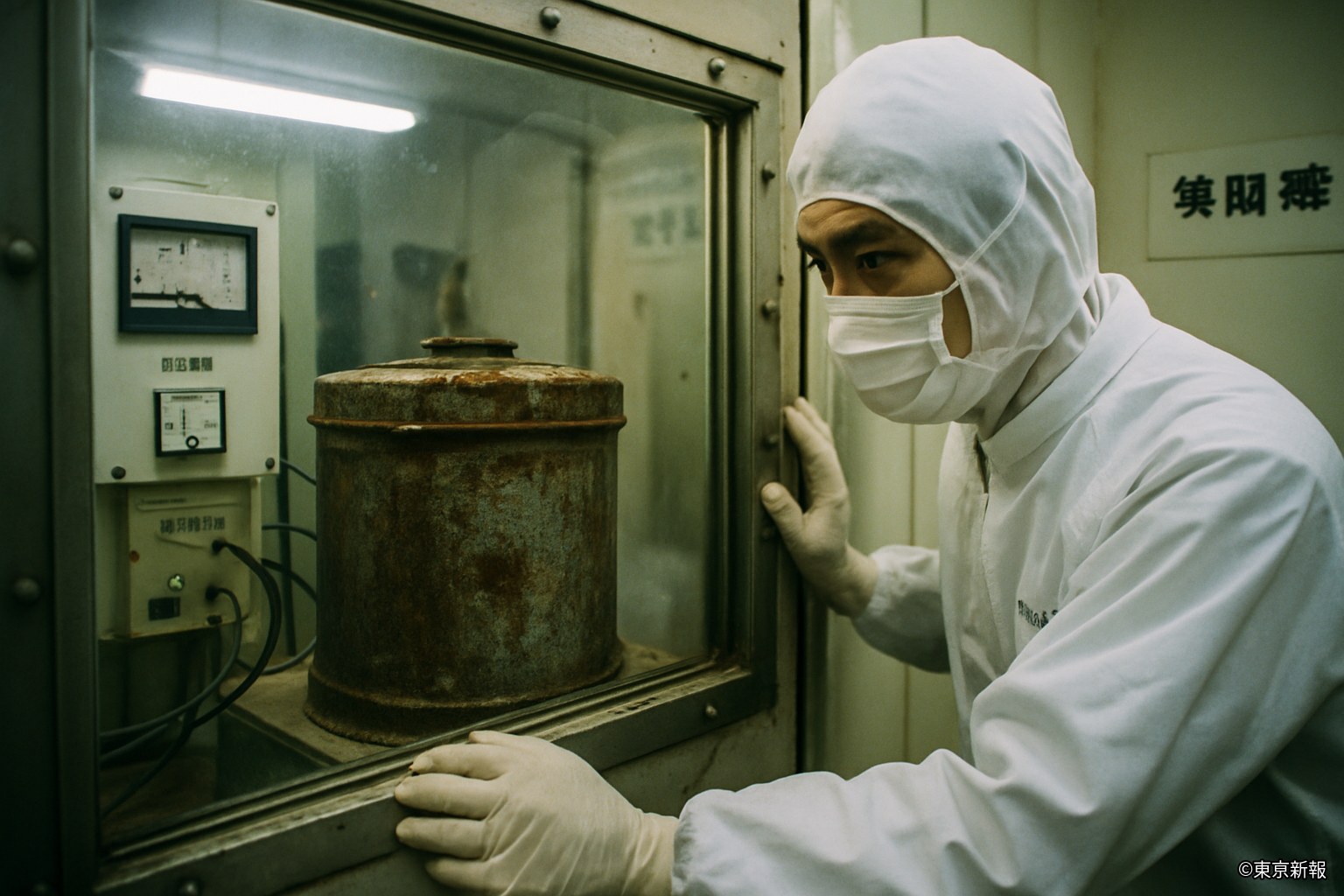
The three drift objects have been held in the isolation wing of the Third Appraisal Center in Kameido since their recovery on the 21st. X-ray and neutron imaging confirmed about 180 liters of liquid inside the largest container. Trace sampling through the container wall found the liquid resembles water, but its hydrogen and oxygen isotope ratios "match the water of no worldline in the observational record," the center announced.
"No toxic component has been detected," the chief appraiser told a press conference. "But there is a distance between 'not toxic' and 'safe.' How water with a different isotopic signature behaves in a living body — there is no precedent to consult." Imaging of the other two containers shows fibrous contents in one; the other is nearly empty.
The center's quarantine committee voted unanimously on Thursday night to postpone opening all three. "The scholarly value of the contents is extremely high, but at present the benefit of opening does not outweigh the risk of losing the sealed state," it said. The inscriptions on the container surfaces have been fully transcribed and registered with the international joint study's reference database; matching is expected to take months.
The Dimensional Boundary Control Act sets no deadline for appraisal. The center currently holds a backlog of about 1,400 drift objects, the oldest recovered 19 years ago. "Quarantine work is the long way round, done properly," the center said, adding there are no plans for public display.
Isotope ratios serve as a "fingerprint" for telling worldlines apart: matter that permeates carries the subtly distinct water and atmospheric composition of its point of origin, and comparison against the accumulated reference database can suggest where a drift object came from. The database currently holds 147 registered signatures — yet fewer than a third of all drift objects can be traced. "A non-match is not a disappointment," says a retired appraiser from the center. "It may be signature number 148. Matching is patient work. A fingerprint I registered in my working years matched a new object after I retired — an answer twenty years in arriving."
Whether the three Fukagawa objects even share a single origin is not yet settled: the script of the inscriptions differs subtly among the three, leaving open the possibility of mixed provenance.
On the street in Fukagawa 2-chome where the objects were recovered, people still leave flowers and drinks. A nearby florist says a few customers a day buy cut flowers "to offer at the place where the drift objects were." Those who leave them cannot quite explain to whom they are offered. The neighborhood association has posted a notice — offerings will be cleared after three days — and replants the cleared flowers in the children's park nearby. "Somebody's luggage from over there arrived in our town," said the association's 70-year-old chairman. "That's all it is. And somehow, that's enough to make everyone want to leave something."