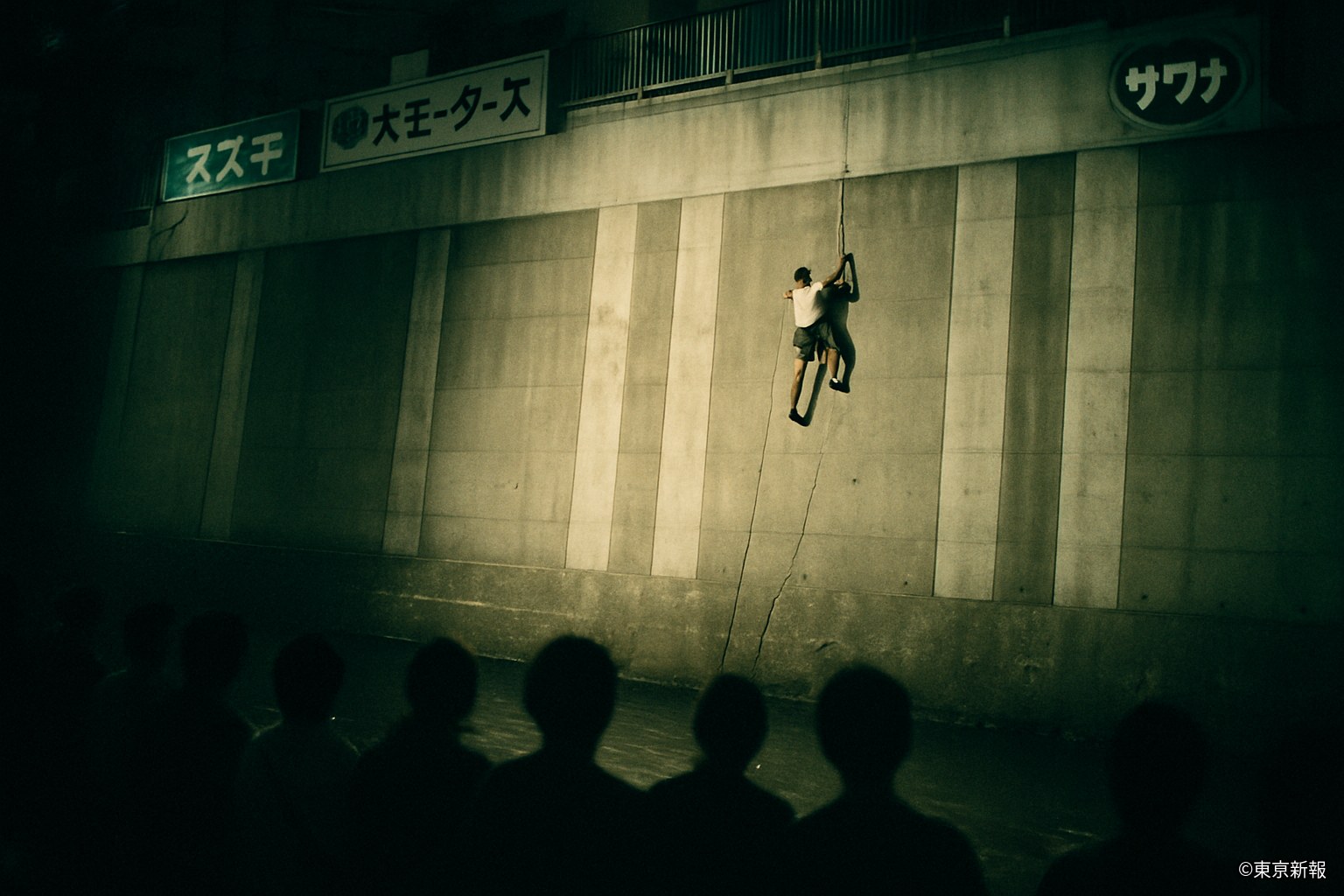
"We came to climb all of them": Edagawa High's nine in a last tune-up at the old Shinonome sluice gate
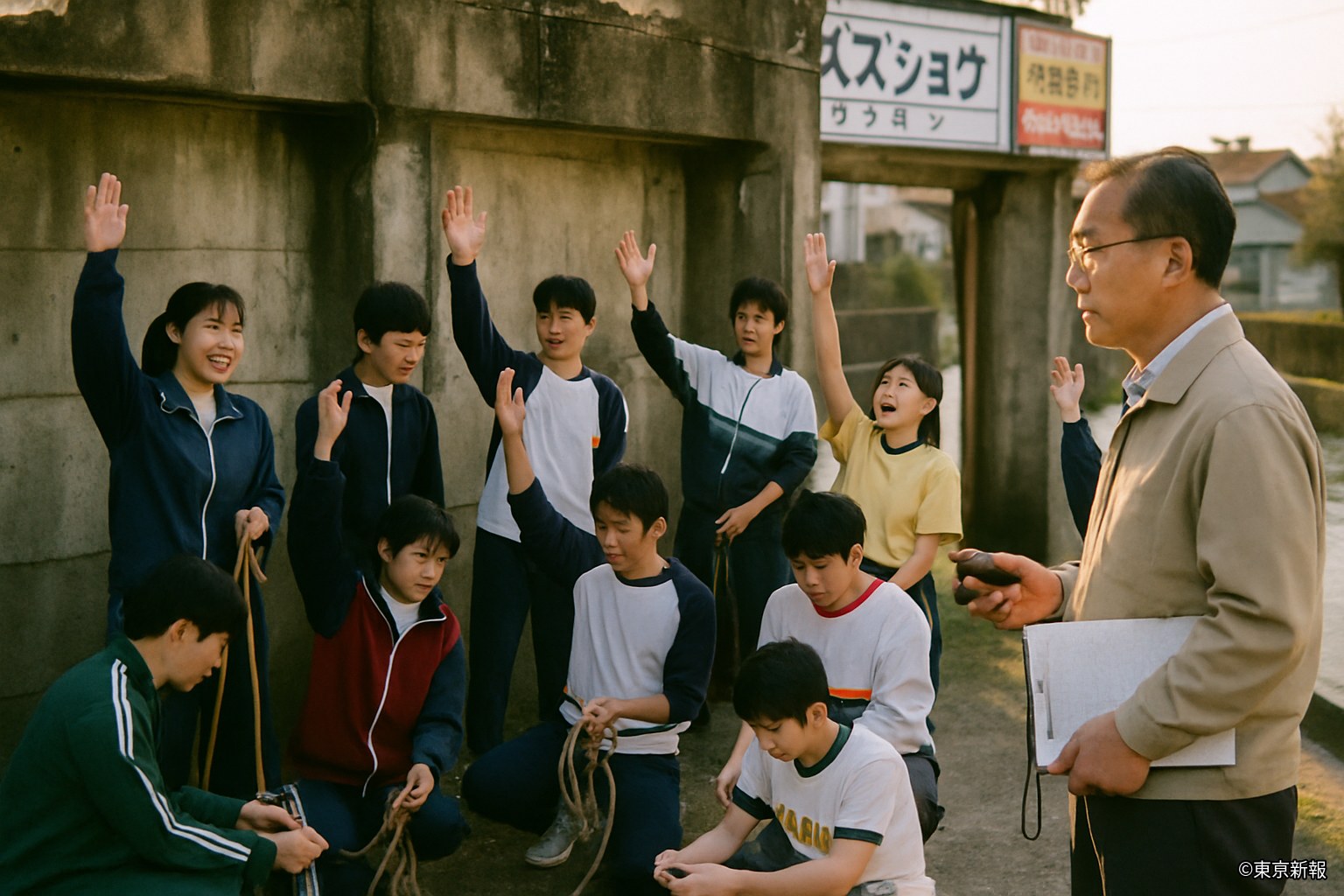
The autumn student qualifiers for wall racing open on Sept. 5. On Sept. 1, one of the 62 first-time entrants — the wall racing club of Edagawa Metropolitan High School — held its final tune-up on the face of the old Shinonome sluice gate, the wall it uses for practice. Nine members, two years since founding, and a first-round draw against Toyosu Technical, last autumn's runner-up.
The face of the old Shinonome sluice gate stands four meters lower than the Kameido Second Wall used in competition, and about half as wide. Only three lanes can be marked on the upper section, so the nine members cannot climb at once. The canal authority permits use on weekdays from three in the afternoon until sunset; on this day that came to one hour and fifty minutes of actual practice.
The nine spent much of it on rope work, repeating aloud the double checks they had learned only weeks earlier at the federation's safety course, one climb at a time. "Anchor, good." "Knot, good." "Release, good." The calls echo off the inside of the gate and carry to the far bank of the canal. "At first it was embarrassing, because everyone walking along the canal looks over," said a second-year member, 17. "Now I've worked out that being watched is what stops you skipping a check."
The club was founded two years ago by four then-first-years, for the single reason that there was a wall nearby. The teacher who agreed to advise it, a 41-year-old mathematics instructor, has never competed. "The safety course was the first time I ever put on a harness. What I can teach is the safety check, and mathematics. The business of climbing angles is, in fact, mathematics."
He has his students log hold positions and elapsed times after every session. Two years of notebooks now fill six volumes. "We can't win on size or experience. If we win at anything, it's the number of times we've climbed the same wall. Numbers go up if you count them." Of the nine members, three are first-years who entered this spring, and one of them will take the fourth lane in the opening round four months after joining.
A record 184 schools entered this autumn's qualifiers, 62 of them for the first time. The federation attributes the surge to a rule taking effect last year that makes attendance at its safety course a condition of entry; schools that took the course tended to conclude they might as well compete. "More entries means more places an accident can start," a federation official said. "This year we added an item to the referees' course: treat a first-time school's rope work as something to doubt. It sounds rude, but being doubted is the first gate a new school passes through."
The qualifiers run three days — first and second rounds on day one, third round and quarterfinals on day two, semifinals and final on day three. Lanes are drawn by lot, and the fourth lane sits at the edge of the wall, taking the river wind head-on. "Wind can't be read with mathematics," Edagawa's adviser said wryly. "That part I leave to whichever of them has the instinct."
At August's draw, the captain, 17, said flatly that the team had come to climb every wall there was. This time he added a little to it: "When the opponent is strong, you spend longer looking up. If you think of it as practice at looking up, there's nothing to lose."
Toyosu Technical, the first-round opponent, finished second last autumn, has 42 members and its own wall on school grounds. Federation records show the two schools have never met. "A first-time school is what frightens me most," Toyosu's head coach told this paper. "We have no data on them, and they have nothing to lose. It amounts to the same thing."
The old sluice gate was retired when the canal was rebuilt and is kept by the canal authority for maintenance use. The club petitioned the management office for permission to use the face when it was founded two years ago; the conditions were to be off the wall by sunset and to drill no new holes in it. The team's anchors are existing inspection fittings. "Because we can't drill, the lines are fixed," the captain said. "There's only one place to climb. So we climbed that one place a few hundred times. The first time I saw the competition wall, there were so many places to choose from that it actually threw me."
Edagawa's practice always ends before sunset. The municipal road along the canal falls within the nighttime restriction zone, still not lifted, and parents collecting their children must detour. "The pickup takes an extra fifteen minutes each way," said the mother of a first-year, 45. "I don't mind the waiting in front of that gate, though. They all come down off it with the same face on."
"We're the club that goes home early," the teacher said, laughing. "Finished before dark. If nothing else, I'd like that to become our tradition."
The autumn qualifiers run for three days from Sept. 5 at the Kameido Second Wall. Edagawa climbs on the morning of the 5th, in the fourth lane; a win puts them into an afternoon round the same day.