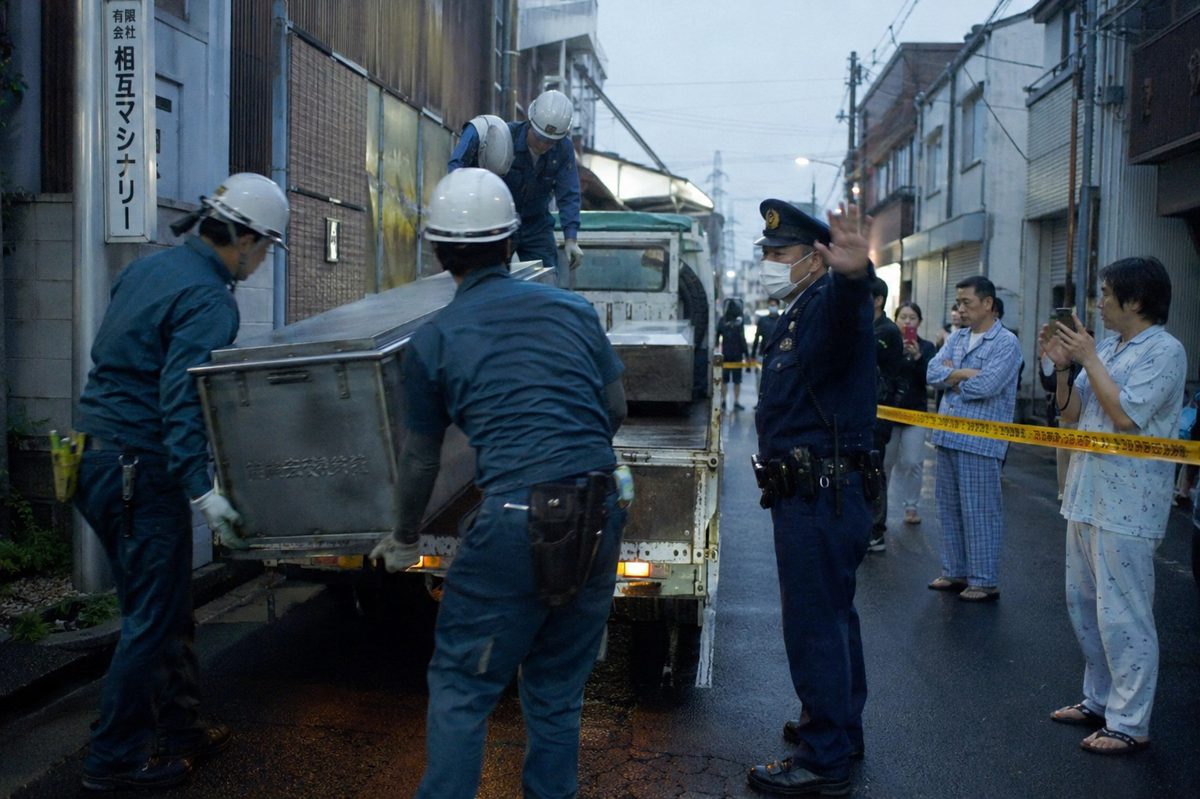
Guard seriously injured in bay warehouse district; TDA launches first nighttime removal operation
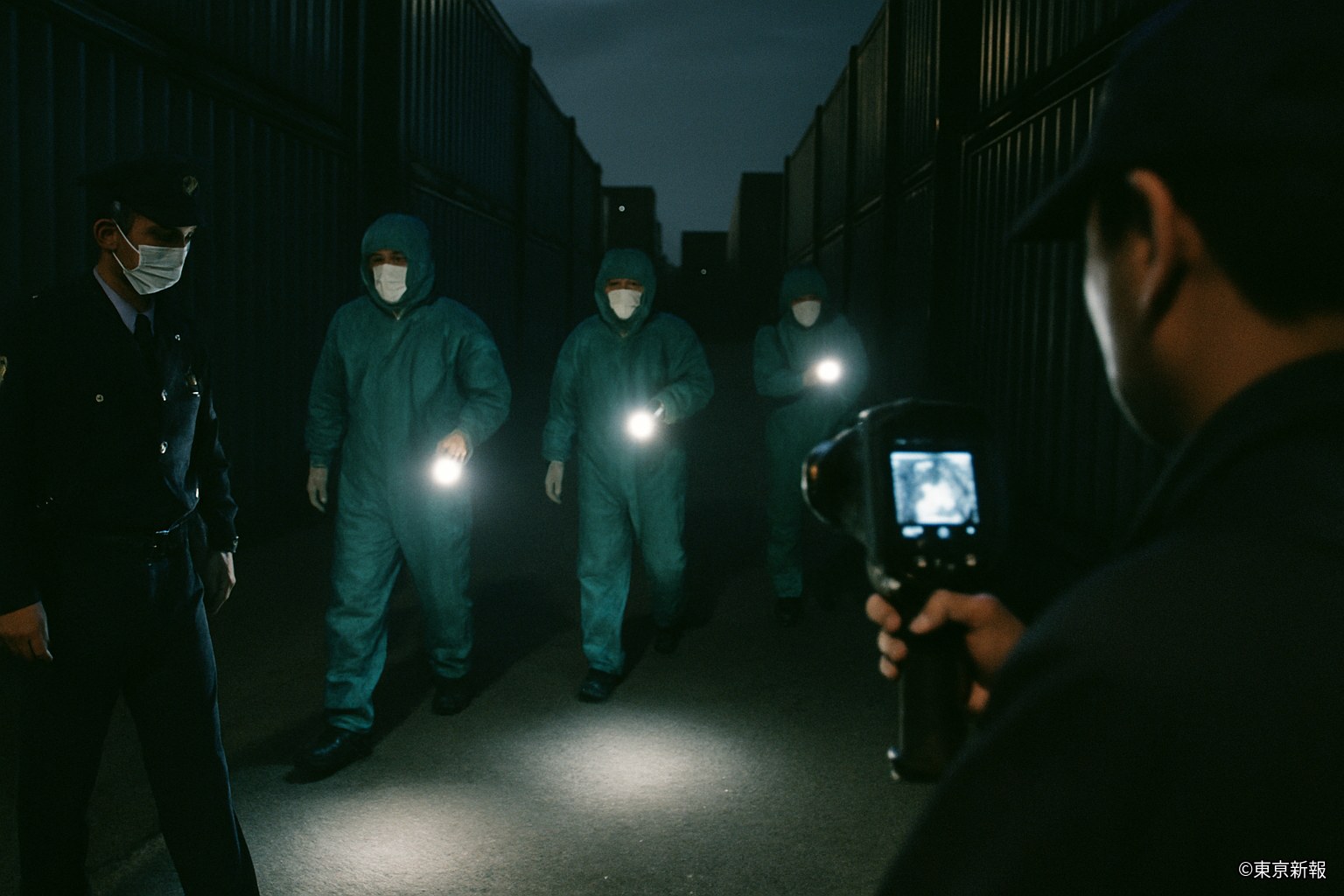
At around 2 a.m. on the 30th, a security guard, 52, patrolling a bay-area warehouse district was attacked and seriously injured in the arm and back. Based on traces left at the scene, the TDA's Biological Control Division believes the injury was caused by an unidentified drift species over two meters long, and launched a joint nighttime removal operation with police — the division's first-ever nighttime removal operation.
According to the security firm, the guard left the station house at 1:50 a.m. and entered the container yard on a solo round. His scheduled radio check was missed at 2:04 a.m. When a colleague reached him, he was down between the container rows; his flashlight lay some twenty meters away, still lit.
The guard reportedly said he was "pulled down from the dark — I never saw it. I only heard it breathing." His injuries are serious but not life-threatening. Four parallel claw-like gouges were left on a container wall at a height of about 1.8 meters; the Biological Control Division says they "match no known designated drift species" and that analysis of residue is being expedited.
At 3:20 a.m. the division and police sealed roughly forty hectares of the warehouse district and began the division's first nighttime removal operation. Removal operations are normally confined to daylight, when the target can be visually confirmed; this was the first invocation of the provision covering "cases where bodily harm has actually occurred and movement of the subject risks further harm." About sixty personnel are sweeping the container rows block by block with thermal imaging.
As of Sunday night the animal had not been found. "We have had two thermal contacts; both were stray cats," the division said. "We are redrawing the search area, including the possibility that the individual has left the district." On any link to this month's elevated permeation index: "We cannot say at this point." Light trucks have been positioned along the boundary with the neighboring residential area, nighttime entry is prohibited until further notice, and the city has asked businesses with night operations to suspend solo rounds.
A man who has worked the warehouses for twenty years said: "On night rounds, there's a spot deep between the container rows where the insects go quiet. Started last week." A dispatcher at a trucking firm added: "Among the drivers, word had been going around for ten days — don't go deep into Block C at night. Nobody says why. They just don't." The division is collecting such accounts as "valuable observational data" at a temporary desk beside the cordon; thirty-one reports came in on the first day, several of them describing sounds of movement across the container tops on dates before the attack. The division is assembling a timeline to estimate the animal's range.
"Removal operation" is the administrative term for a joint response by the TDA's Biological Control Division and police against a designated drift species confirmed to be dangerous. Since the framework was established in Torek 40, this is the 38th operation; 34 of the previous 37 ended in capture, with the animals transferred to the Kameido containment facility. Daylight-only operation has been the rule — partly for visibility, and partly because, as the operating regulations' commentary puts it, "pursuing a subject at night endangers pursuer and pursued alike."
A former division chief told this paper the nighttime invocation was "proper in itself — with a person injured, waiting for morning was not an option," but added: "A night operation is also a battle with the searchers' own fear. The longer you spend looking for what you cannot see, the more rigid the judgments on the ground become. Everything depends on not letting it drag on."
Removal operations prioritize capture; lethal measures are limited to "cases of realistic danger to human life." Captured drift species are, as a rule, assessed and then held at the Kameido containment facility.
On the first night of the closure, nearly every house in the neighboring residential blocks shuttered its rain doors. The neighborhood association considered its own patrols, dropped the idea at the division's request, and agreed instead that every household would leave its outside light burning until morning. A bento shop facing the street extended its hours for the personnel standing the cordon overnight, with a handwritten sign: "Reheating — as many times as you need."
A mother of an elementary-school child, 38, said: "Am I frightened? Yes. But what I told my child was: a dangerous animal has arrived, and the adults have gone to take it into protection. I didn't say 'exterminate' — because this is a child who reads the drift-species pages of the encyclopedia over and over."
At Monday morning's press conference, the question of lethal measures was asked repeatedly. The division chief answered, "As the regulations state" — then, after a pause: "In thirty-eight removal operations, this division has finished thirty-four times without losing anyone. On either side. We are taking our time so that the thirty-fifth ends the same way."
From his hospital bed, the guard passed a message through his employer: "Thirty years in this job, and this was the first time I was afraid. But I also hope they don't corner it too hard. That breathing wasn't an angry sound. It was the sound of something in trouble."
At the end of the interview, a division officer added: "They didn't ask to come here either."