Fukagawa drift object: instruments cleared, opening question goes to Sept. 16 hearing
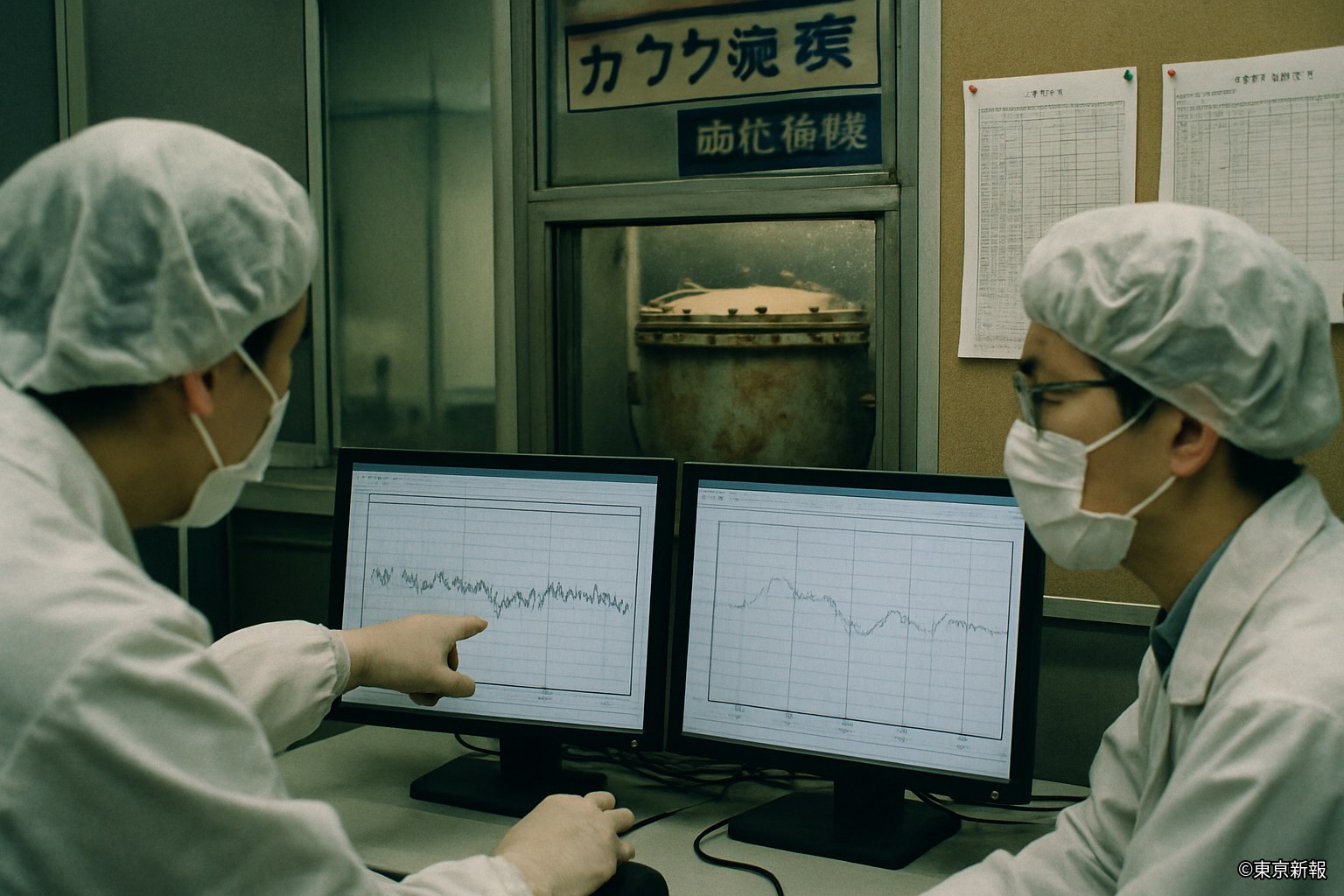
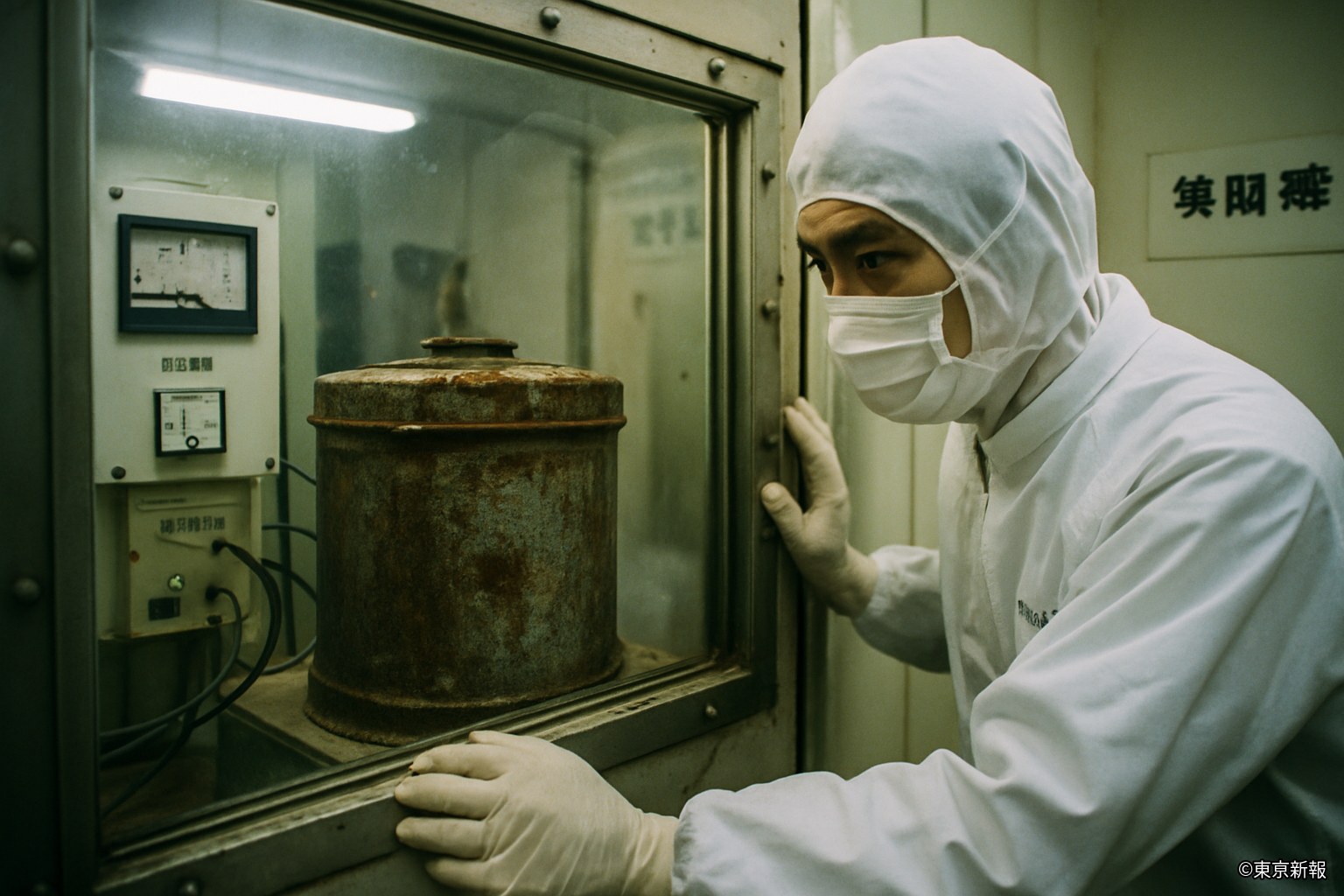
The joint working group at the Third Appraisal Center reported the results of a re-verification of its measurement and imaging systems to the quarantine committee on the 2nd, concerning a Fukagawa drift object recovered in July. It concluded the instruments were sound, but could not explain why the object's liquid surface fails to follow when the container is tilted. The quarantine committee will decide on September 16 whether to open it.
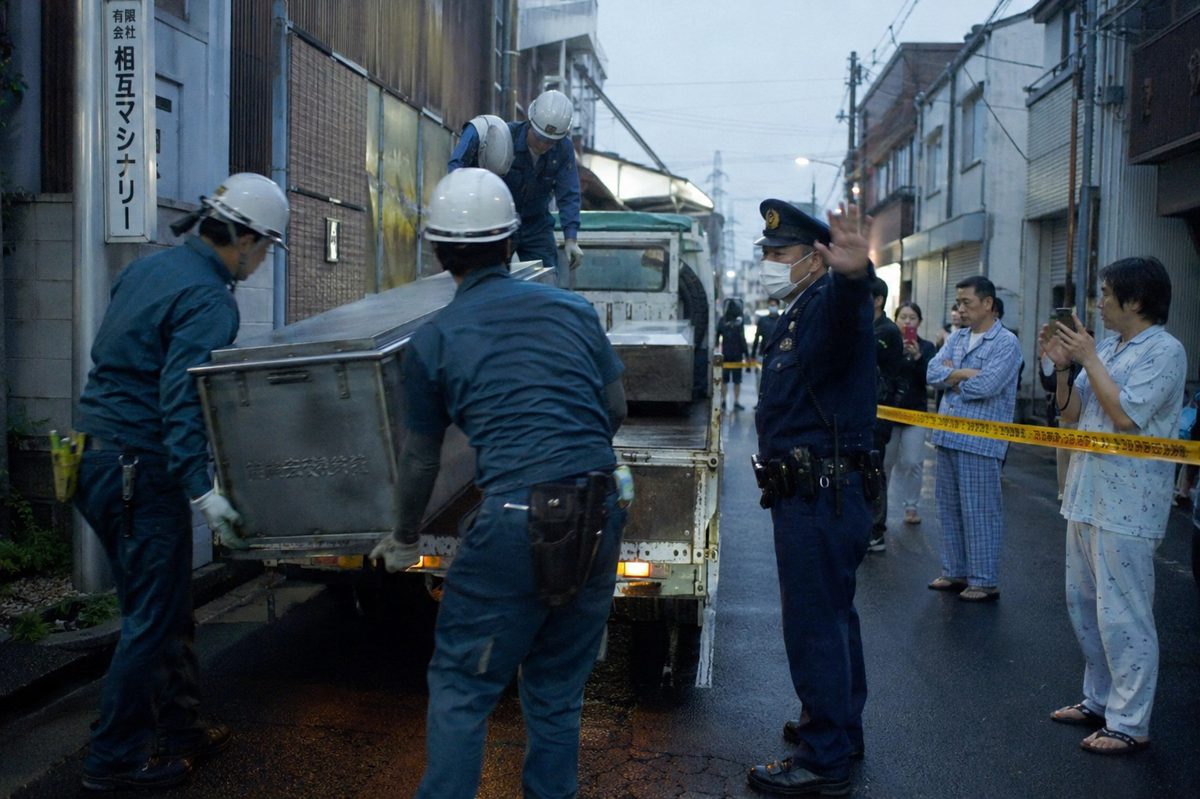
The joint working group at the Third Appraisal Center reported the results of a re-verification of its measurement and imaging systems to the quarantine committee on the 2nd, concerning one of three drift objects recovered in Fukagawa 2-chome in July — a sealed container holding liquid. Repeating the same procedure on a separate test container turned up no discrepancy traceable to instrument error or image-processing quirks. "The instruments were normal — nothing more, nothing less," an official said.
The anomaly first surfaced in late August: even when the container is tilted up to 15 degrees, the imaged surface of the liquid inside barely follows. Both X-ray and acoustic measurements produced the same result, and the quarantine committee had initially been unable to determine whether the cause lay in the equipment or in the object itself, postponing a decision on whether to open it.
This latest review worked through the equipment side of that question one item at a time — dosimeter calibration records, the correction parameters in the imaging software, the precision of the sensor that measures the container's own tilt angle — all within normal tolerances, the group found. On that basis, it concluded that "the image's behavior is more likely attributable to a property of the object itself."
The phenomenon is beginning to draw attention in academic circles. "There is little precedent for an isotopic anomaly and a mechanical-behavior anomaly occurring together in the same object," one university observation scientist said. "Careful verification is needed, including the possibility that the two are unrelated." The Third Appraisal Center says detailed data will not be released academically until after the opening decision is reached.
That does not mean the property has been identified. The liquid's isotope ratio was already known by the 29th to differ from ordinary water, but how that connects to the unresponsive surface remains unexplained. "Saying it's 'a property of the object' doesn't mean we know the cause," the group's 48-year-old lead researcher said carefully. "It only means we can say it isn't the instruments."
The quarantine committee will take up the question of whether to open the container on September 16. Until now, drift objects cleared as non-hazardous have typically proceeded through opening, appraisal, and eventual museum display or transfer to state ownership. This time, for the first time, a formal option to keep the object sealed and in storage indefinitely will be on the agenda — which, if adopted, would be the first permanent-storage policy ever applied to a quarantined drift object.
"We've never had a category for handling something as permanently unknown," one committee member said. "Frankly, we didn't expect to need one." Another, favoring caution on opening, said: "The side we're on now also needs the skill of leaving something unexplained safely in place."
Roughly 1,400 drift objects currently sit in the center's quarantine backlog awaiting appraisal, the oldest recovered nineteen years ago; the Dimensional Boundary Control Act sets no appraisal deadline, and that has allowed the queue to build. The Fukagawa liquid container may now receive an unprecedented status within that queue — remaining in line indefinitely, its nature still unknown.
The worldline-matching database currently holds 147 registered signatures, yet fewer than a third of all drift objects can be traced to an origin. Given the liquid's distinctive isotope ratio, it will likely be registered as a new lineage regardless of the outcome — but the center stresses that registering a signature and deciding whether to open the container are separate procedures. "Taking a fingerprint and confirming what's inside are different jobs," a working-group official said. "Whether a drift object can go on living for a long time with only its fingerprint on file — that's what's actually being discussed here."
Ahead of the hearing, the center also plans to hold a briefing for the Fukagawa neighborhood association. Its 66-year-old chairman welcomed the move — "Being asked before a decision is made is nothing like being informed after" — but added a condition: "Even if they decide not to open it, I want an answer on how long it will simply sit there."
Monitoring measurements near the site have dropped from three times a day to two since late August, and no health effects have been reported in the surrounding area. Fukagawa has long been known for a pattern of everyday-object drift arrivals that locals call the "Fukagawa type," and the neighborhood association keeps its own custom of burying a marker plate at each recovery site. Whether this liquid-filled container will eventually be treated the same way is a question no one can yet answer.
The quarantine committee's chair cautioned that "September 16 is only the day deliberations begin. A conclusion on that day is not guaranteed," adding: "There are moments where the regret of a slowness with no regrets is preferable to the regret of haste." On the street in Fukagawa 2-chome, people continue to leave flowers. "Until this is decided," the neighborhood chairman said, "we're watching it as our town's own story."