Mid-scale Yuragi hits Fukagawa before dawn; TDA recovers three cargo-like drift objects
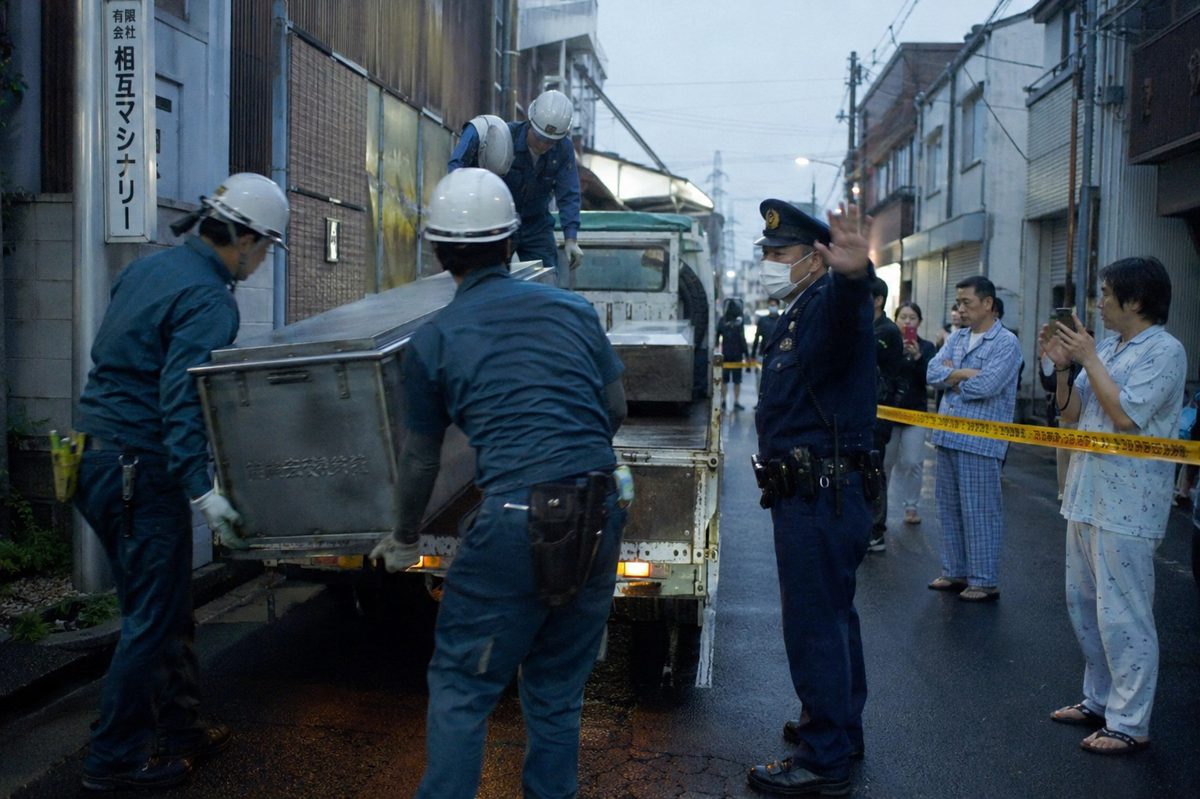
A mid-scale Yuragi occurred on a street in Fukagawa 2-chome at around 3:40 a.m. on the 21st, leaving three drift objects believed to be cargo. The TDA recovered them; the area was cordoned off for about four hours. No injuries were reported.
According to the TDA, observation of the Yuragi began at 3:40:12 a.m. and lasted about 90 seconds — the third-largest permeation recorded in the city this year, and the first in a dense residential district since the Kameido case of Torek 49. All three objects are metal container-like items, the largest about two meters long with an estimated weight of 300 kilograms. Inscriptions resembling text "match no known observation record," the TDA press office said. The objects were transferred to the Third Appraisal Center in Kameido the same day.
Footage from a municipal disaster-prevention camera shows the streetlight glow "smearing" slightly before the three objects appear about 1.5 meters above the road surface and drop almost simultaneously. The TDA's observation department notes that cargo-like objects rarely permeate in multiples, let alone in alignment: "We will analyze the possibility that they moved as loaded — exactly as they were stacked on the other side."
"A low sound, like a rattling window," is how Takara Senou, 41, who runs a restaurant nearby, describes what woke him. "I opened the curtain and there were boxes I'd never seen lined up in the middle of the road, with something like steam rising only around them. Third time in my life here. You never get used to it." Mr. Senou is a second-generation Drifter, and many of his regulars remember the early years.
A man, 67, who runs a small metalworks, saw the containers from his window before the cordon went up. "There was a bulge like a shipping tag on one corner. I work metal myself — that thing was made for somebody to use." Fukagawa police logged eleven emergency calls in the minutes after the event, two of them reporting "a person collapsed on the road." It turned out to be a newspaper carrier's bicycle, laid down by the first person on the scene.
The TDA forecast division had issued a "medium" permeation index for the bay-to-east corridor at 9 p.m. the previous evening. A "medium" index carries no restrictions on outdoor activity, and no evacuation guidance was given. "It occurred inside the forecast zone; the observation network functioned normally," the division said. Mayor Motoko Ukai, asked about long-standing calls in the city assembly for nighttime loudspeaker advisories during "medium" periods, told reporters: "There is still room for ingenuity between the forecast and how it reaches residents. I intend to discuss it with the TDA."
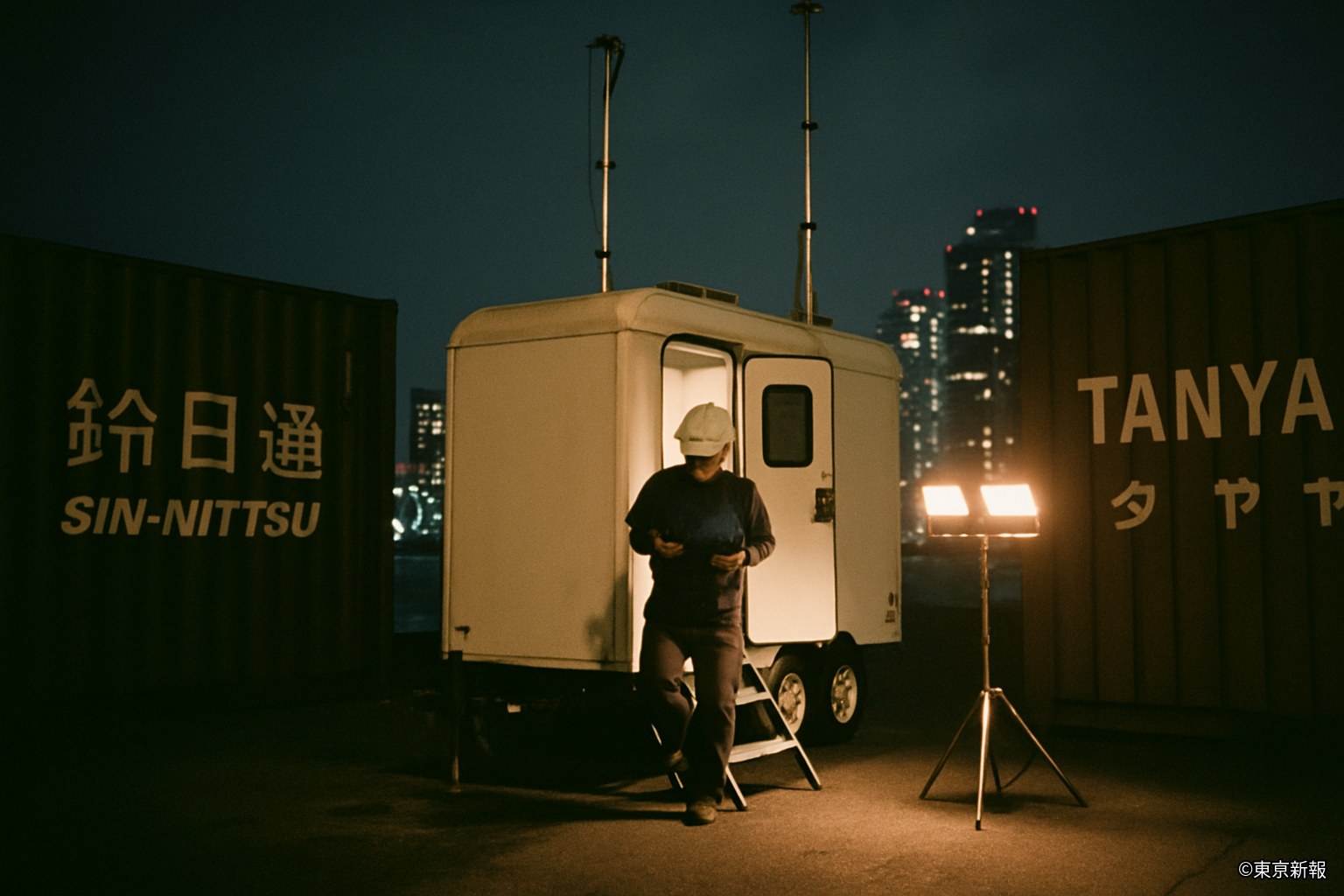
The recovery itself began at 5:10 a.m.: twelve personnel in protective gear wrapped each container in resin film and carried them out on vibration-damped dollies, with handhold positions specified so that no one touched the inscribed faces. The work ended at 7:40 a.m. "In a residential district, quiet takes priority over speed," the TDA site commander said. "Not waking the sleeping is part of the job."
Fukagawa's history with drift objects runs deep: this is the ninth confirmed arrival in the district since records began in Torek 31. The oldest entry in the residents' logs is "a chair on the road"; the largest, a boat-shaped structure that arrived in a vacant lot in Torek 44. Fukagawa's drift objects lean toward household goods — a pattern researchers call the "Fukagawa type." "Where the bayfront receives raw materials and organisms, Fukagawa receives the tools of somebody's daily life," says the city's historiography office. "The old hypothesis is that a neighborhood much like this one exists on the far side. There has never been a way to test it." The neighborhood association buries a small metal plaque at each arrival site; a tenth will be added here once the cordon records are closed.
Under the Dimensional Boundary Control Act, recovered drift objects revert to the national treasury. If appraisal finds them safe and no claimant appears, they are customarily transferred to the municipal Drift Object Museum after public notice — though appraisal of inscribed containers can take years.
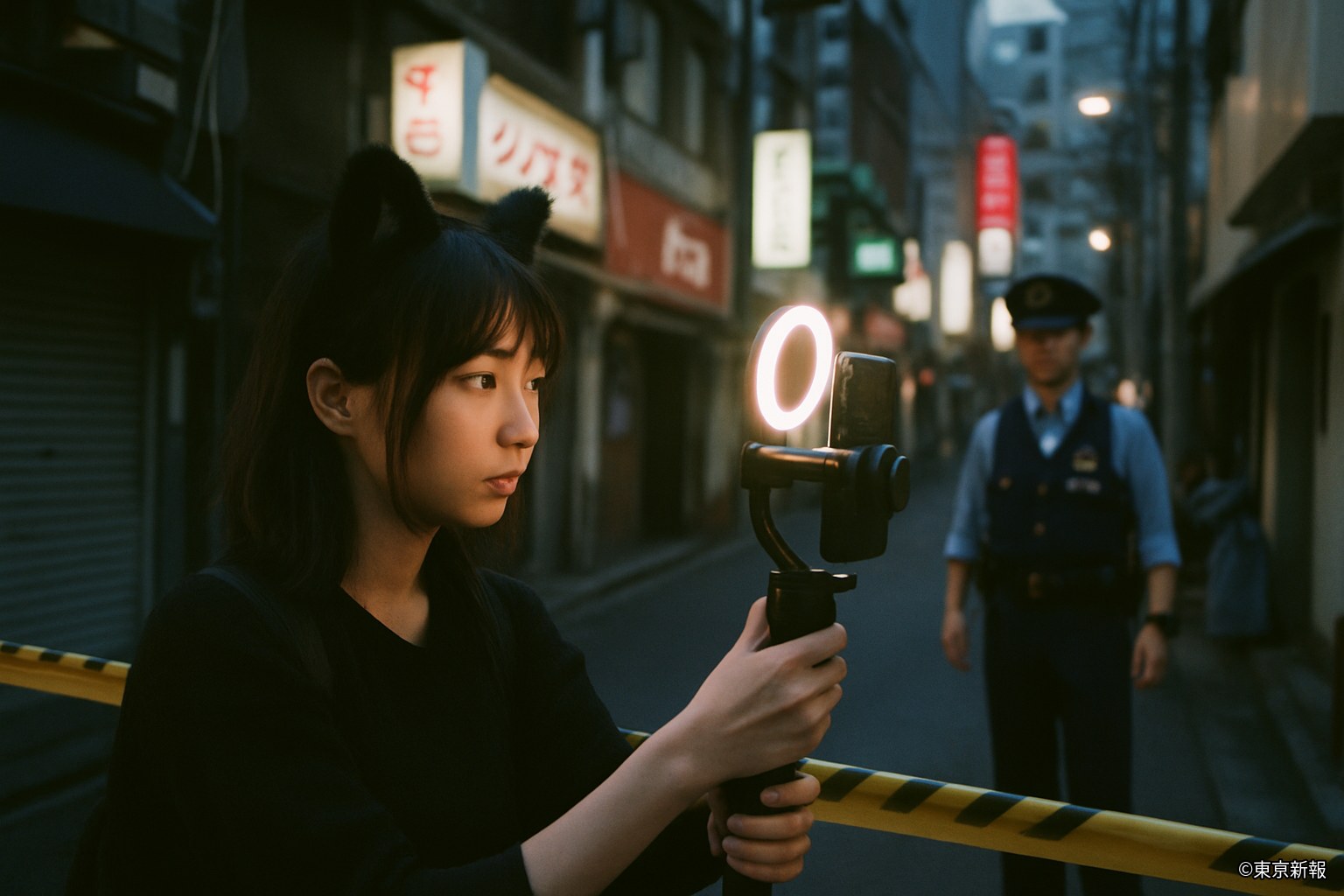
Once again, crowds of kishi-kenbutsu — shore-gawkers — gathered outside the cordon from before dawn, reaching about eighty people by 5 a.m. Fukagawa police urged them to keep moving; one person fell in a scuffle over filming positions at the tape.
The treasury rule itself is increasingly questioned. When the Dimensional Boundary Control Act was drafted, drift objects were nationalized wholesale on the premise that "confirmation of ownership is in practice impossible." But as the first generation ages, the federation of rite associations has proposed that harmless household items deserve "treatment closer to memorial care than to storage," speaking for the feelings of owners on the far side. Some appraised objects are already displayed at the museum, after a lost-property-style notice period, as "luggage whose owners have not appeared" — and visitors, the museum says, often write in the guest book: "We are keeping it safe for you."
"The law processed drift objects as ownerless things; the public has never once believed they were ownerless," notes a professor of boundary law. "The flowers in Fukagawa prove it. Sooner or later, legislation will have to close the gap between the system and the sentiment."
Mr. Senou opened his restaurant at 8 a.m., the moment the cordon lifted. "Gawkers or not, if they come, they can drink our miso soup. That's the kind of town Fukagawa is." The soup sold out by noon.