"Bell code" gets its first trial broadcast in three bay-area districts
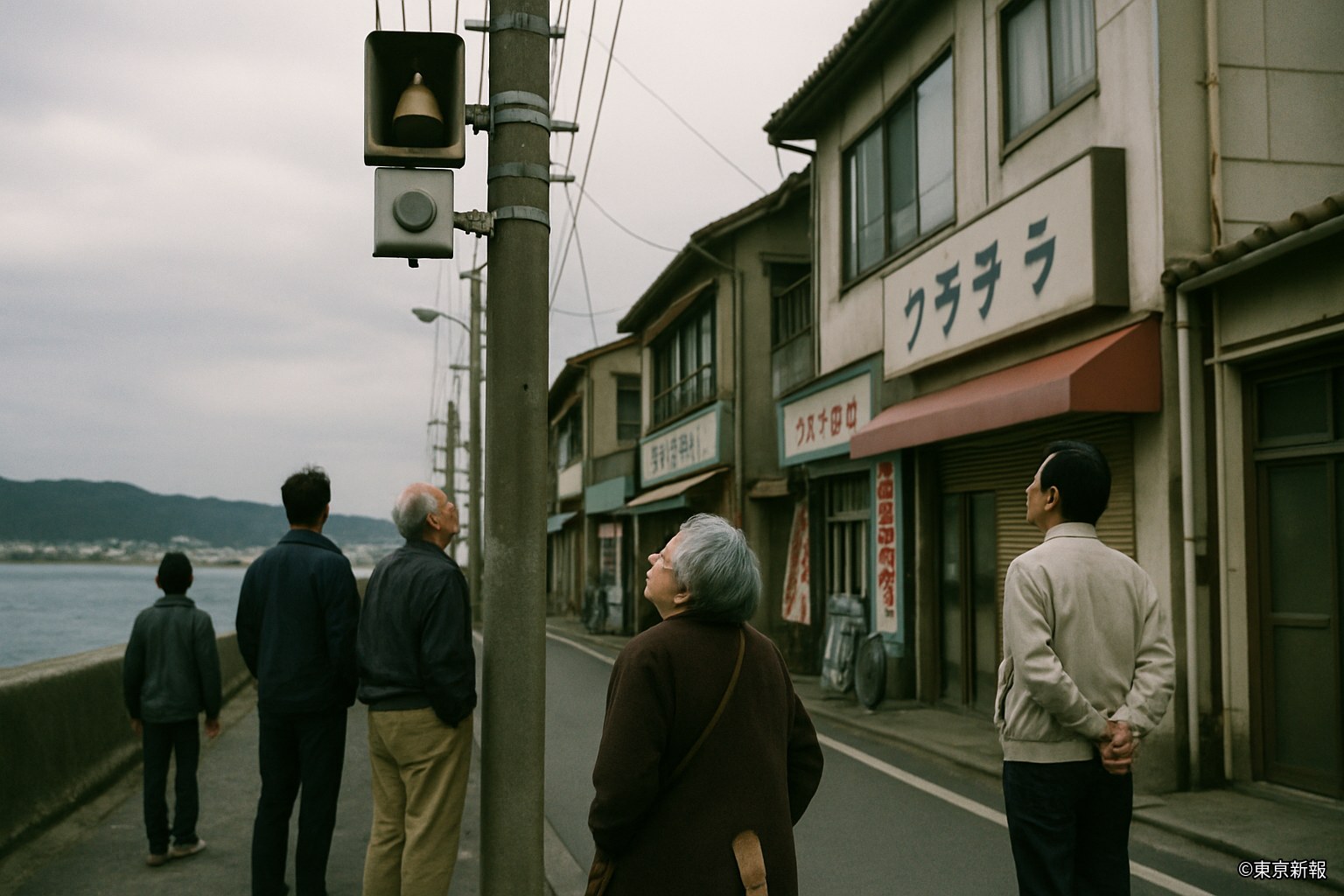
The TDA and the city carried out the first trial broadcast of the "bell code," a warning method dating back to the internment-camp era, across the three bay-area districts of Shiomi, Fukagawa, and Sunamachi at 10 a.m. on the 3rd. The test precedes a planned integration into the disaster radio network in next fiscal year's budget: one strike means caution, two means alert, three means evacuate. The trial stopped at two strikes, but revealed problems — including that roughly half of younger residents did not know what the strike counts meant.
The bell code is a warning method that spread spontaneously among drift settlers during the internment-camp era of the 1970s, using the number of bell strikes to signal the scale of an emergency. Valued for its simplicity, it is the subject of a budget request by the city and TDA to formally integrate it into the disaster radio network next fiscal year. The trial broadcast on the 3rd was positioned as this year's demonstration ahead of that, and marked the first time the bell code had been broadcast across the three bay-area districts.
The audio source was a recording of a camp-era bell held by the Drift Object Museum. One strike signifies caution, two signifies alert, and three signifies evacuate — but the 3rd trial stopped at two strikes. "A test that goes all the way to three, implying an actual evacuation, risked causing confusion, so we held off this time," a city disaster-preparedness official explained. "This stage was about confirming whether the sound reaches people at all."
An 83-year-old first-generation Drifter living in Shiomi said he stopped in his tracks when he heard the broadcast. "Back in the camp, it was my job to gather the children when the bell rang. I never imagined I'd hear that sound again, at my age, out of a city loudspeaker." By the second strike, he realized, he had unconsciously begun counting the children around him with his eyes. "I suppose the body doesn't forget."
A post-trial survey by the city surfaced several problems. The most common complaint was that the broadcast could not be heard from interior hallways of high-rise apartment buildings. While rooms facing outdoors heard it clearly, a number of residents in units without hallway-facing windows, or in newer, well-insulated buildings, reported not noticing the broadcast at all.
"I had the TV on and didn't notice a thing," said a 38-year-old man living in a bayside apartment building. "I only realized later, when a neighbor mentioned it, that it had been the bell code." In response, the city is considering strengthening outreach through building management associations.
A second problem was that the meaning of the strike counts itself has not taken hold. In street interviews after the broadcast, roughly half of younger respondents said they could not tell the difference between one strike and two. For generations who lived through the camp era, the bell code is a signal etched into the body; for those without that experience, it is just a sound.
"I heard the bell itself, but I didn't know what the number of strikes meant," said a 15-year-old student. "I don't remember learning it in school." In response, the city announced it is considering distributing explanatory cards to every household and adding the bell code to school disaster-preparedness education.
"There's a strength in the sound calling up old memory — but an equally large weakness in that it means nothing to generations who don't have that memory. We need to redesign with both in mind," a TDA official said. The next trial is planned to coincide with the autumn disaster drills; whether to expand the covered area or run a full drill including the third strike will be decided based on today's results.
Next fiscal year's TDA budget request includes about 600 million yen for integrating the bell code into the disaster radio network — a small line within a record 147-billion-yen total request, the agency's largest since its founding. "The size of the figure and its weight to residents are two different things," an official said.