People of the Shore (6): Tane Kishitani, 101 — "This year, I'm the one who listens"
Among the 121 first-generation drift settlers invited to the September 7 Arrival Remembrance Day ceremony, the oldest is 101-year-old Tane Kishitani, who was already 50 when she arrived in 1975. Living with her second-generation grandson's family in a Fukagawa row house, she spoke about fifty-two years, and what the ceremony means to her now.
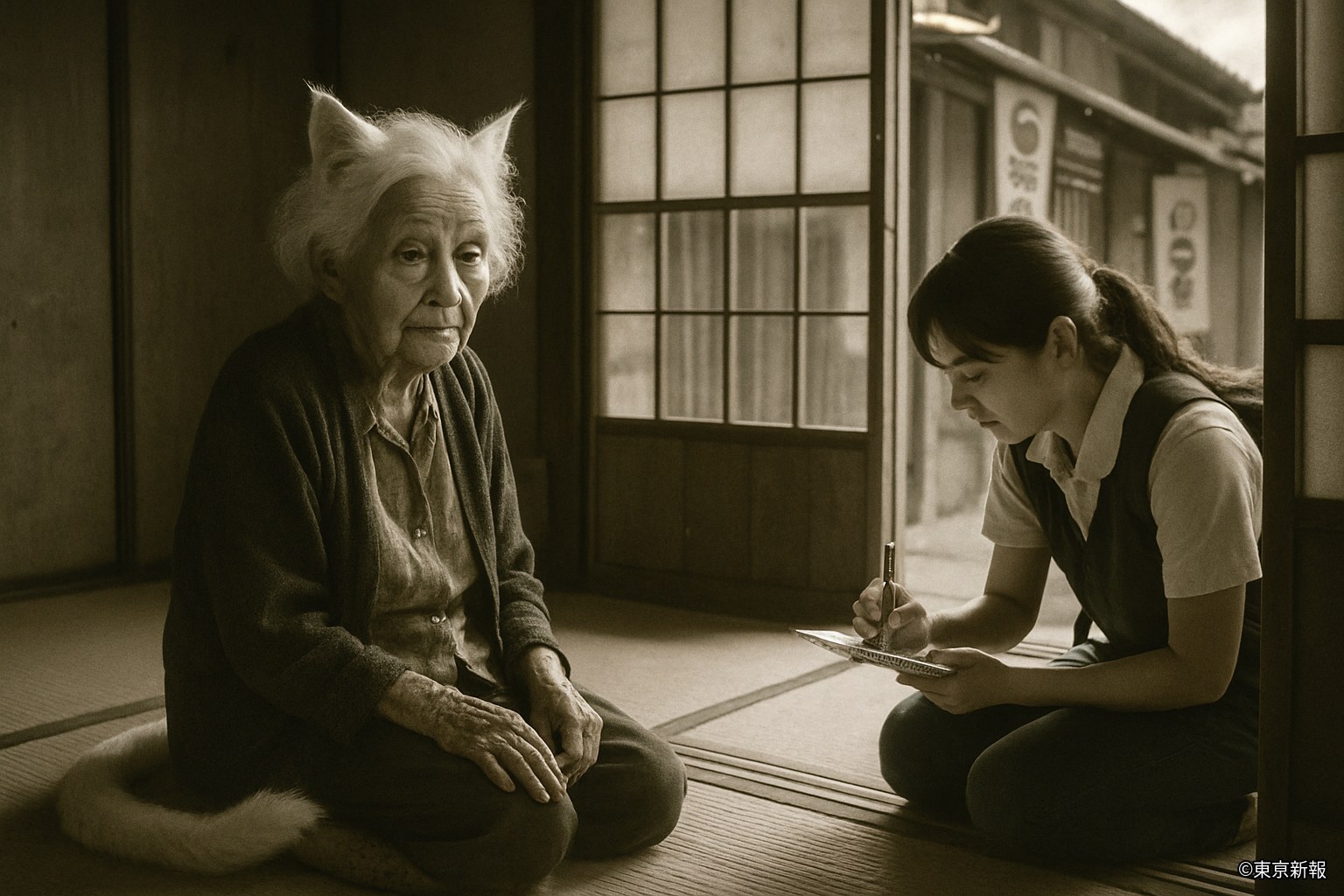
In a sunlit tatami room of a Fukagawa row house, Tane Kishitani sat with her back straight on the floor cushion. At 101, her voice carries with an efficiency hard to square with her age. "This year, I'm the one who listens," she said, opening with the line that would frame the whole conversation, as the September 7 Arrival Remembrance Day ceremony approaches.
Kishitani arrived in 1975 at the age of 50. Of her time in the internment facility afterward, she says simply, "All I remember is working." She was assigned to the kitchen. "There's no time to argue about which world you're from when you're cooking for that many people. Rinse the rice, watch the fire — that was it." Nearly everyone of her generation who could speak firsthand of those kitchen days is gone now; there is almost no one left for Kishitani to share the memory with directly.
When it came time to choose a surname during naturalization, Kishitani was one of those who chose a name containing the character for "shore." Of the custom that began in the camps, she says, "No one decided it for us. Everyone just sort of chose it. We'd drifted to the shore, so shore seemed fine. I doubt anyone was thinking too deeply about it." The second character, meaning "valley," was chosen for the terrain of her late husband's birthplace.
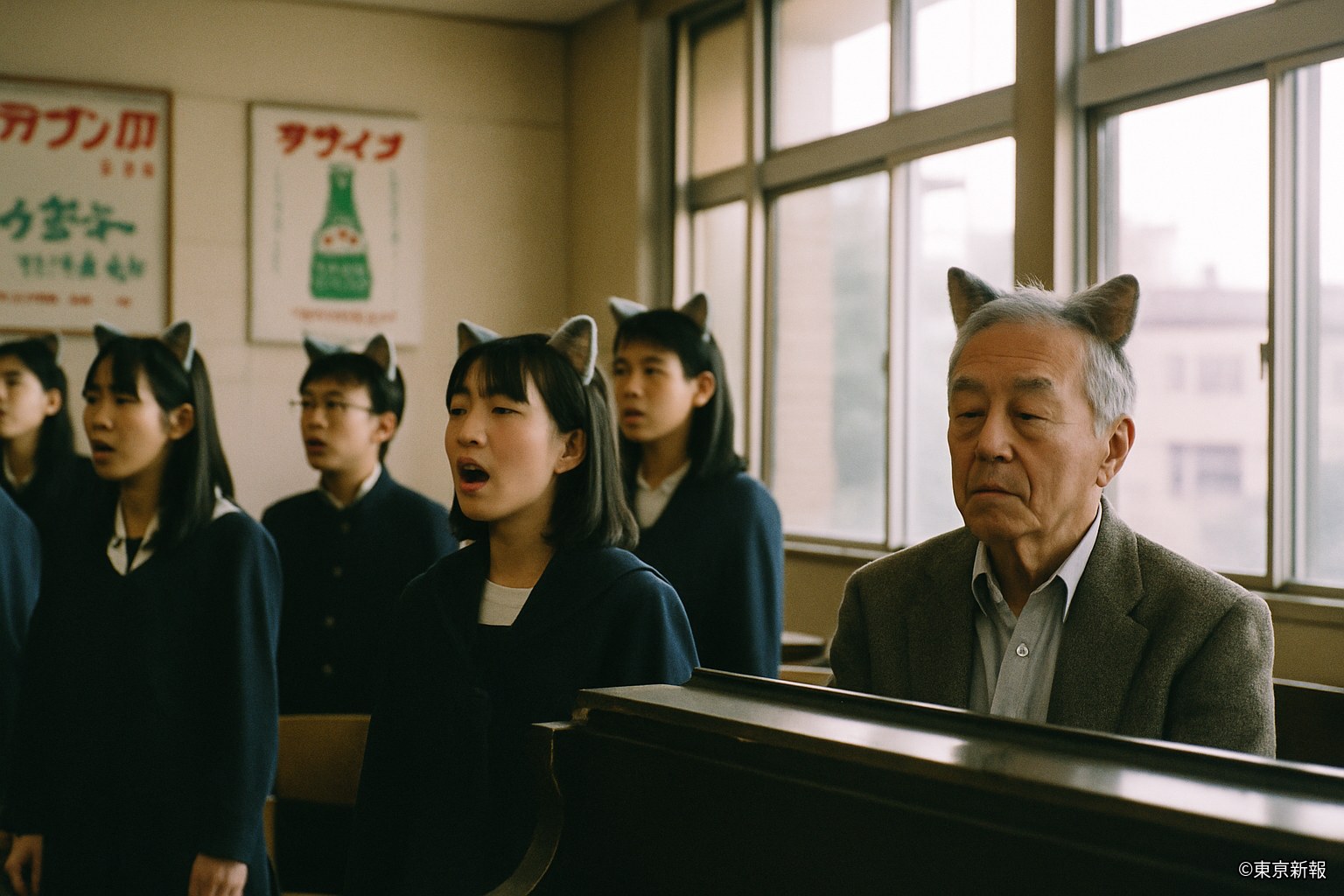
After naturalization, Kishitani found work at a traditional confectionery shop in Kyobashi. Her kitchen experience led to her being entrusted with cooking the red bean paste by her late thirties. "Rice and bean paste both burn the instant you look away from the fire. That much was the same." She worked at the shop until age 70, then moved to Fukagawa after retiring, where she now lives with her second-generation grandson's family. One of her great-grandchildren, she says, attends the same school as the choir from Bay Third Junior High School that will sing "The Shore Lullaby" at the September 7 ceremony. "My grandson told me he never imagined he'd be on the listening side rather than the singing side."
A former coworker from the shop, 88, said by phone: "Tane's bean paste had a fragrance before it had sweetness. When I asked why, she said, 'the flavor takes care of itself, if you just watch the fire' — I remember not quite understanding what she meant."
These days her routine is simple. "Up at six, drink some water, look at the morning glories in the garden. That alone is about a day's worth of satisfaction." The small garden of the row house, planted by her grandson, has bloomed well again this year. Several acquaintances of her own generation once lived nearby, she says, but none remain. "They all went first. I suppose I was just the slowest one," she laughs.
Her knees keep her from traveling far now, but she still walks the row-house lane on her own feet. When a neighbor greets her — "Tane, you look well again today" — her standard reply, "Sturdier than I look," has become something of a small local greeting in itself.
For years, Kishitani has made a point of not speaking of her homeland. Asked why, she paused before answering: "Because if I talk about it, I'll start waiting." She said no more, but her grandson's wife, listening beside her, said, "I've never once heard my grandmother speak of it, either."
The song, though, is different. "The song is different. A song isn't talk." Asked about "The Shore Lullaby," rewritten from notation half a century after Ushio Kishiura first transcribed it, something shifted in Kishitani's expression. "I can't sing it anymore. But I remember that when that song was heard, the kitchen would go quiet. No one said anything — it was a song that stopped your hands."
This year's ceremony transport will be handled by a new city volunteer program. Kishitani's assigned volunteer is Misaki Asakura, 20, a university student who was chosen from over 240 applicants. "In the interview, I said I wanted to be the one who listens, and I was matched with her," Asakura said. She will accompany Kishitani to Kishihama Park on the day.
Asakura applied for the volunteer program after encountering oral records of first-generation Drifters in a university course. "I didn't want to be someone who 'takes' a story from someone. I just wanted to sit beside her." She has already met Kishitani twice. "Tane can tell the moment you're being careful around her," she said, laughing a little.
The city's volunteer transport program drew over 240 applicants for 80 spots, requiring a lottery; Asakura is one of those who made it through. A city official overseeing the program said interviewing applicants left the impression that "a conversation with a first-generation settler seems to mark some kind of turning point for the people who apply."
Of the 121 first-generation settlers invited this year — about half the number of a decade ago, with an average age already in the late seventies — the city is said to be home to roughly 480 remaining, of whom only a few hundred are physically able to attend a ceremony or serve as a witness. Asked about serving as a witness for the coming-of-age rite known as "the Shore Crossing," Kishitani is blunt: "I no longer have the strength for that." Even so, she says she is looking forward to the ceremony itself. "I hear one of the singers goes to the same school as my great-grandchild. That's reason enough to go."
At noon, "The Shore Lullaby" will be sung in public for the first time, at Kishihama Park. Tane Kishitani intends to be in the front row — simply listening to a song she has rarely spoken of in fifty-two years.