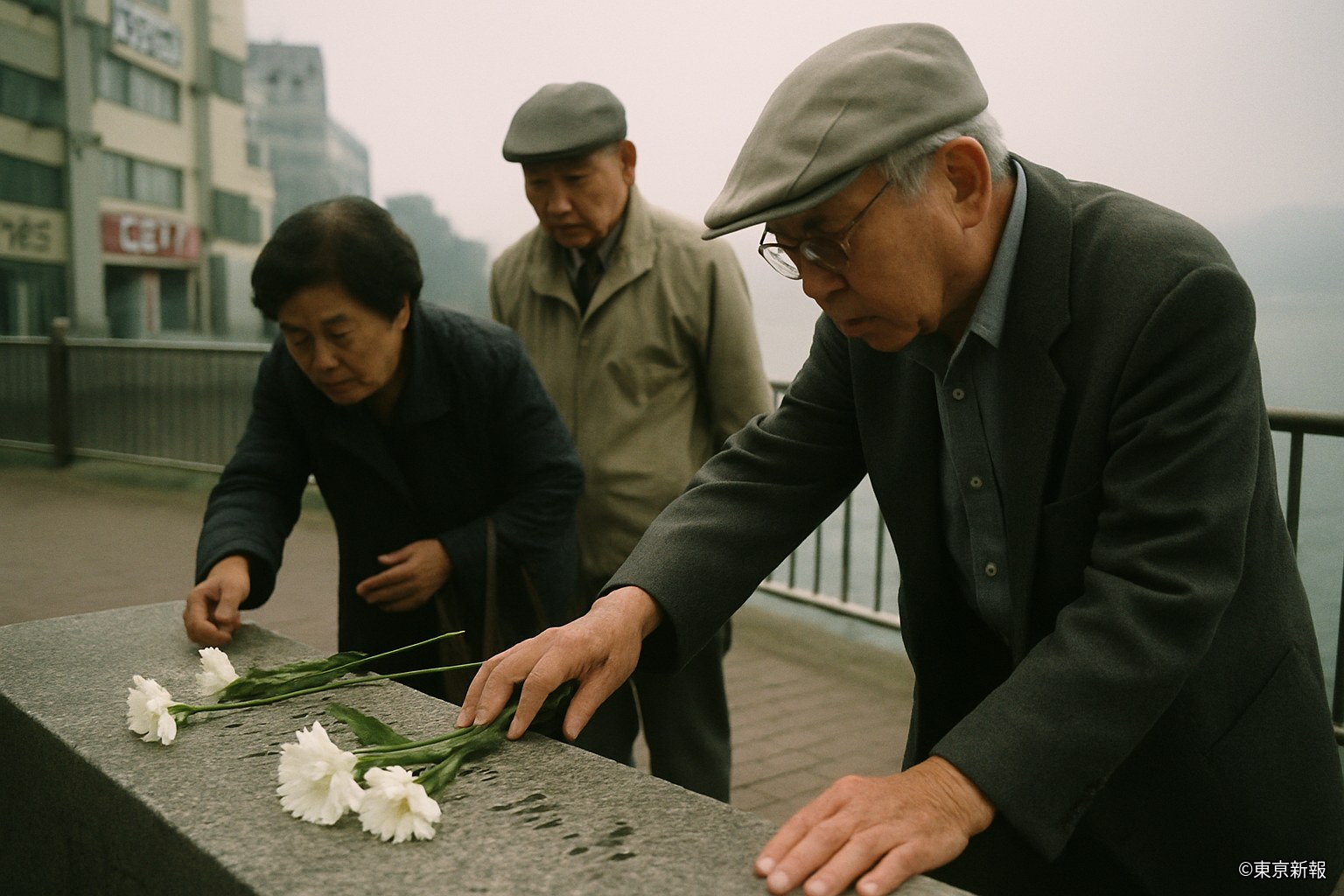
"Lullaby of the Shore": the last joint rehearsal before the day
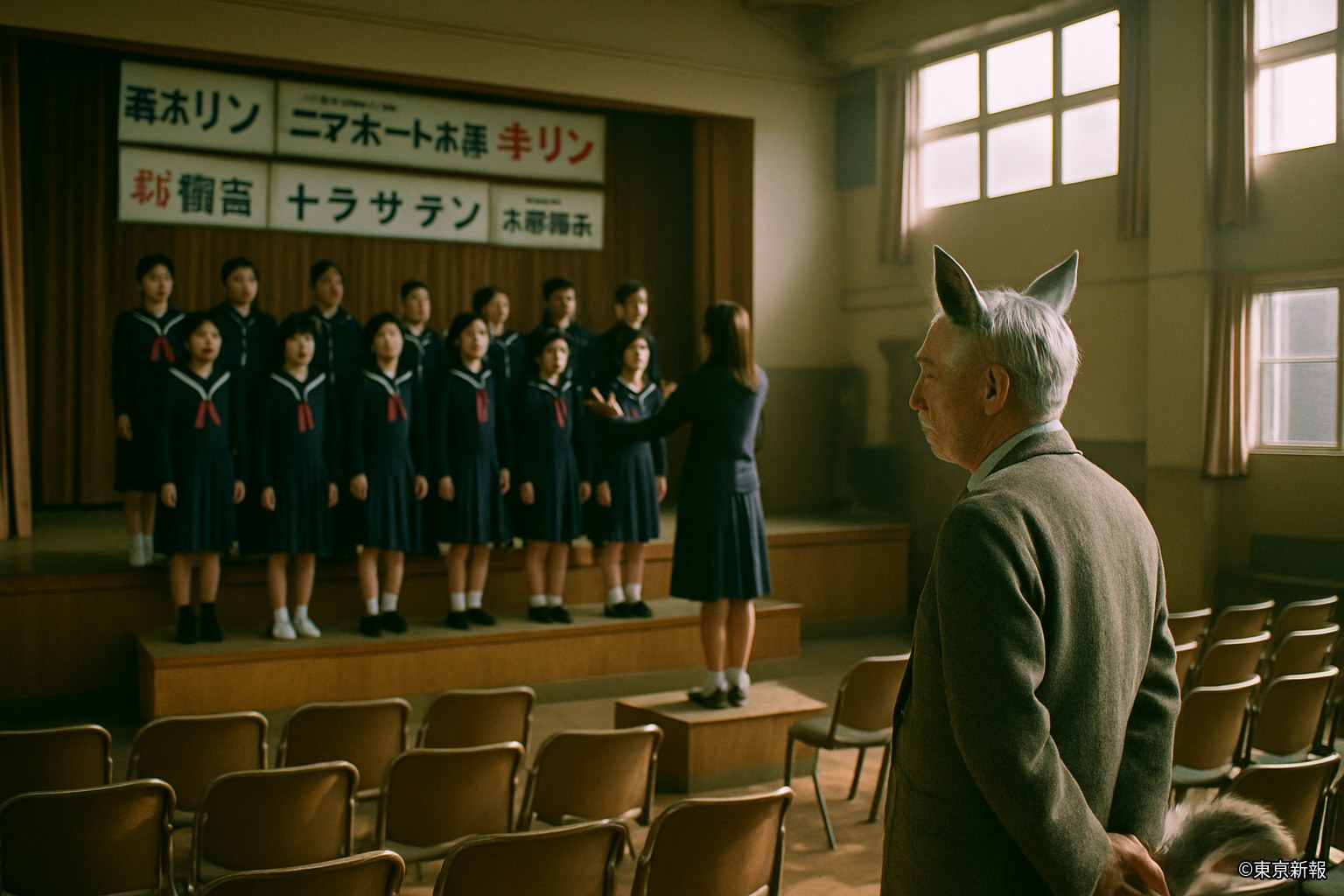
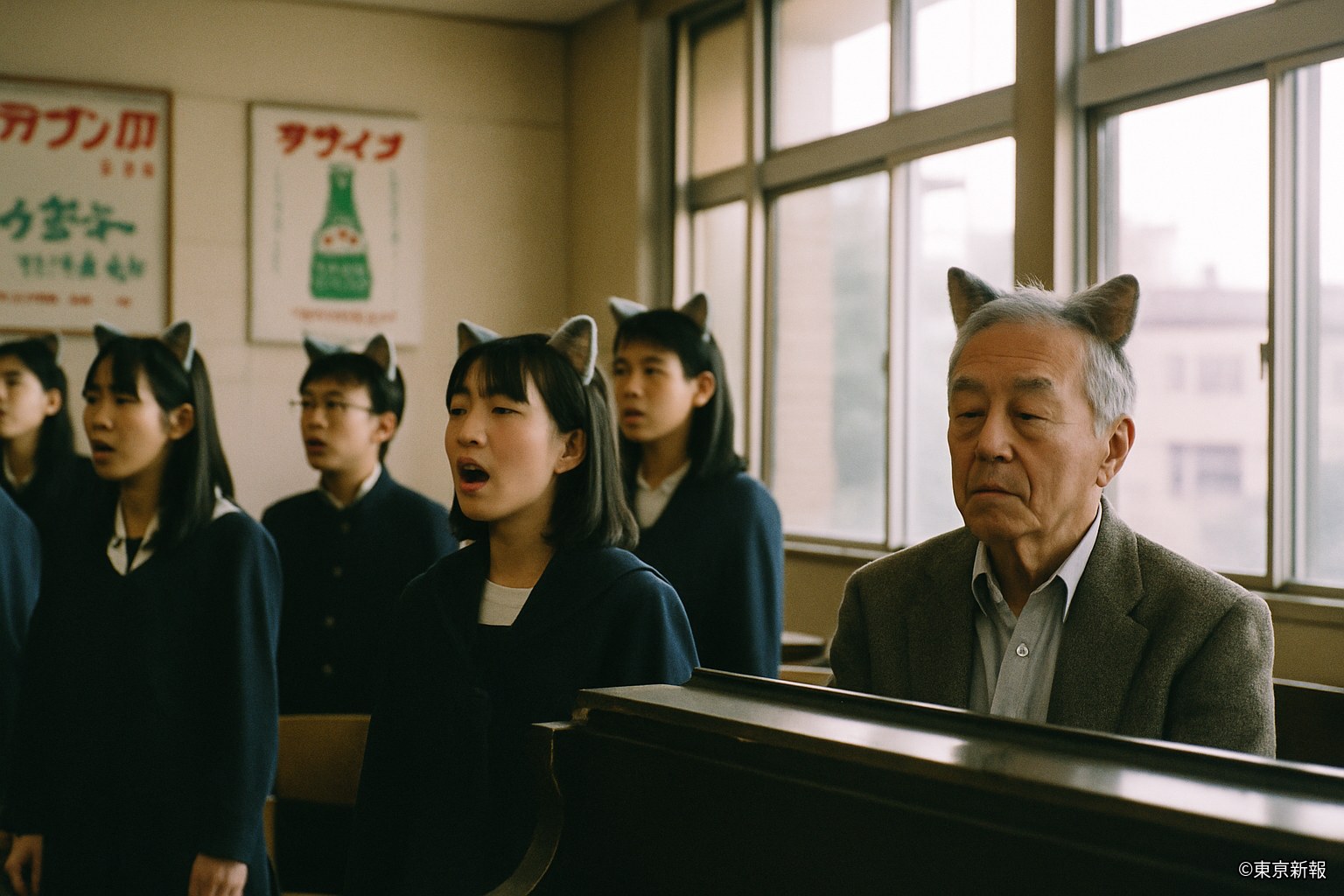
The last joint rehearsal for the "Lullaby of the Shore" — to be sung in public for the first time on Drift Memorial Day, Sept. 7 — was held on Aug. 30 at a community hall in Fukagawa. Twenty-eight members of the city's junior-high choir sang; Ushio Kishiura, 74, the first-generation Drifter and music teacher who transcribed the song, sat in.
The choir numbers 37 — 28 half-Drifter students, mostly from Bayside Third Junior High, and nine students of non-Drifter families who joined by open call. They had already finished what was billed as the final rehearsal on the 29th, in a practice room at the bayside community hall, but the organizing committee added one more day on an actual stage. Twenty-eight sang on the 30th; nine were away at school events.
Fukagawa's community hall was chosen because the depth of its stage and its distance to the seats resemble the temporary stage being built at Kishihama Park. "Outdoors, the sound does not come back to you," the choir's music teacher said. "If they aren't used to that, on the day they will all go hunting for their own voices and speed up." On the first run-through, the thirteen verses finished about forty seconds faster than in the practice room.
The first half of the lullaby is in the language of the singers' home worldline, and Mr. Kishiura again handed out no phonetic sheets. "I did not learn it from the meaning either," he said. "If you sing it in a voice that makes people sleepy, then you have it right." The students traced the melody by watching his mouth — a sound rolled at the back of the throat, a word-ending that dissolves into breath. His corrections always came at the ends of words: "That is a sound you leave behind you," he repeated. Within two hours they had a complete run; on the last one, nobody looked at a music stand.
One half-Drifter student, 14, has no memory of the song at home. "My mother says she thinks her grandmother sang it to her when she was small. She only ever says 'I think.' It makes me happy that we can turn a song that only exists as 'I think' into a real one and hand it back." A third-year girl, 15, who joined by open call, said: "At first it felt like borrowing another family's song, and that unsettled me. Now I think it is fine to go on borrowing it."
No translation of the lyrics will be read before the singing. The committee is keeping to the choice the first generation made: to hand the song on untranslated.
The lullaby is believed to have been sung in the bayside internment shelters in the first year of the Torek era (1975), by first-generation Drifters putting their children to sleep in the days after the mass arrival. For half a century it had no score: the first generation refused transcription, saying that "if it is written on paper, the song can no longer go home." Mr. Kishiura, one of its last carriers, volunteered three years ago, and spent two years recording all thirteen verses in phonetic notation with the city's survey team. The choir has rehearsed twice a week since last October, more than seventy sessions. Fifty-one years after the mass arrival, this will be the first time the song is sung in public. "Fifty-one years feels late," the committee's secretary said. "But with this song, the reason it was late matters more."
At the end of the rehearsal, Mr. Kishiura walked to the very back of the seating and listened from there, some two hundred empty seats away, arms folded, without moving. "In the shelters, the people whose voices carried past the wall were the ones whose names got learned first," he said afterward. "Today I learned all of their names."
The hall's caretaker, 59, watched from the wings. "When people rent the hall, they ask about the air conditioning. This time they asked whether a voice reaches the back wall. All I could say was yes. It rather stumped me."
The performance opens the "Gathering of the Fifty-First Year" at Kishihama Park at noon on Sept. 7, and is open to all. The city has invited 121 first-generation Drifters, and the ceremony will be relayed to three care facilities. Mr. Kishiura will again listen from the last row rather than take the stage. If it rains, the event moves to a nearby gymnasium — where, at his one request, the speakers will not be placed behind the audience. "So that the voices do not come from behind them."