Sword Bearer License Exam: 108 Pass at 20.7-to-1, Including First Licensee Outside the Old Lineages
The Hinokuni Sword Bearers' Association announced the results of this autumn's sword bearer licensing exam on the 26th. Of 2,240 applicants nationwide, 108 passed, a 20.7-to-1 ratio that matched the previously reported forecast of 'over 20-to-1 again this year.' Among the new licensees is the first one with no family ties to the Kanome, Minase, or Himuro lineages, a fact drawing attention within the association itself.
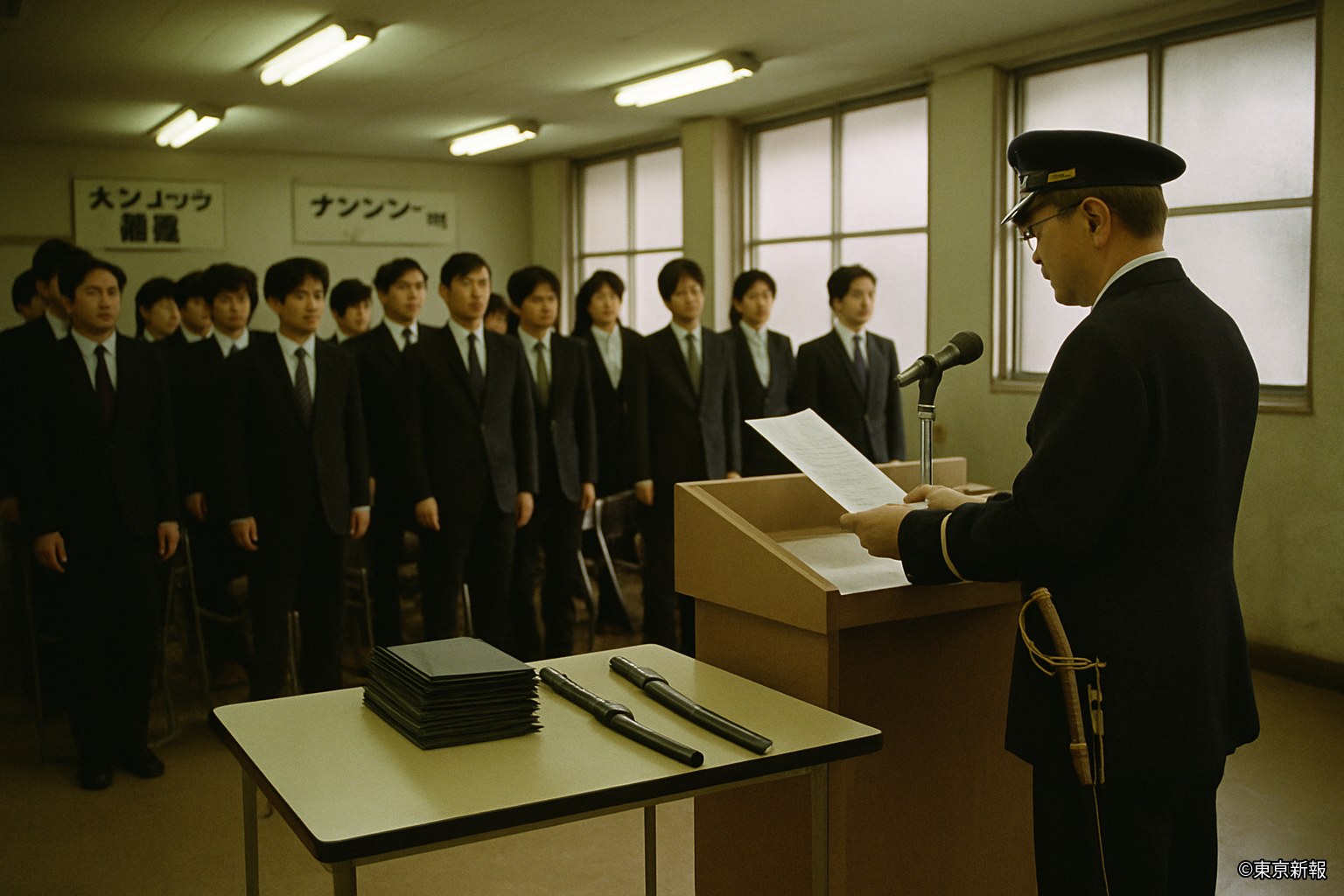
The Hinokuni Sword Bearers' Association announced the results of this autumn's sword bearer licensing exam, held under the 1994 Sword Carrying Special Provisions Act, on the 26th. Of 2,240 applicants nationwide, 108 passed — a ratio of 20.7 to 1, matching the previously reported forecast of "over 20-to-1 again this year." At the Tokei venue specifically, 612 applied and 29 passed, a slightly steeper 22.1-to-1. Successful applicants will receive their Special Sword Registration Numbers on October 1 and will be permitted to carry a registered sword while on duty from that date. Association staff say the ratio has held steady around 20-to-1 for several years running, driven by both a rising number of applicants and a roughly fixed number of licenses granted.
The exam consists of a written portion on institutions and regulation, a practical portion covering basic form and a mock "reading" judgment, and an interview. The average age of successful applicants was 24.3, ranging from 18 to 37. Thirty-four passed were women, about 31 percent, closely matching the previously reported figure that "roughly three in ten sword bearers are women."
The licensing system began with the 1994 Sword Carrying Special Provisions Act, and this marks its 32nd exam. More than 3,400 people have passed cumulatively over that span, but attrition through retirement and death has kept the active total at the previously reported roughly 2,600 nationwide, about 900 in Tokei. The association said, "The cumulative pass count alone might look like it keeps climbing, but the number of people actually still standing in the field doesn't grow nearly as easily."
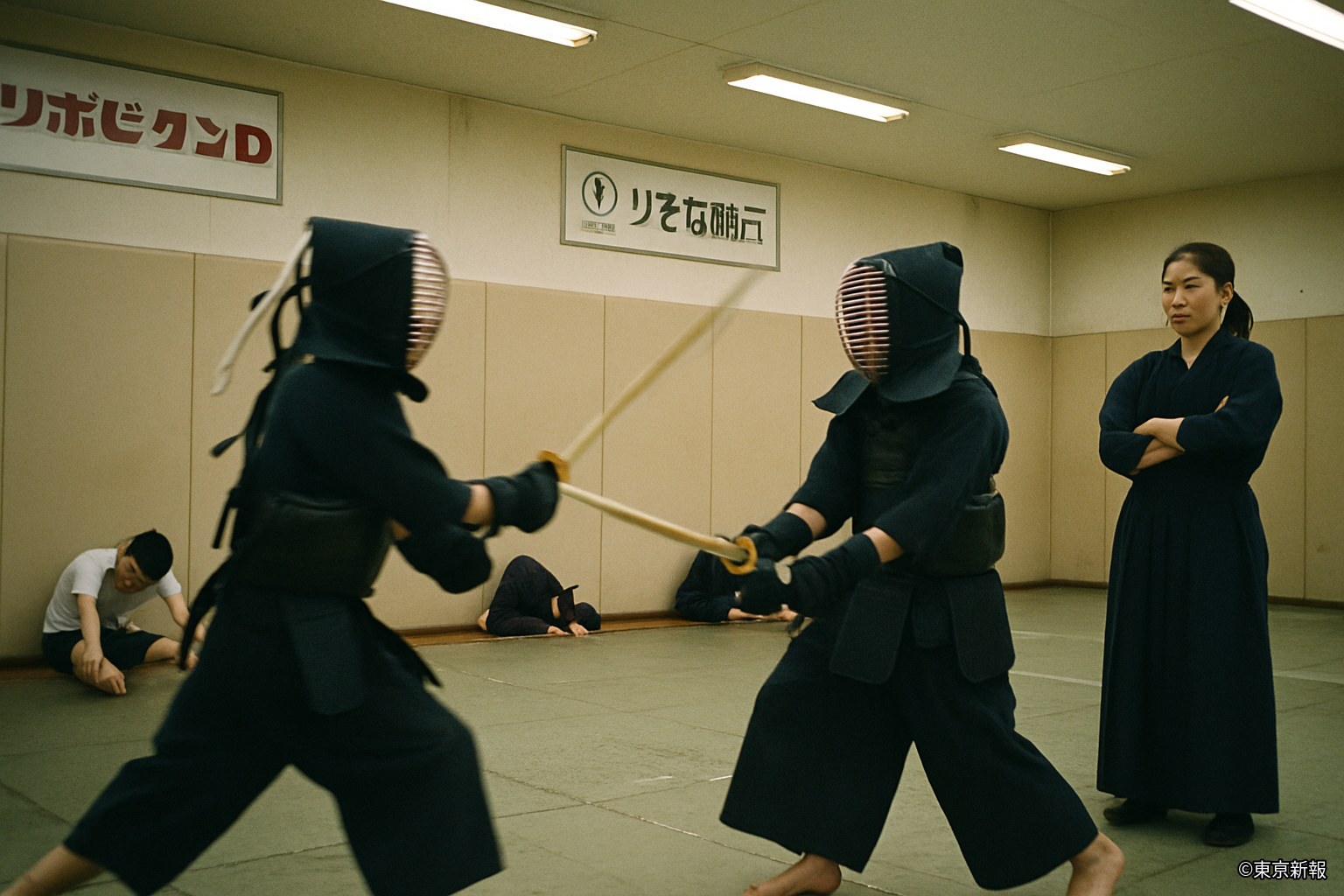
Drawing particular attention within the association is **Mai Honda, 23**, who — as far as records show — is the first successful applicant with no family ties to the Kanome, Minase, or Himuro lineages that have long dominated the profession. Raised in an ordinary salaried household, she told this paper she was drawn to the field after a general-education university lecture on the Sword Carrying Special Provisions Act. "For the first year at the training hall, people kept telling me I even held the equipment differently," Honda recalled. "Without a lineage's forms to fall back on, I drilled the basics harder than anyone else so I wouldn't develop bad habits of my own. Passing isn't the end — the real training starts now." An association official said, "Family lineage has no formal bearing on eligibility, but in practice a licensee like this one is rare. We're watching this as a sign of how the applicant pool may be broadening."
Six of this year's 108 new licensees carry nonhuman traits. One, second-generation Drifter **Misaki Okiura, 26**, said, "I sometimes hear from younger Drifter-descended applicants worried their traits might interfere with judging during the practical exam. That it wasn't an issue for me this time should be an answer for whoever comes after." Sword bearer licenses must be renewed every five years for a flat fee of 30,000 yen, with a simplified practical check at renewal time; the fee helps fund the association's operations. This year's 108 will face their first renewal in 2031.
Chitose Kaname, 41, head of the Kanome lineage and the author of the column "The Sword That Stays Sheathed," offered a brief comment on the results. "The moment of passing might look like the proudest part, but what really matters, to my mind, is every single year afterward spent not drawing the blade," she said. Of the licensee with no lineage background, she added, "Someone without a school's forms can sometimes rethink the weight of 'not drawing' from first principles. I'd like my own students to hear about how Ms. Honda trains."
Some within the lineages remain cautious. A veteran sword bearer who teaches at the Himuro lineage in Hokuto said, "I welcome a rise in applicants without a lineage's forms in itself, but a lineage's forms carry the accumulated experience of past field operations. I'll admit I'm not yet convinced that mastering the basics alone is sufficient." An association official responded that "a lineage's forms and family background are, properly speaking, separate issues — this year's applicants weren't scored on the assumption of any one lineage's forms," while adding, "how to weigh institutional fairness against the accumulated experience of the lineages is a subject I expect will keep being debated."
Soichi Gamo, 66, chairman of the Hinokuni Sword Bearers' Association, told reporters on the 26th, "The ratio remains high this year too, but I believe we're holding quality over quantity." Asked about the Autumn Five-Match Tournament opening October 3, he said, "None of today's 108 will step onto that stage right away, but someone among today's names will be standing in next year's or the year after's tournament." Referring to the previously reported debut of young Gen Minase, 22, he added, "Watching last year's licensees make it to the front stage like this is one of the best moments in this job."
The Autumn Five-Match Tournament opens October 3 at a training hall near the wall course in Kameido, with the Tokei Sword Bearers' Association already in group practice since the 21st, as previously reported. The 108 new licensees will, for now, build basic skill at their respective lineage and regional training halls while entering rotation for accompanying field operations. The association reiterated its standing position that "passing is not a finish line — it's the bare minimum ticket to standing in the field."
Only a handful of these 108, who cleared a gate narrower than 20-to-1, will likely become household names. Still, the arrival of one licensee from entirely outside the lineage system feels like a small crack opened in an institution nearly half a century old. As Kaname put it, their work will likely make the paper only after a long accumulation of days when nothing happened at all.