Fukagawa Drift Liquid Found to Shift Viscosity on a 47-Minute Cycle — Academic Presentation Leaves Core Mystery Unsolved
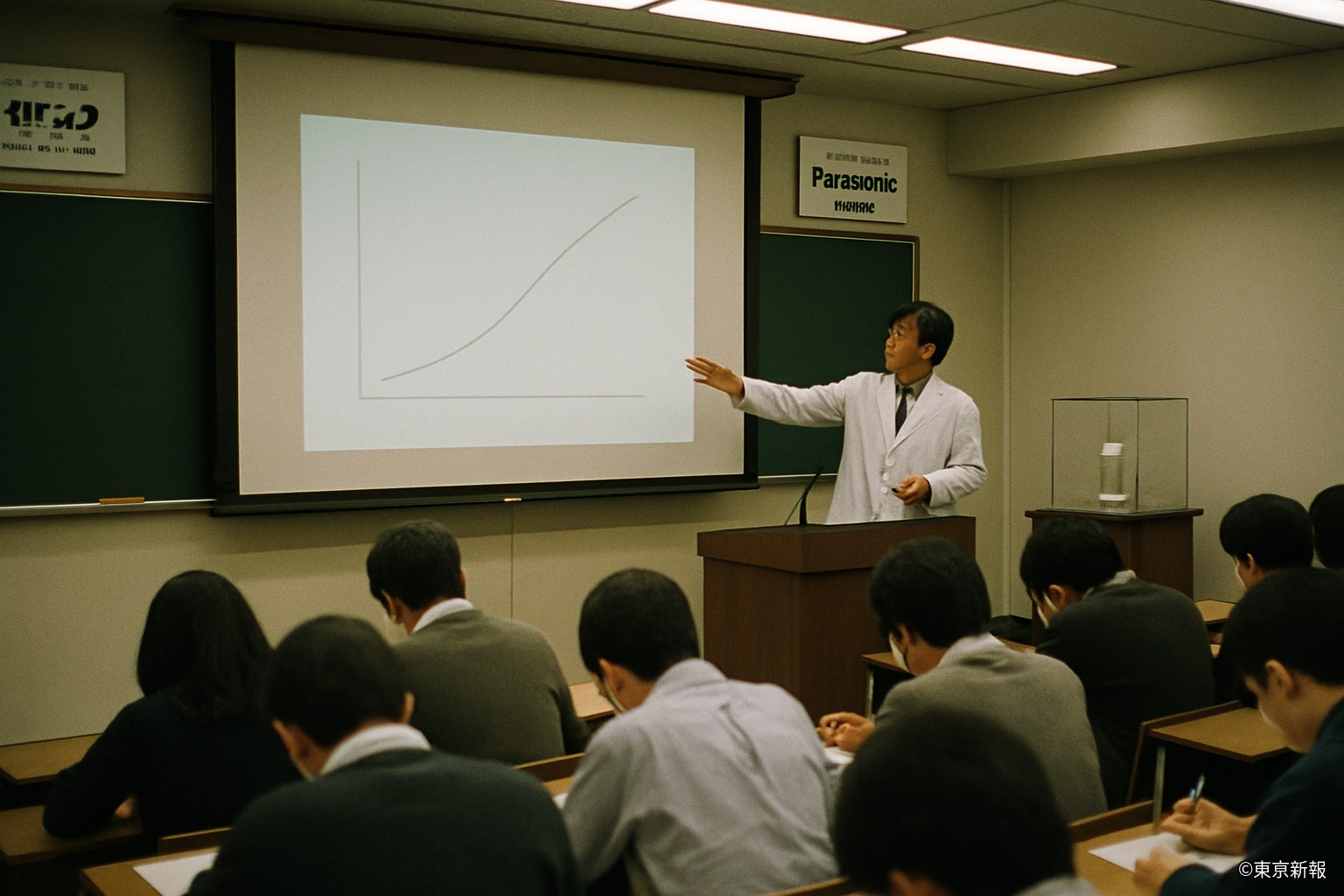
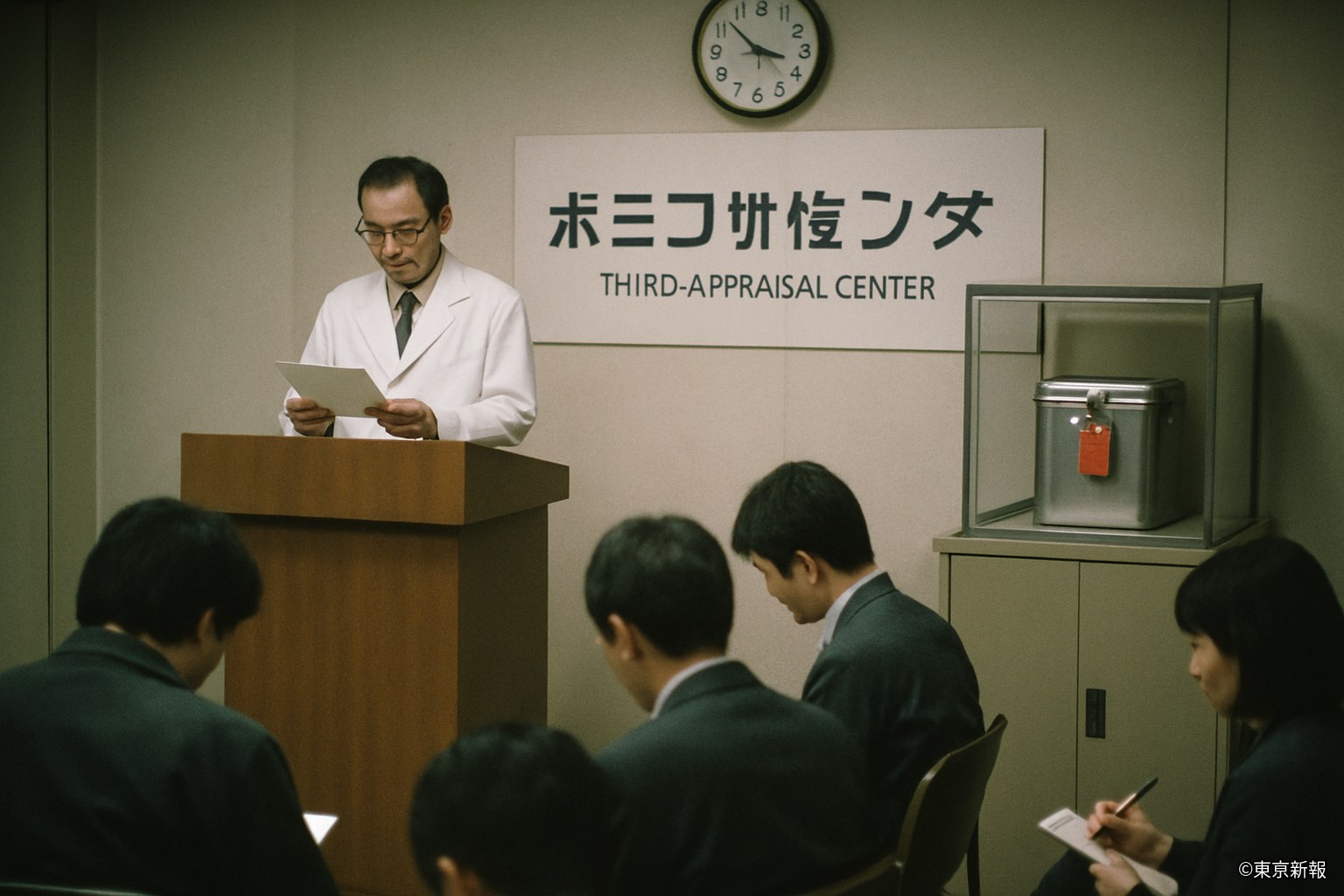
The Third Appraisal Center and Bayocean University gave a joint presentation at an academic conference's autumn meeting on the 10th, on the Fukagawa drift container opened on September 29, previously reported. The centerpiece: continuous measurement has confirmed that the viscosity of the liquid inside shifts in strength on a roughly 47-minute cycle. A possible link to the previously reported phenomenon in which the liquid's surface fails to follow the container's tilt is now suspected, but proof of any causal relationship remains far off, and the underlying cause is still unexplained.
The Third Appraisal Center and Bayocean University gave a joint presentation on the 10th, at the autumn meeting of a domestic observation-sciences academic society held in the city, on the previously reported Fukagawa drift container — washed ashore August 21, opened September 29. It was the second release of scientific data on the find, following an October 2 release, and this time centered on a new measurement: the viscosity of the liquid inside has been found to rise and fall in strength.
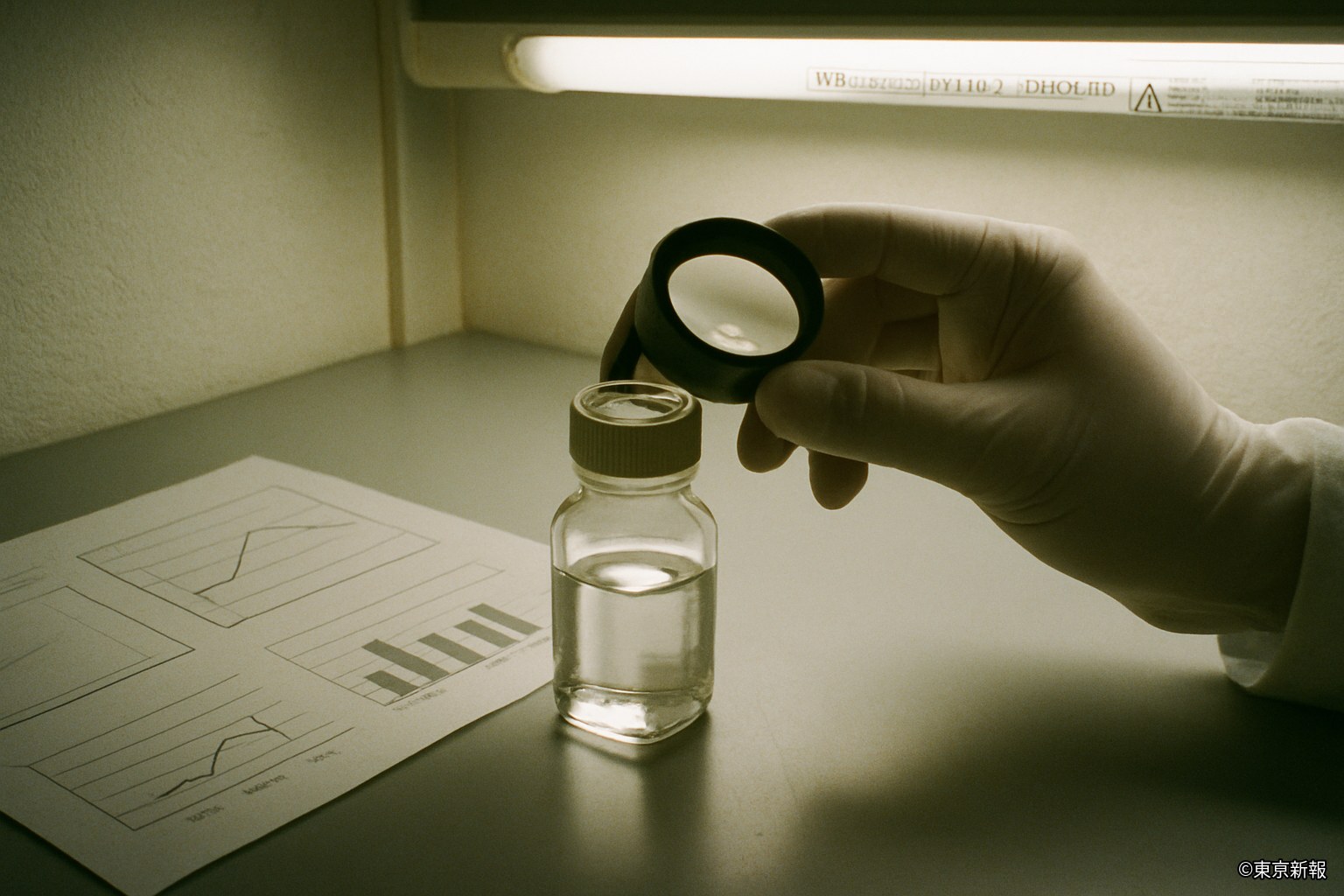
Since the opening, the container has remained inside a sealed chamber under continuous, non-contact observation. The center said it uses a method that applies vibration from outside the chamber and reads how it echoes back, so the liquid's viscosity can be tracked without anyone touching it. Statistical analysis of roughly eleven days of recordings confirmed that the viscosity — the thickness of the liquid — rises and falls on a cycle of about 47 minutes. In the thin phase it flows almost like water; in the thick phase it behaves closer to honey.
No clear match has been found between this 47-minute length and any known tidal or meteorological cycle. "We can say, numerically, that there's a cycle," a center official said. "Whether we can say it isn't just a coincidental repetition is a separate question we're not ready to answer."
As previously reported, the liquid's surface strangely refuses to stay level when the container is tilted — it does not follow the tilt. The new data showed that this failure to follow grows slightly more pronounced during the thick-viscosity phase of the cycle. Even so, the center was careful to add a caveat: "What we're seeing looks like a correlation, nothing more — not causation. It's possible both behaviors come from the same unknown property, or it's possible this is simply where two separate observations happen to overlap." The center's position on the markings inside the container — that they share "something in the way the lines are drawn" with the symbols on the tentatively registered Lineage 148 metal post, but no more than that — remains unchanged as of the 10th.
Of the three containers that washed ashore on August 21, only the one opened on September 29 was the subject of this presentation. The other two remain in sealed storage, with no opening planned for now. "Even studying one container alone has already turned up this much we don't understand," an official said. "If we opened the other two at the same time and saw similar phenomena overlap, it would only get harder to tell which behavior belongs to which container. Caution, in the end, is the faster path."
During the Q&A, an observational scientist from another institution noted that if there is periodicity, "we can't rule out that it's responding to some external stimulus — though 47 minutes is an awkward length, too long to call a biological rhythm outright and too irregular to call a clean mechanical cycle, either." Another attendee remarked, "A presentation that ends with 'we now understand less' isn't unusual in this field. What matters more is how precisely the outline of that added unknown can be drawn." A representative of Hindh Federation's mathematical analysis team, which continues decoding the tentative Lineage 148 markings under lead researcher Anirudh Rao, commented that "at this point, there is no mathematical link we can see between the carry-over rule in the symbols and this 47-minute cycle."
A public gallery was set up for the session. A homemaker, 52, from Fukagawa, who said she had followed the story since August, remarked, "At first I was scared, but the more I hear about it, the more curiosity has outweighed the fear. Hearing '47 minutes' made me compare it, without meaning to, to the rhythm of my own day — a bit longer than my lunch break." The remark drew a small ripple of laughter from the gallery.
Compiling the full findings into an academic paper is expected to take until sometime next year, and no date has been set for the next public release. The official repeated, nearly verbatim, an October 2 remark: "This release did more to sharpen the outline of what we don't know than to answer anything. Still, sharpening that outline means something. Tracing the edge of what we can't see is, right now, our job."