Fukagawa drift object enters opening review; "the liquid does not follow the tilt"
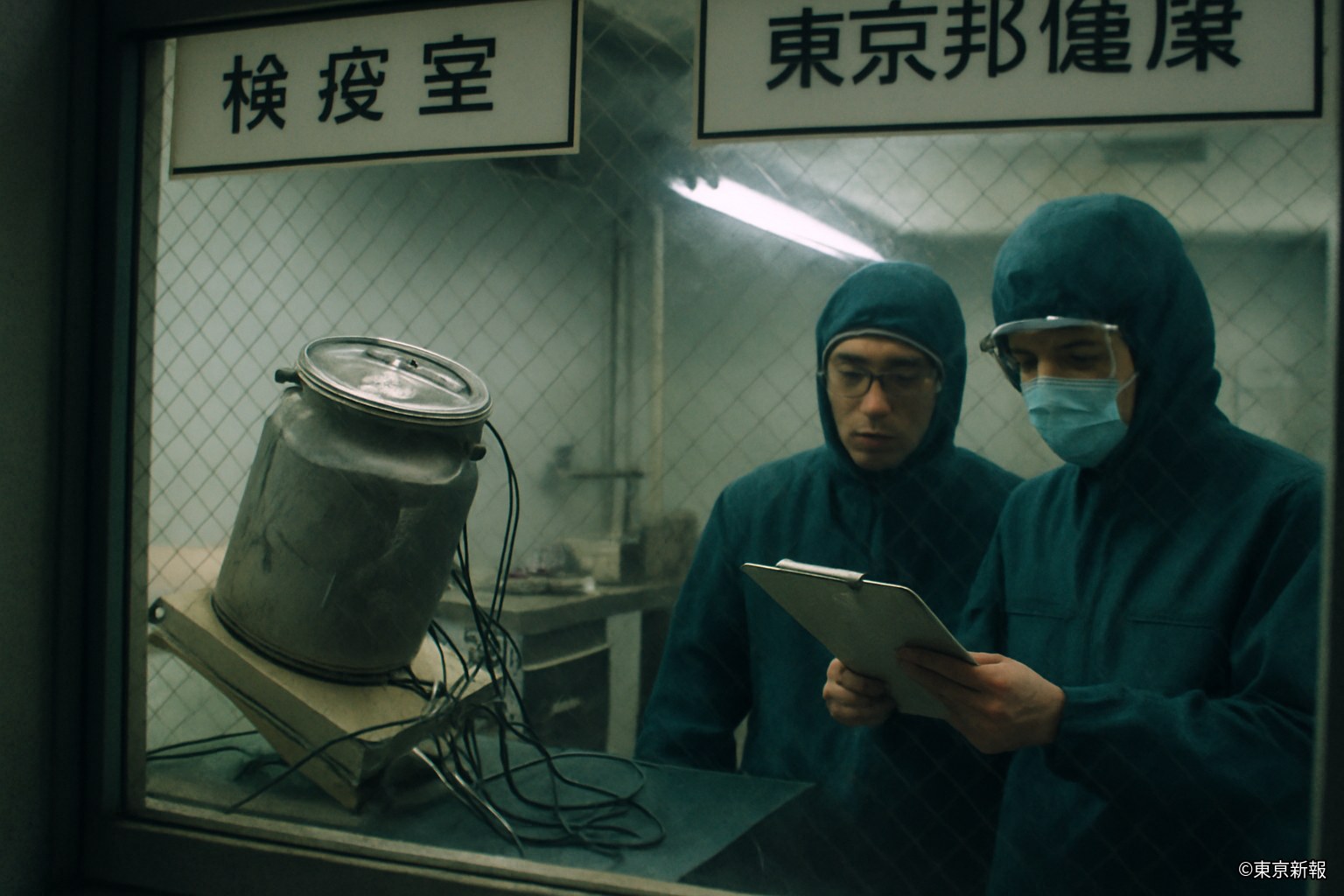
The TDA's quarantine committee began deliberating on Aug. 30 whether to open the drift object recovered in Fukagawa, inside which an image consistent with a liquid has been confirmed. Additional non-destructive testing reported that the liquid surface does not follow the container when the container is tilted. The first session ended without a conclusion.
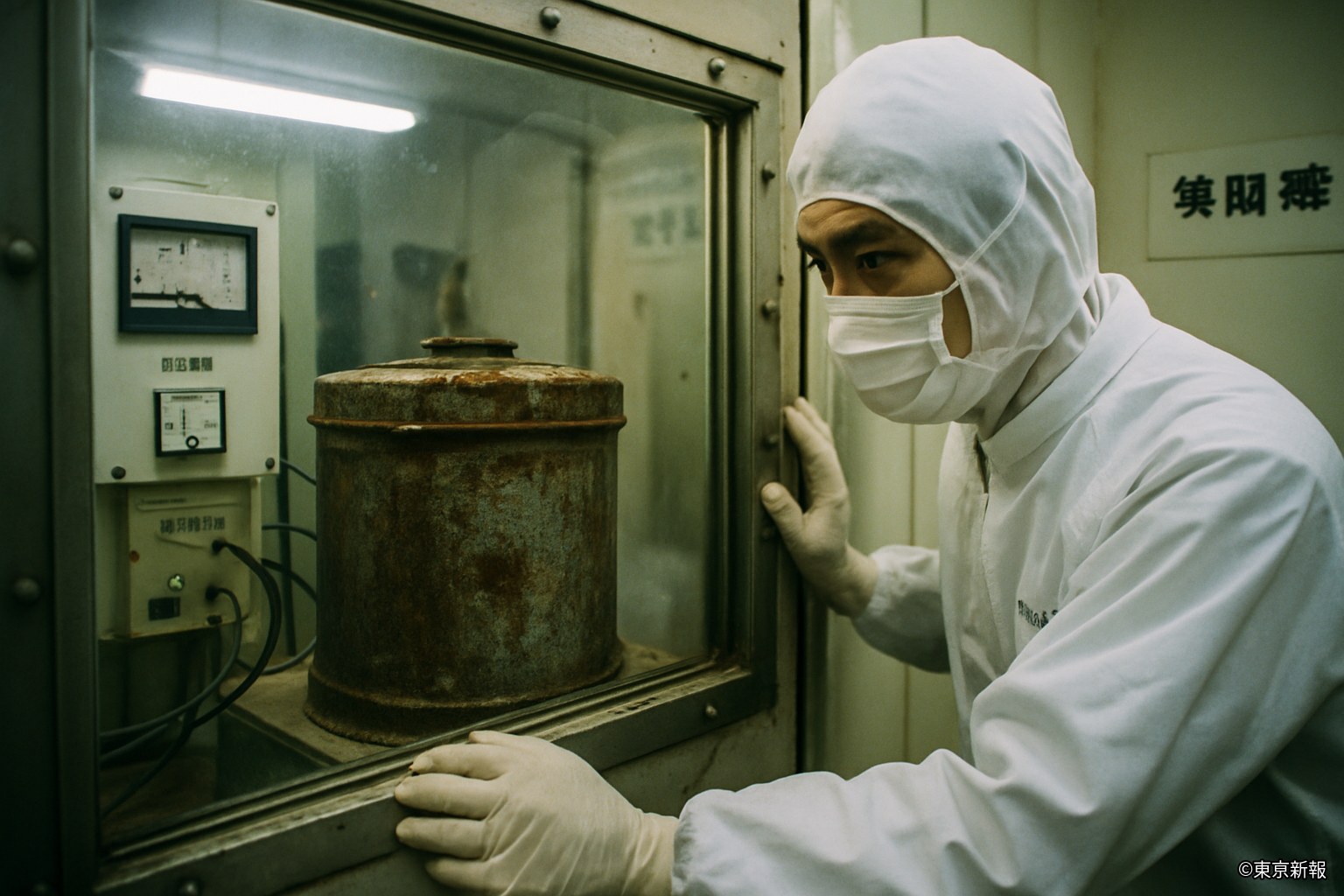
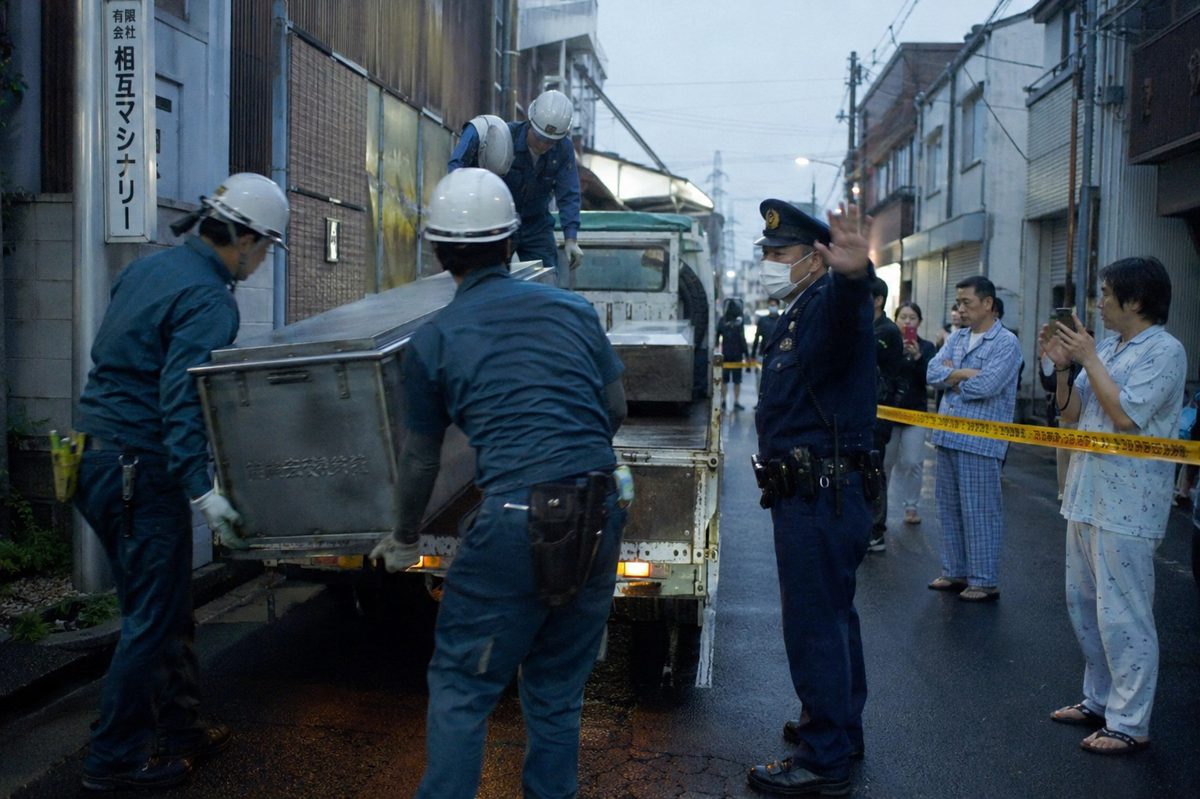
The three drift objects have been held in the isolation wing of the Third Appraisal Center in Kameido since their recovery on Aug. 21. That the largest container holds an image consistent with about 180 liters of liquid, and that the liquid's isotope ratios match the water of no known worldline, was announced on the 29th, when the quarantine committee voted unanimously to postpone opening. Monday's session followed additional non-destructive testing carried out by the center between the 26th and the 29th.
For that testing, the container was mounted on a tilting platform and inclined in five-degree steps up to fifteen degrees, held for thirty minutes at each angle, and imaged by both X-ray and acoustic methods. The image of the liquid surface stayed level throughout, the center said. No movement was recorded in the images corresponding to bubbles either.
"Tilting it, waiting it out — the result was the same," said the appraiser who ran the tests. "The motor on that tilting platform came off an old rig we normally use to calibrate scales. I never expected a day when we would be doubting our own definition of level."
The committee described the finding as impossible to separate at present: either an anomaly in the measuring system, or a property of the object. Before debating whether to open the container, it decided to verify the testing methods themselves. A control run — a calibration container of the same type filled with known water and imaged by the identical procedure — is to be completed by early September, and the phase correction applied on the acoustic side will be reviewed.
"Before the question of opening it, we are at the stage of doubting our own instruments," one committee member said afterward. Another admitted: "Several of us are hoping it turns out to be a fault. A fault can be repaired."
The quarantine committee is a nine-member body, including outside researchers, seated at the center under the Dimensional Boundary Control Act. Opening requires unanimity; the act sets no deadline for appraisal. The center's backlog stands at about 1,400 objects, the oldest recovered 19 years ago. "Having no reason to hurry is the only strength this system has," a center official said. "We know people are waiting. But waiting while you still can is the etiquette of quarantine." The control-run results and the date of the next session are to be announced in mid-September.
No tilt testing has been done on the other two containers — the one with fibrous contents and the one that is nearly empty — because both exceed the platform's weight limit; the center has requested funding to reinforce the frame in next year's budget. The surface inscriptions have been fully transcribed and registered with the international joint study's reference database, where matching is expected to take months.
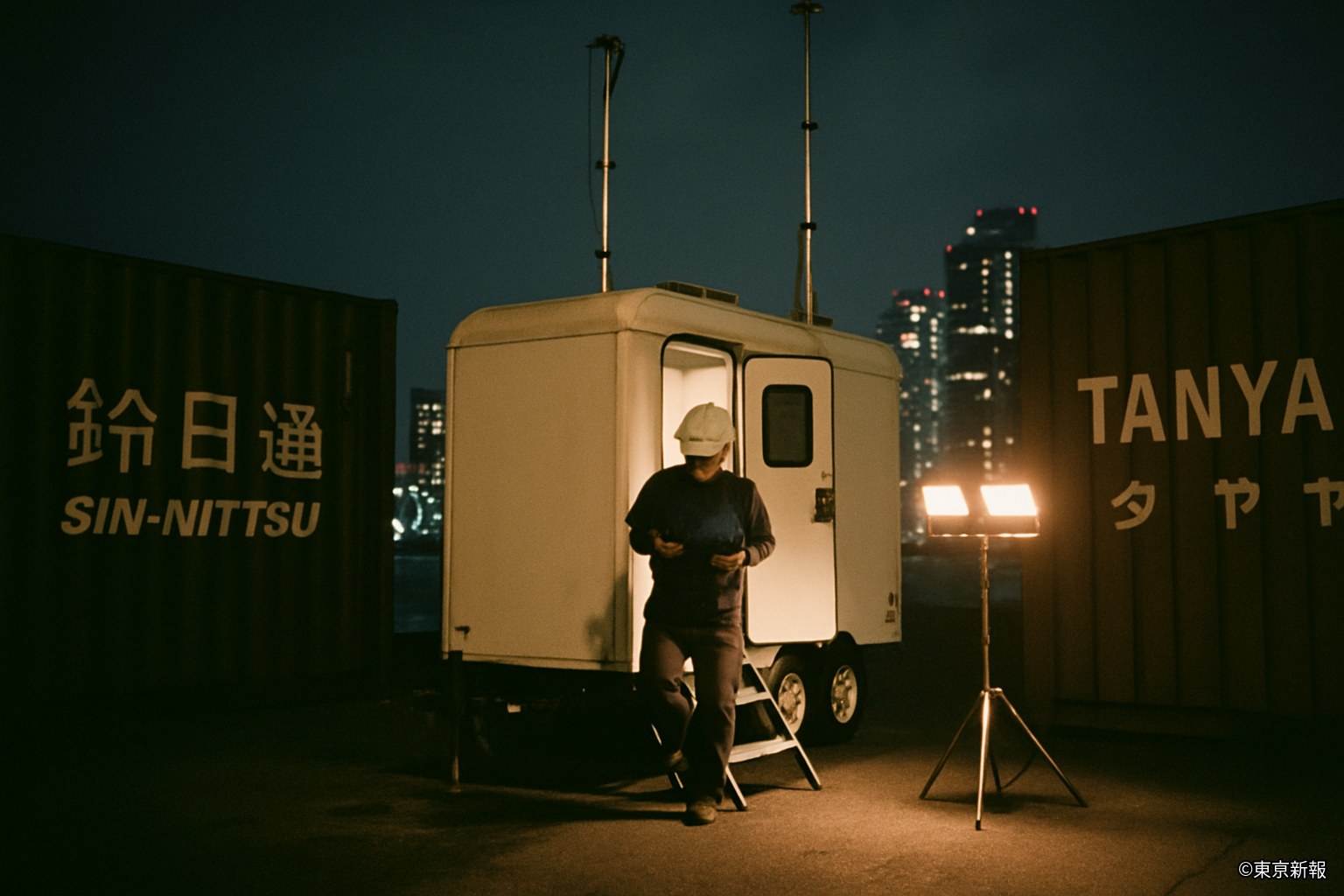
The container remains in the quarantine bay, where entry is limited to two inspections a day. No health effects have been reported near the recovery site; the Fukagawa public health office logged 57 drift-related health inquiries in August, all precautionary rather than reports of symptoms.
Flowers and drinks are still left on the street where the objects were found. "My customers only talk about what's inside — it's water, no it isn't," said a barber, 66, whose shop is nearby. "Personally I find the part about it not moving when you tilt it more unpleasant. If it doesn't move, then that thing is looking at some other idea of level than the one my floor uses."