First Public 'Send-Off' for a Symbiotic Robot — Tokiwa-dō's 'A Place to Put Your Hands Together, Like a Memorial Tablet'
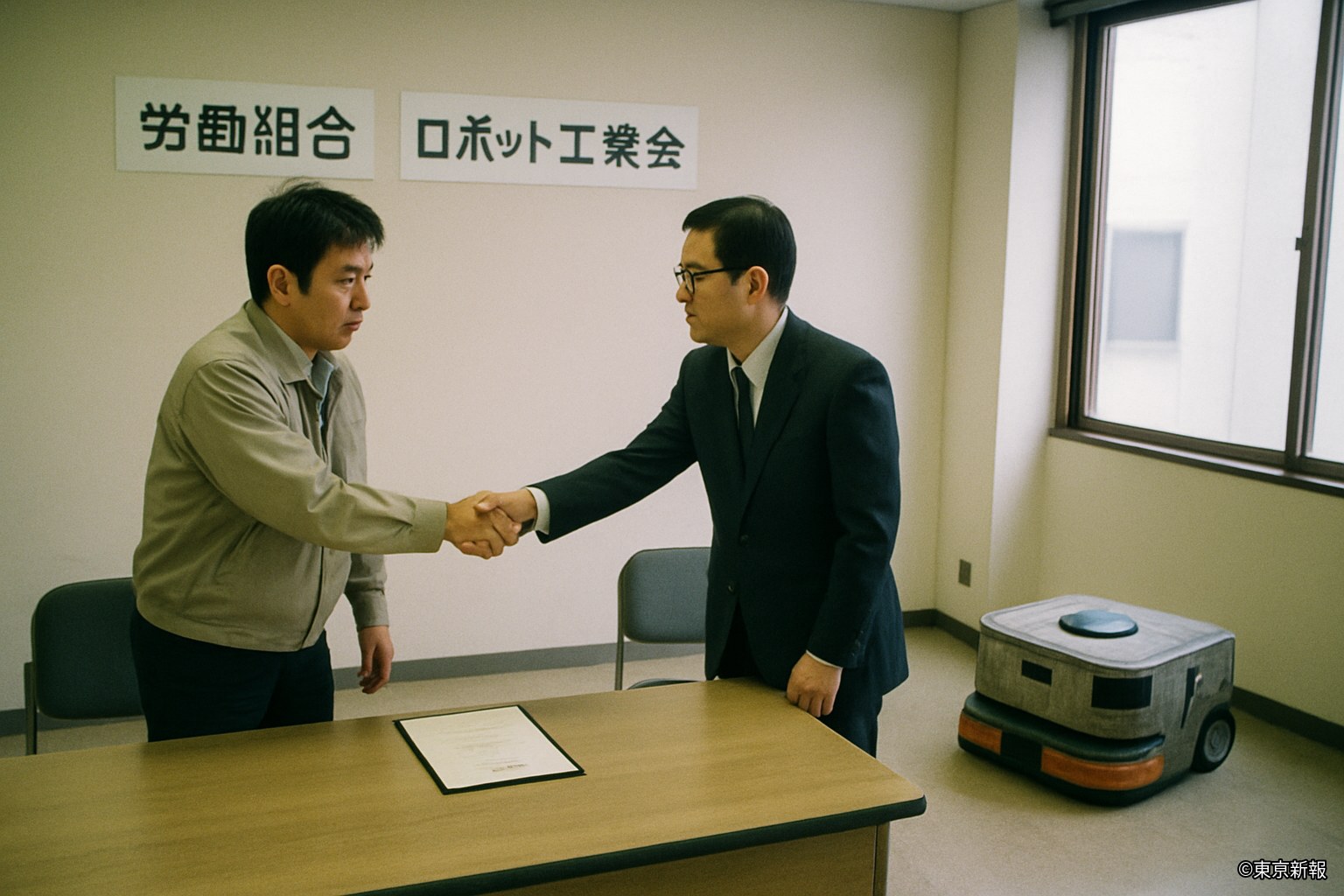
Tokiwa-dō, the perpetual-storage business in Kyobashi, held its first publicly open 'send-off' ceremony on the 29th for a cleaning-and-transport robot named Nana-gō (No. 7), marking the robot's end of active service based on a decision recorded under the trial run — previously reported on the 24th — of the newly added 'continuing-service preference' box in the symbiotic-robot guideline previously reported on the 23rd. The ceremony itself carries no legal weight, but Tokiwa-dō's proprietor Tokuzo Tokiwa, 67, said, 'It's the same as a memorial tablet. You need a place to put your hands together,' as roughly 40 onlookers watched.
According to Tokiwa-dō, the cleaning-and-transport robot at the center of the send-off ceremony, named Nana-gō (No. 7), was put into service in 2000 and spent 26 years handling cleaning and small deliveries at a commercial facility in Kyobashi. The client was Fuyo Niwa, 79, the former operator of the facility, which had housed a Buddhist-altar-goods and sundries shop. With the facility closing this year, she had requested perpetual storage from Tokiwa-dō. Under the trial run of the newly added preference box, previously reported on the 24th, Niwa recorded from Nana-gō's operating patterns that "it still seems to want to work," but chose to end its active service anyway, saying, "The robot's own preference and my own decision are two separate things."
■ "I Know It's Fair to Say It's Too Soon"
After the ceremony, Niwa told this paper, "Right up to the end, Nana-gō kept preparing to switch on whenever the shutter was due to open. That's what I wrote in the preference box. So I understand it's fair to say it's too soon. Even so, it felt wrong to keep it working when the facility itself no longer exists, so I decided now was the moment." Asked about Tokiwa's comparison to a memorial tablet, she agreed: "I think that's exactly right. Having a place to put your hands together means you don't have to regret the decision you made."
■ Tokiwa: "Having a Box to Record It In Is What Made the Decision Possible"
Tokuzo Tokiwa said, "Whether there's legal personhood has to wait for the Robot Legal Advisory Council's conclusion. But being able to write down how hard Nana-gō was 'trying' let Niwa decide without hesitation, I think. Before the box existed, people had to invent their own reasons to decide." Yamato Okita, 24, previously reported, the human partner of Shi-gō (No. 4), the robot that placed in the Kiko Festival previously reported on the 4th, also came to watch, saying, "Shi-gō will stand in this spot someday too. Watching Nana-gō's ceremony, I feel like I've settled a little of my own resolve for that day."
■ Why "Send-Off," Not a Funeral
Tokiwa-dō calls the ceremony a "send-off," not a funeral. "The unit isn't broken. It's simply moving to a storage shelf. That's why we chose the word 'send off,'" Tokiwa explained. The ceremony itself lasted about ten minutes: Nana-gō was placed in a corner of the storage shelving, Tokiwa and Niwa put their hands together, and onlookers each set a single teacup before the shelf in turn before it ended. Tokiwa-dō's shelves hold more than 320 robots, as previously reported on the 25th, but this was the first ceremony held in open, public form.
■ Robot Manufacturers' Association: "An Early Example of Practice"
A representative of the Hinokuni Robot Manufacturers' Association commented, "The guideline itself doesn't take effect until next April, but having a field example like this emerge ahead of time is useful for those of us designing the system." As previously reported, it was again confirmed that this is a separate track from the Robot Legal Advisory Council's conclusion. Tokiwa-dō says it will consider holding future send-off ceremonies in open form whenever a client wishes.
■ What Comes Next
If the planned expansion of Tokiwa-dō's storage shelving, previously reported on the 25th and under consideration for next year, goes forward, similar ceremonies may become more common. "Every unit has some stretch of time when someone was out there trying hard," Tokiwa said, adding that he intends to keep handling each case individually, in step with each client's own decision.