Tokiwado's Monthly 'Wake-Up Day': A Line of Families for 305 Robots in Its Care, Outside the Legal-Status Debate
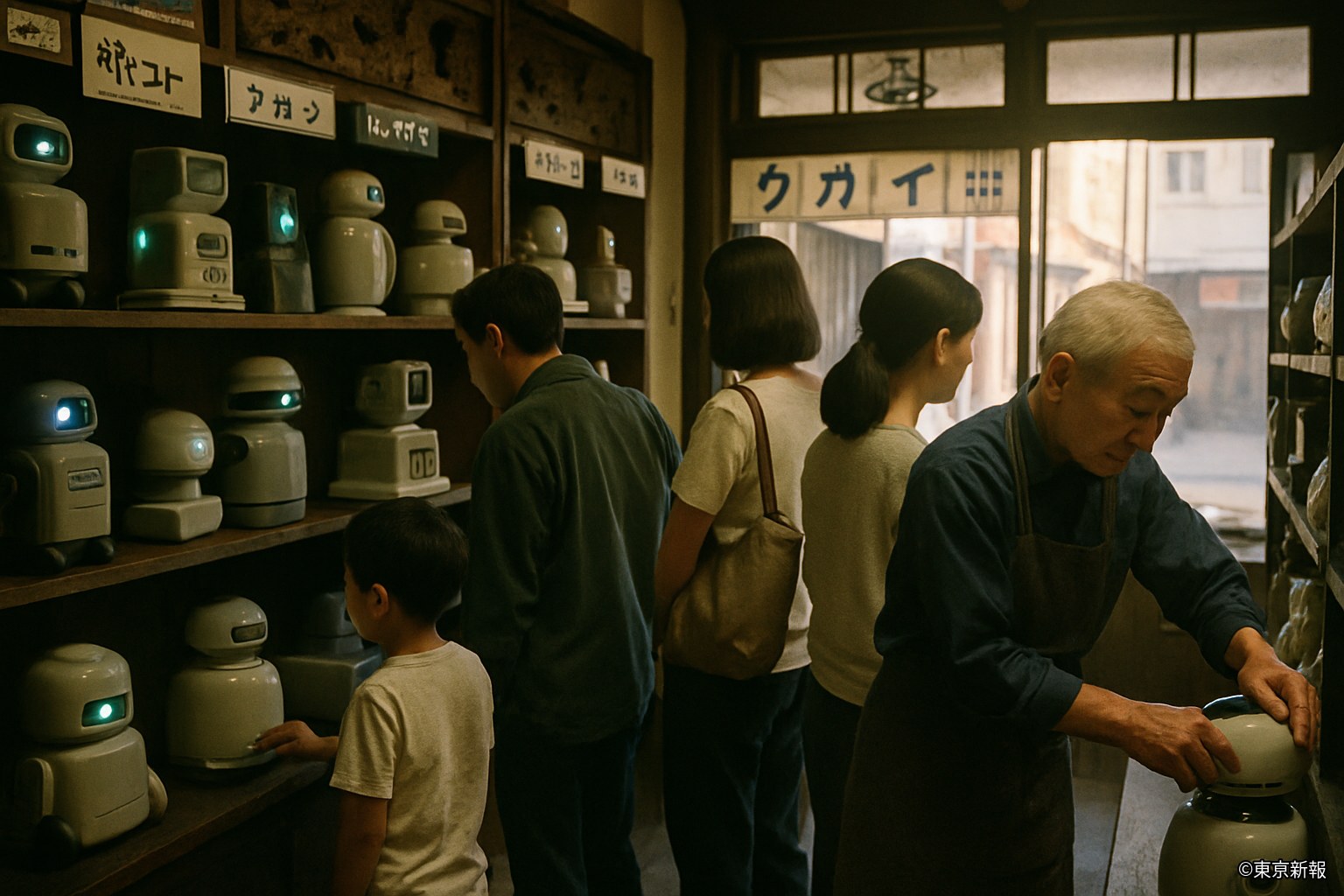
At Tokiwado, the Kyobashi business that keeps retired symbiotic robots in perpetual custody, the 16th brought the month's 'Wake-Up Day' — a day when robots that have finished their working lives are briefly powered on to meet the families who entrusted them to the shop. As previously reported, the number in Tokiwado's care has passed 300. While the robot legislative council continues to debate legal status, the families who gathered on Wednesday were focused on something much smaller.
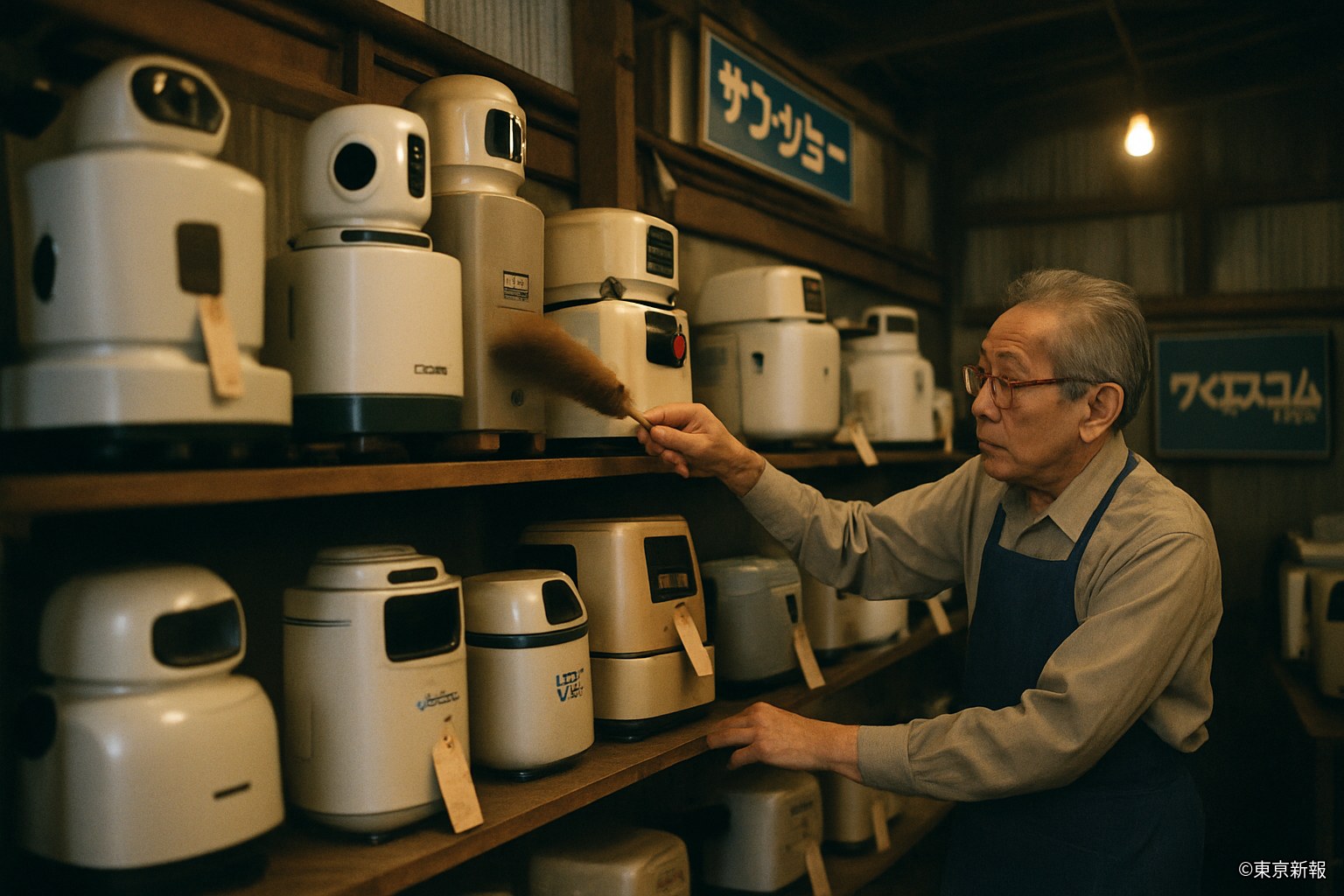
Tokiwado, a Buddhist-altar shop in Kyobashi that converted in 2019 into a business offering perpetual custody for retired symbiotic robots, held its monthly "Wake-Up Day" on the 16th. Robots that have finished their working lives are kept in Tokiwado's care under a monthly fee, taking on the "afterward" for robots whose families cannot, or do not, take them back. Ordinarily powered down on the shelves, they are switched on briefly once a month so the families who entrusted them can visit. Behind an old shopfront in a Kyobashi backstreet, shelves line the walls, holding a mix of non-humanoid shapes — boxy cleaning units, arm-only work robots, wheeled delivery models. "Wake-Up Day is our busiest day," said shop owner Tokuzo Tokiwa, 67, "but it's also our quietest one." The visits are by appointment; 42 families came on Wednesday. The number in the shop's care has reached 305, previously reported, with new intakes still running a three-month wait.
A company employee, 38, who came from Fukagawa, visited the work-support robot her late father had used for years. "It used to do the cleaning in his place. I couldn't bring myself to have it disposed of, so I left it here." When it powered on, she said, it made a short sound and moved its arm slightly. "I know the motion doesn't mean anything. But that's fine." Another family brought their child to see a delivery robot they had given up when they moved house. "Our kid basically grew up alongside this one," the parent said. Tokiwado has also seen a rise in what it calls "advance reservations" — contracts made while a robot is still in active use, arranging in advance for it to come here eventually. "Every family has its own reason it can't take one back," Tokiwa said. "We never judge that, not once."
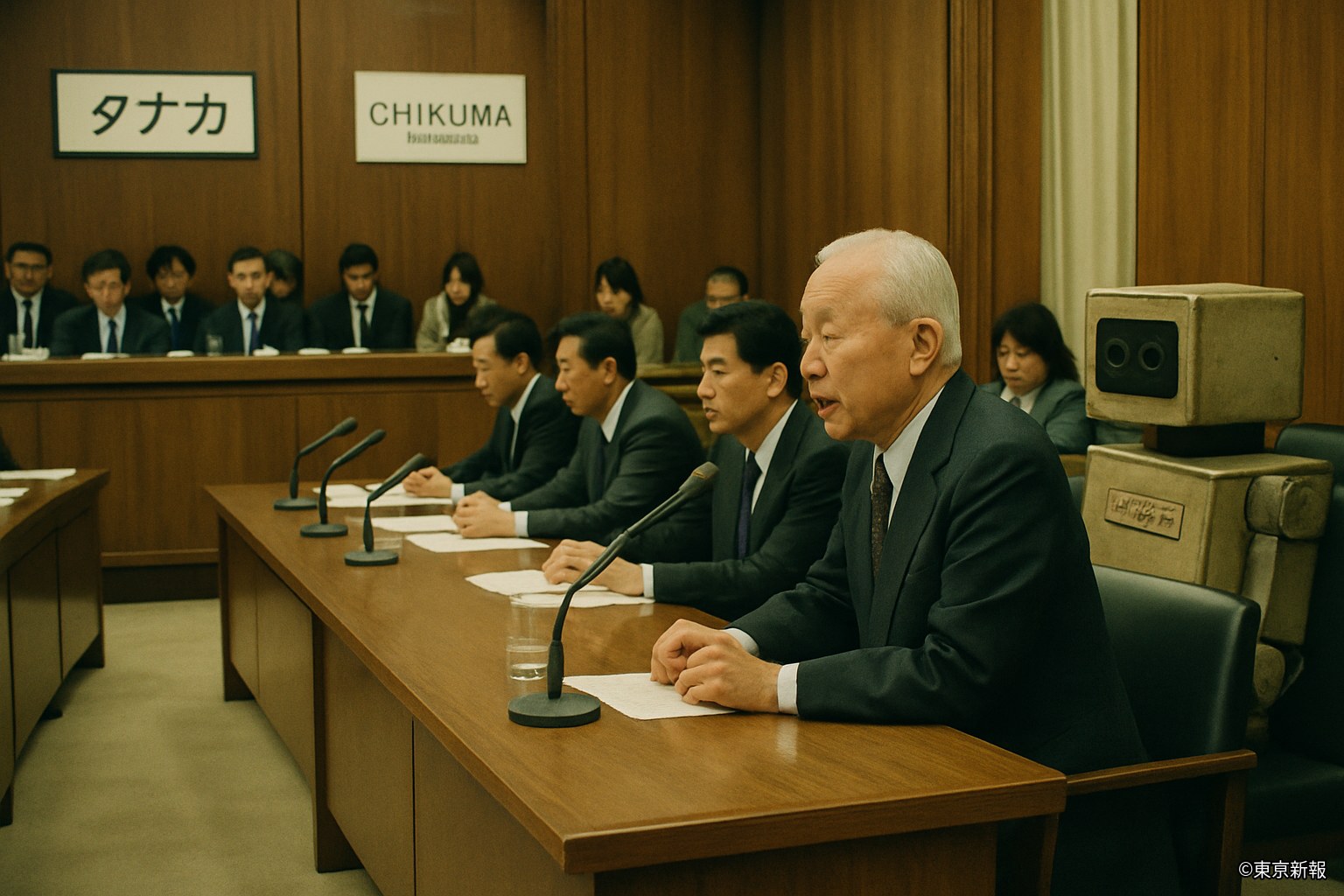
The legal status of symbiotic robots has been carried over for fourteen years across the robot legislative council's deliberations, since its first report in the 37th year of the Permeation Era. As previously reported, the 15th council held the system's first-ever public hearing on Sept. 2, where Tokiwa himself appeared as a witness, invoking another witness's words — "I didn't lose a machine, I lost a partner's record" — to describe what the custody business looks like from the ground. A further hearing, open to public applicants, is planned for October.
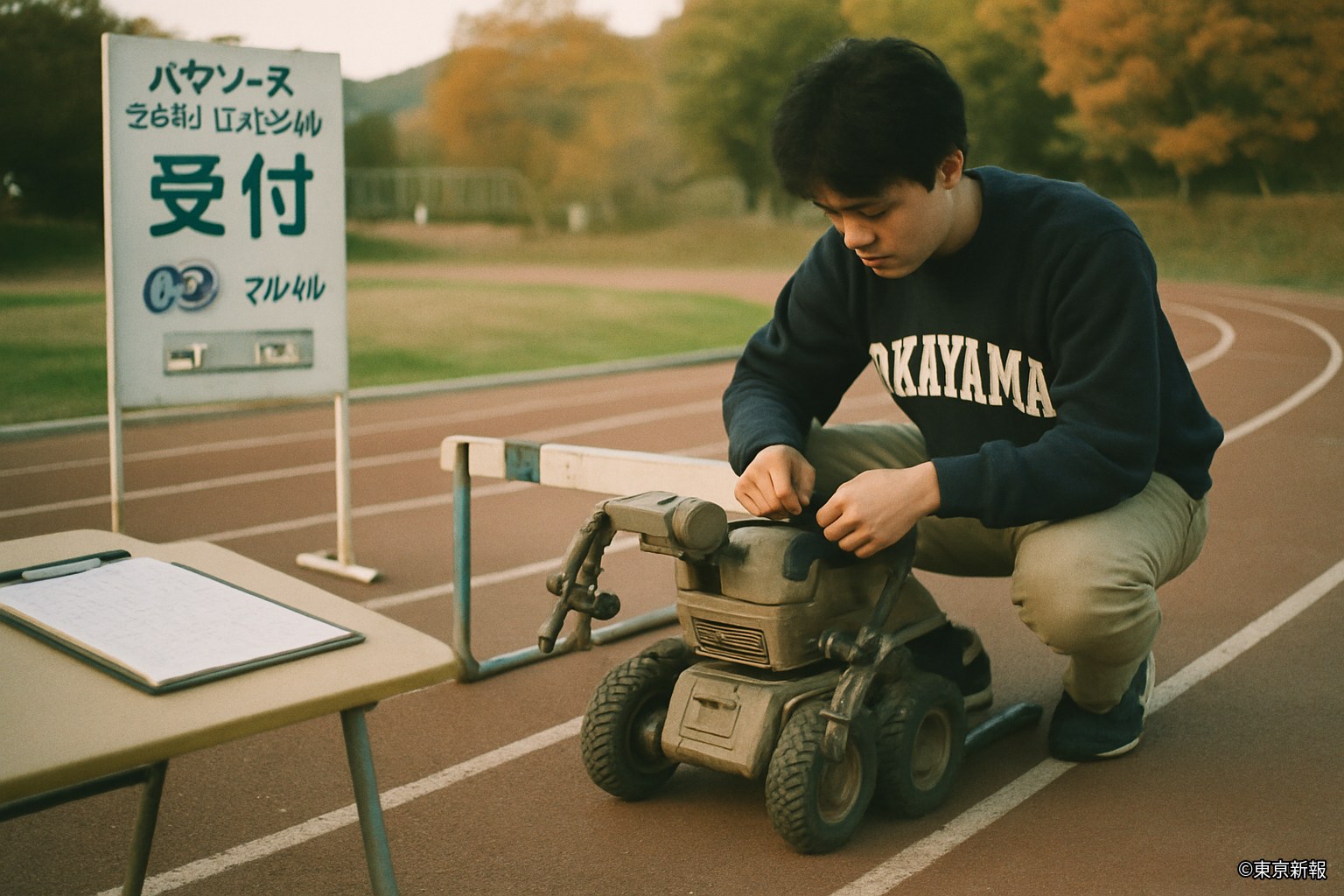
Inside the shop on Wednesday, though, almost none of the families brought up that policy debate. "For the people who come here, whether it's declared a quasi-person matters less than whether this one runs properly today," Tokiwa said, smiling. "The legal stuff can wait until they read about it in the paper later — that's about the right order." At October's Kiko Festival, previously reported, Tokiwado's team is aiming for a fourth consecutive appearance fielding a lineup that includes a robot in its care — a different kind of "turn in the spotlight" through competition rather than custody.
Visits wound down by evening, and the robots were powered off one by one and returned to their shelves. The last to leave were an elderly couple, who held the joint of the hand — more a hinge than a hand — of the housekeeping robot that had been with them for nearly forty years, before finally gathering to go. Looking over the shelves, Tokiwa said only: "Next month, we'll do the same thing again."