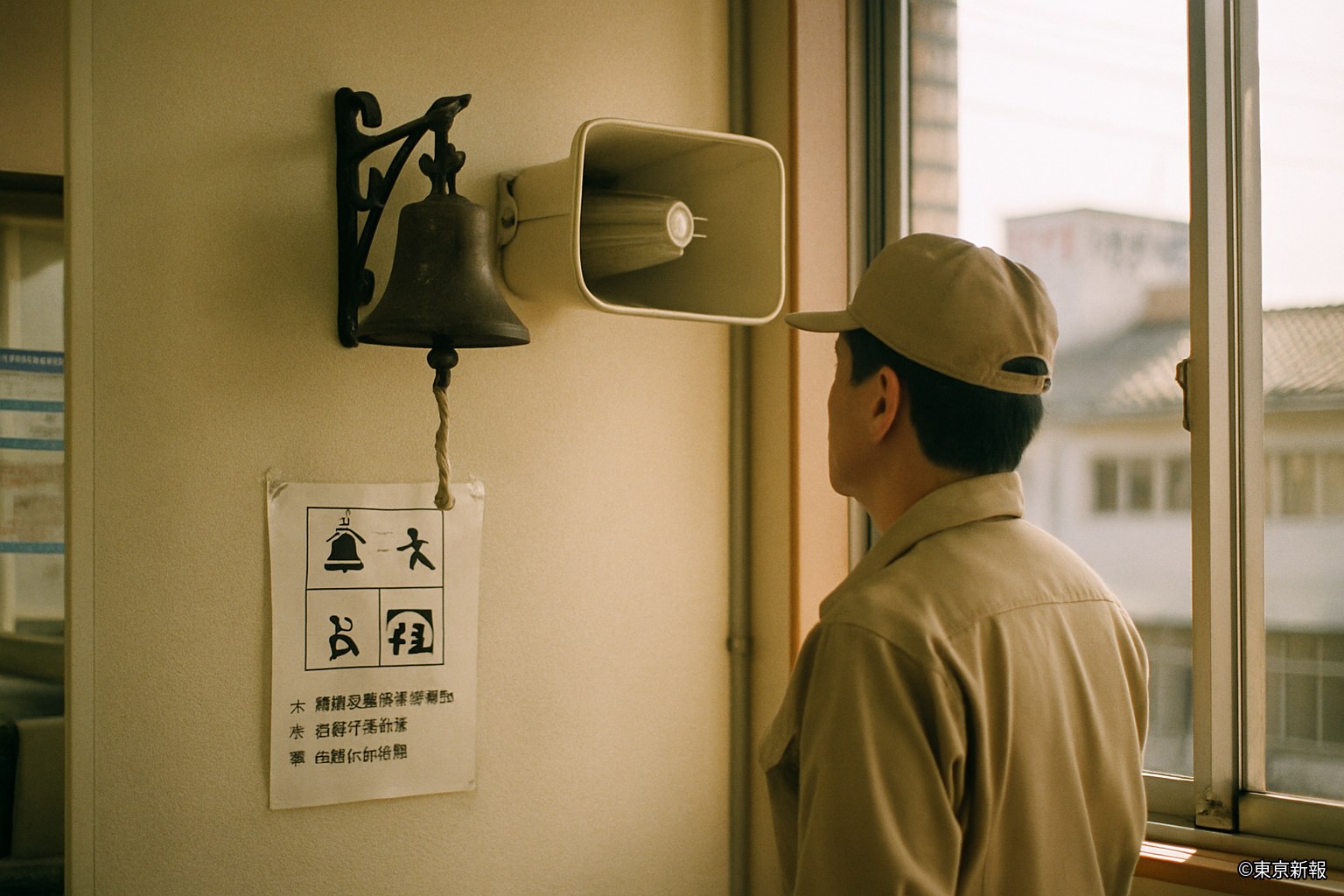
Bell-Code Indoor Speakers Now Installed in Every Building — Dog-Line Clan: 'Ringing Is Like Barking'
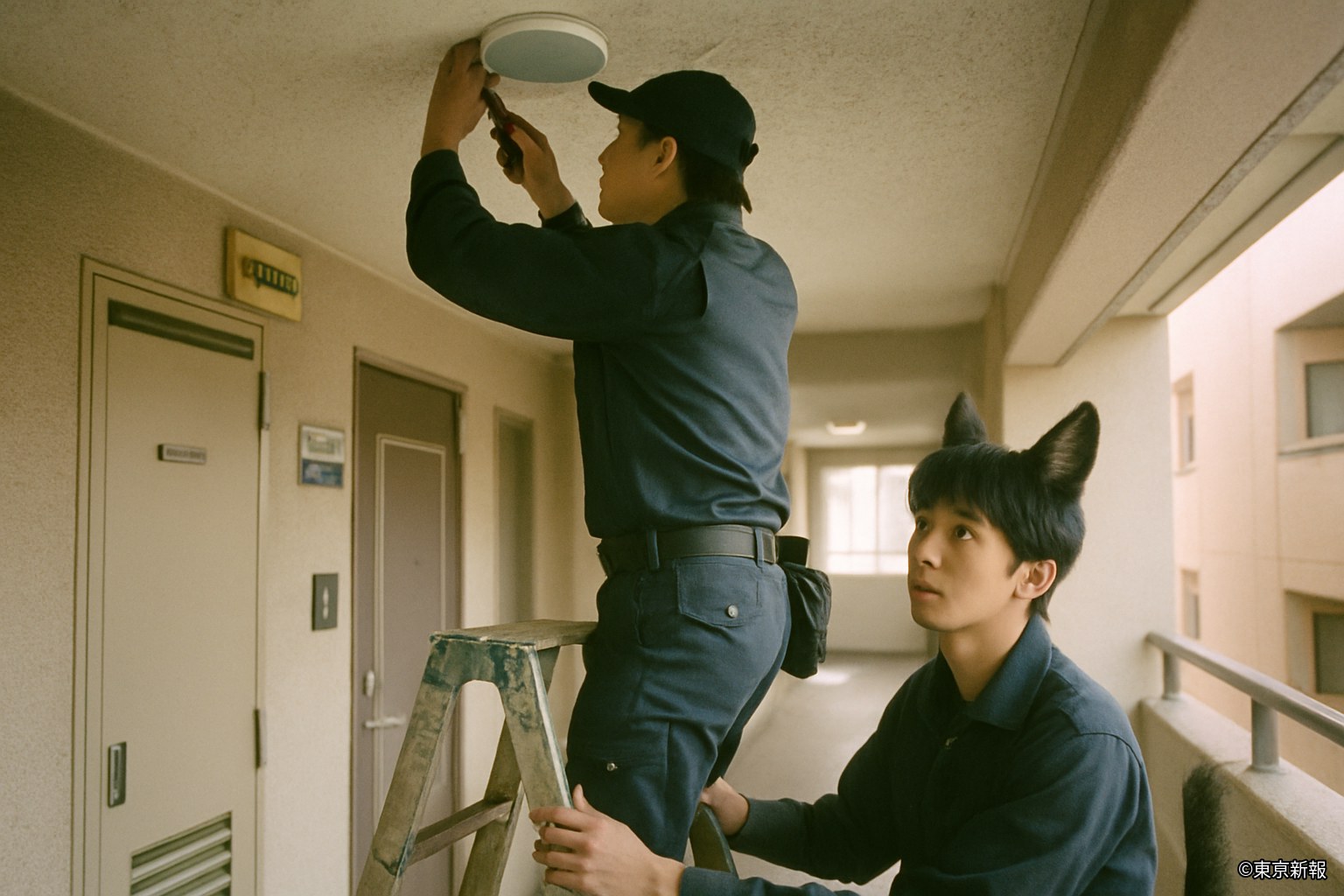
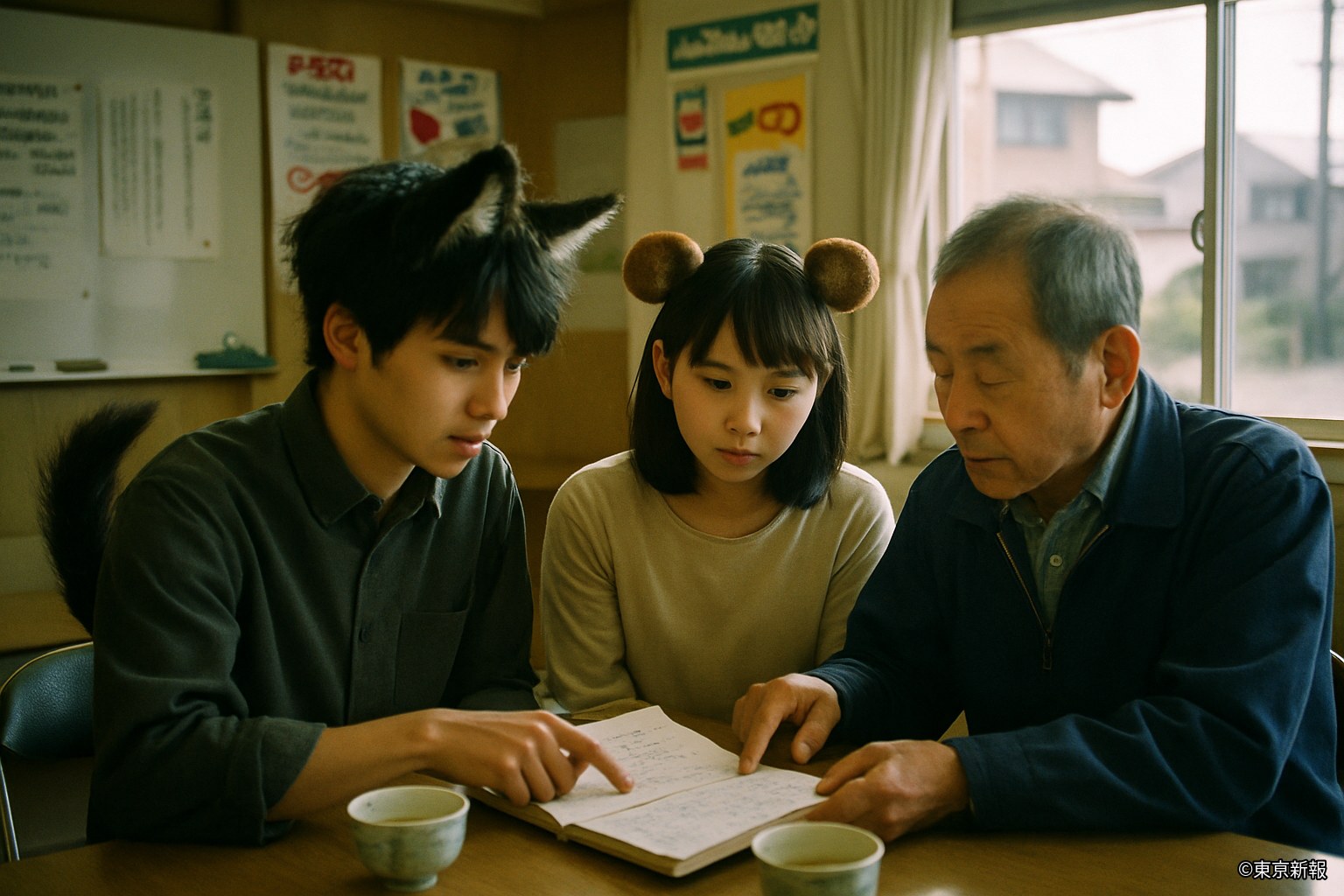
Indoor-speaker installation work for the previously reported Yuragi warning system known as the 'bell code' was completed on the 11th across all 40 target bay-area apartment buildings — about ten days after full operation began on the 1st. Yuto Takinami, 26, a dog-line drifter who co-organized Fukagawa's previously reported joint clan autumn festival, says the way the bell is rung overlaps with the life of his own clan.
As previously reported, the Yuragi warning relay method known as the "bell code" was formally built into the disaster radio systems of three bay-area districts — Shiomi, Fukagawa, and Sunamachi — and entered full operation on October 1. To address the problem of broadcasts being hard to hear in high-rise interior hallways, installation work for small indoor speakers at roughly 40 target buildings had been under way; the ward's disaster-preparedness division announced on the 11th that installation was now complete at all 40 buildings. Progress stood at 70 percent as of October 1, with the remainder finished within ten days — a completion the division called "a few days ahead of schedule."
Yuto Takinami, 26, who co-organized Fukagawa's previously reported joint clan autumn festival on the 3rd, is a second-generation dog-line drifter raised in a family line tied to harbor security work. The bell code conveys the scale of a Yuragi event through the number of chimes, and Takinami says, "My family has always trained its ears, growing up, to tell a dog's mood and distance apart just from how it barks in the distance. Counting the number of chimes to read their meaning feels, in principle, like the same thing." Takinami's grandfather belonged to the generation that actually heard the bell during the old detention-facility era. "My grandfather told me his body still freezes for a moment, even now, whenever he hears a bell," Takinami recalled. "I think the meaning of the sound itself and the memory attached to it are kept on separate shelves."
Tamaki Hiiragi, 29, a bear-line co-organizer of the same festival, says she senses something similar between the way bear-line taiko mark the pause before the next beat — showcased at the joint festival — and the way listeners parse the gaps between chimes in the bell code. "Our drums carry feeling through the length of the pause before the next beat," she said. "When I was told the bell code conveys differences in scale through the spacing between chimes, I thought the structure felt very similar."
As previously reported, a trial linkup between the bell code and the forecast app "Madoban" (targeting roughly 3,200 bay-area registrants) has grown to about 3,500 registrants as of the 11th. "Alongside finishing the indoor speakers, registrations on the app side are climbing too," a ward official said. "Ideally people use both together."
The bell code traces back to the detention-facility era after the 1975 mass arrival, when the practice of signaling a Yuragi warning by a count of chimes spread spontaneously among residents, shaping — alongside the previously reported custom of choosing surnames containing the character for "shore" — an old layer of drifter-descended citizens' history. After the facilities were dissolved, the bell itself was kept only as an archival item at the Drift Object Museum and was never, for decades, built into the disaster radio network. As previously reported, last year's TDA budget request was the first to ever fund its formal integration, and after the September 3 test broadcast and the October 1 start of full operation, it has finally joined the modern warning network — half a century later. "Nobody involved in the planning ever imagined the sound sleeping in the museum would come back as an active warning signal," a ward official said.
Additions to school disaster-preparedness education remain on track for rollout through October, though the ward's division says teaching it takes some care. "It's the same idea as teaching children to recognize a siren by its length, but counting chimes adds an extra step that can be hard for younger children," an official said, adding that a trial teaching aid set to a simple song rhythm is being introduced for younger grades to help them count the chimes. Takinami said, "When I taught my own child to count the chimes, I started with a game of counting how many times a dog howled in the distance. I wanted him to feel that counting sounds isn't something scary — that it's part of everyday life — before anything else."
Today's story, about how each clan's own distinct culture of listening to sound overlaps with how the bell code is received, is also a new facet of a tension the city pages have long covered: the balance between preserving a clan's own culture and assimilating into the wider community. "It was a rare experience, having clan culture connect naturally to a citywide safety system that matters to everyone," Takinami said. "Normally we tend to separate things — our own affairs are our own, and outside is outside." Hiiragi agreed: "Bear-line drums only come out a few times a year, at festivals. The bell code is woven into daily life, so it feels like that same sensibility is alive in the everyday, too."
A system for conveying events through a count of chimes carries forward a heavy history from the detention-facility era — yet seeing it now spoken of alongside each clan's own distinct culture of listening to sound looks like an unexpected way for a half-century-old system to finally find its footing. An old mechanism that digitization had simply never gotten around to adopting was called back into service by the weak point of a modern building — the interior hallway — and has now, on top of that, become woven into the lived wisdom of the city's clans. A system built to carry the meaning of a sound, and the lives of people who have long made a practice of listening sounds apart, have joined hands in an unexpected place.