A Secret Annex to the Window Treaty? Foreign Ministry Says 'None Exists' — but a Leaked Remark Lingers

A suspicion has reached this paper — sparked by a remark from a ruling-party source — that a non-public annex setting out priority supply terms for allied nations is being drawn up separately from the previously reported Window Treaty talks. The Foreign Ministry flatly denies any such document exists, but how far the 'separate-track discussions' mentioned in earlier reports have actually progressed remains unclear. The claim could not be confirmed either way.
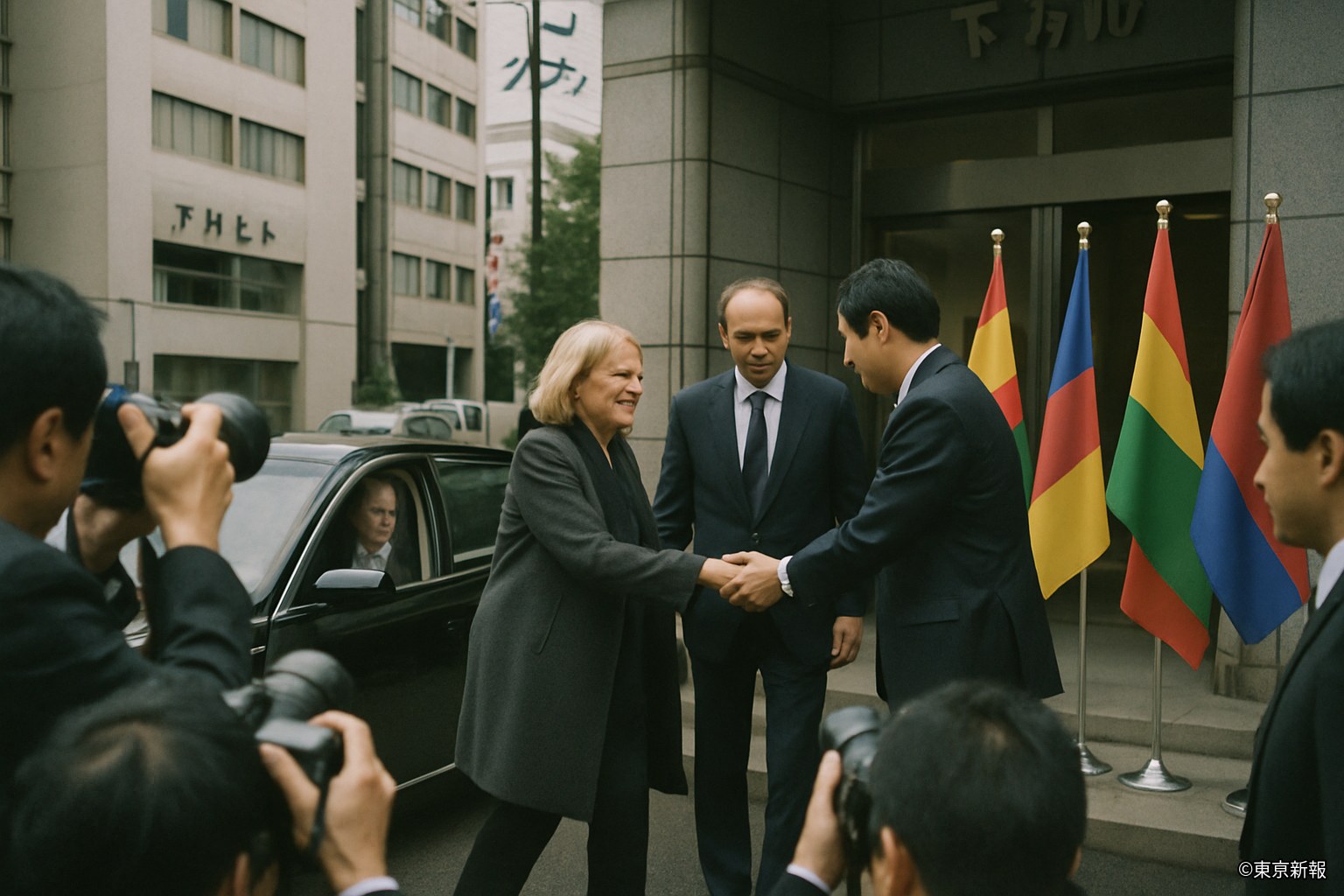
As previously reported, at working-level talks on the 6th with visiting Nordia Union chairwoman Signe Lundqvist, Hinokuni's delegation head Yuichi Amamiya, 55, presented a draft treaty article explicitly banning military diversion, while leaving out Ameria's demand for "priority supply to allied nations" — saying that point would be discussed "on a separate track from the treaty body itself." This paper has continued seeking out multiple sources on what that "separate track" actually involves.
In the course of that reporting, a figure close to the ruling party's "Opening Observation" group let slip on the 10th that "the separate-track matter has, in fact, already taken fairly concrete written form — just not in a form that goes into the treaty body." When this paper sought to confirm the remark's intent, the same person walked it back: "My wording was misleading. I didn't mean there's a specific document." No further explanation followed.
Based on that remark, this paper sought comment from a Foreign Ministry spokesperson, who flatly denied on the 11th that "no non-public annex concerning priority supply to allied nations exists." On the phrase "separate-track discussions," the spokesperson said only that it meant "an exchange of views on related points running alongside the treaty-text work itself — nothing more. Whether it will even take the form of an agreed document is undecided."
Tetsuo Munakata, 58, a sovereignty-leaning member of the House of Representatives, told this paper sardonically, "The denials always come a little too crisply. If they'd simply said from the start that 'such a point exists,' that would be one thing — but denying it forcefully every time it's asked about only makes people suspect there's something there." Sota Miyake, 44, convener of the ruling party's "Opening Observation" group, took a more cautious view: "I take the ministry's explanation at face value. The word 'annex' itself may be something someone used for the first time just now."
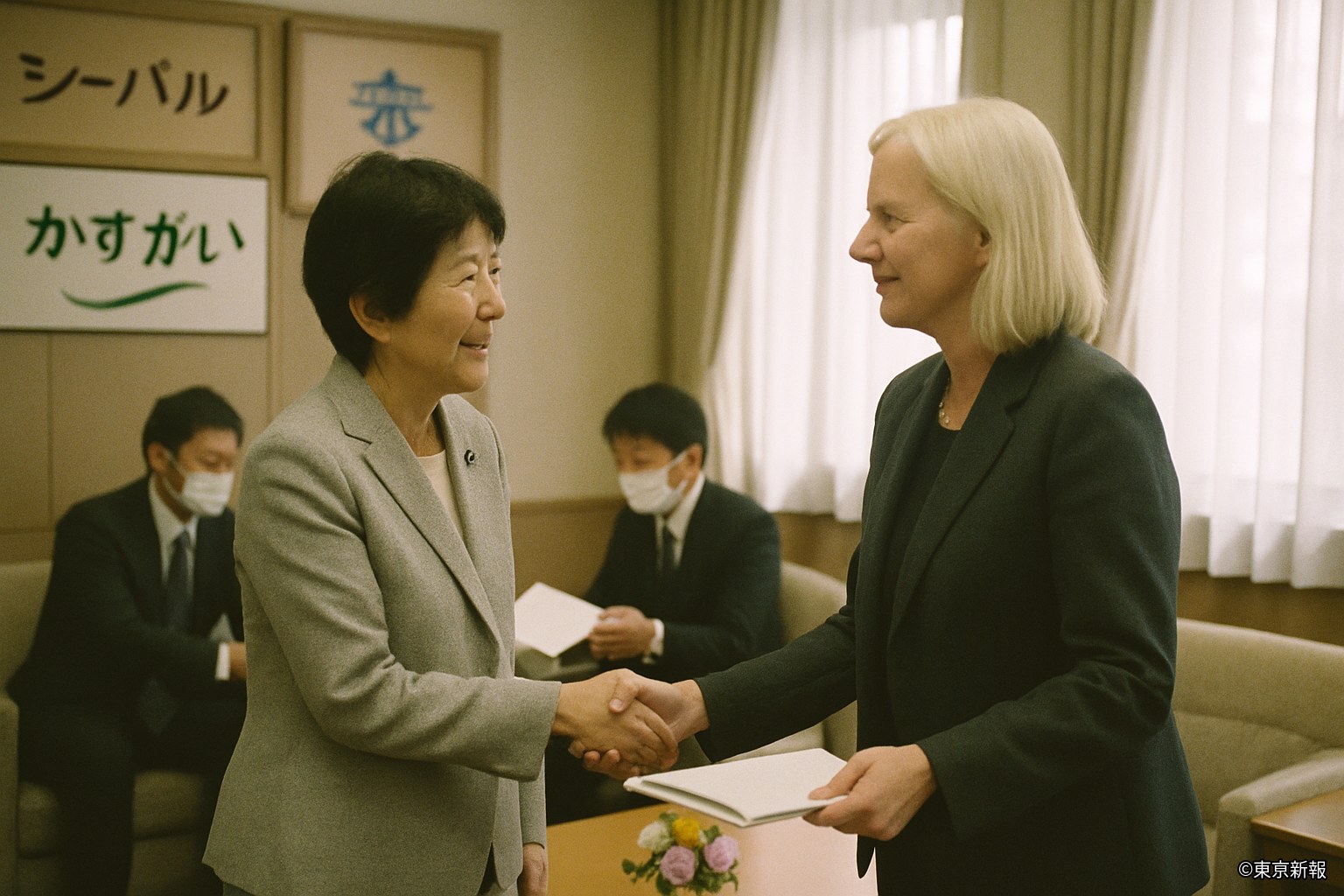
As previously reported, the Genshu embassy had read Mayor Motoko Ukai's industry-consideration request on the 7th as leaning toward the allied camp. Asked by this paper about today's suspicion, an embassy spokesperson said, "This is exactly the concern we've raised all along. If a framework is being built behind closed doors to give priority supply only to allied nations while claiming the open-disclosure banner, that runs against the spirit of the Permeation Treaty." No concrete evidence or documentation was offered to support the claim, however.
This paper attempted to confirm the matter with multiple sources but obtained neither the document itself nor firm testimony establishing its existence. Nothing has surfaced to overturn the ministry's denial, and no official account beyond "an exchange of views" has described how far the "separate-track discussions" have actually progressed. This paper will not pronounce on the truth of the suspicion until it can be confirmed, and records it here only as part of the Window Treaty negotiation's ongoing course. We will watch closely how this point is treated when the "provisional agreement" expected in mid-October is reported.